About Spodiopsar cineraceus (Temminck, 1835)
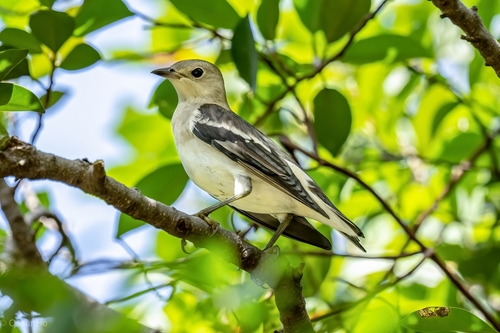
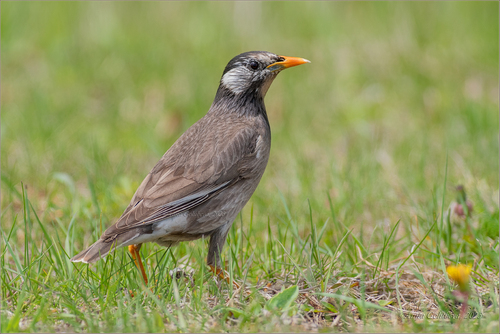
The white-cheeked starling, Spodiopsar cineraceus (Temminck, 1835), reaches 24 cm in total length. Adult males are primarily dark grey-brown, with a paler belly and a whitish band across the rump. Their heads are blackish, with whitish cheeks and forehead. The tail has a white border, and secondary wing feathers bear white markings. Legs are pale orange, while the bill is orange with a black tip. Adult females resemble males, but their overall coloration is paler and duller. Juveniles are brown overall, with pale cheeks and rump, and they lack the black tip to the bill. The call of this species is loud and monotonous, made up of a series of harsh, creaking notes. The breeding range of the white-cheeked starling includes central and northeast China, Korea, Japan, and southeast Siberia. In winter, populations from colder breeding regions migrate south to southern and eastern China, South Korea, southern Japan, Taiwan, and northern Vietnam. Vagrant individuals have been recorded reaching the Philippines, Thailand, and Myanmar. One individual was recorded in Homer, Alaska in 1998; this bird likely arrived to the location via ship. This starling lives in woodland, farmland, and open country, and it has also adapted to occupy urban parks and gardens. It is most common in lowland areas, usually found below 700 meters in Japan. Its diet is varied and includes fruit as well as insects such as mole crickets. Its breeding season runs from March to July, and females often lay two clutches of eggs within this period. Nests are constructed in holes in trees or buildings, or in artificial nestboxes. Each clutch holds 4 to 9 eggs, which are incubated for 14 to 15 days. Young birds fledge 13 to 15 days after hatching.