About Spizella pallida (Swainson, 1832)
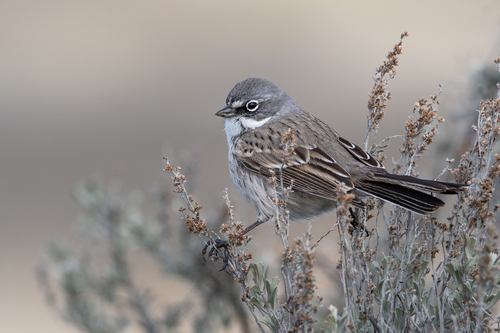
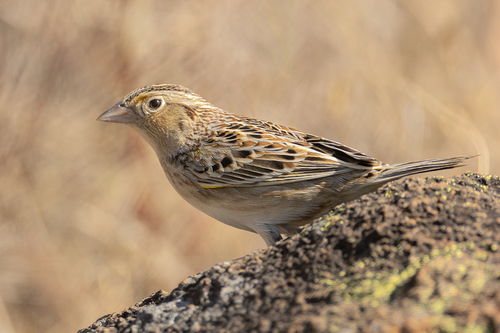
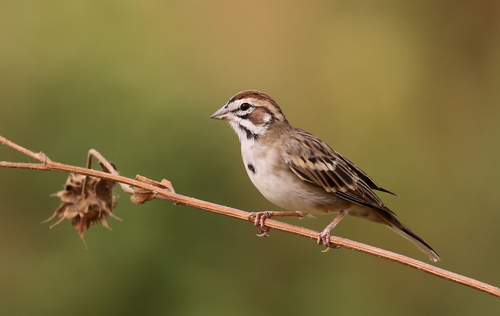
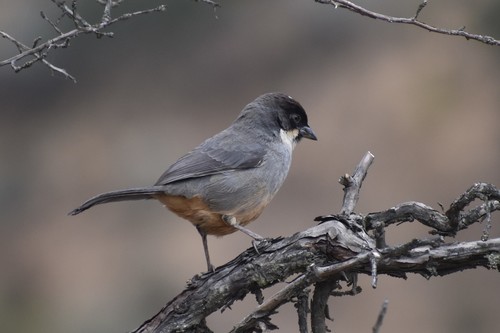
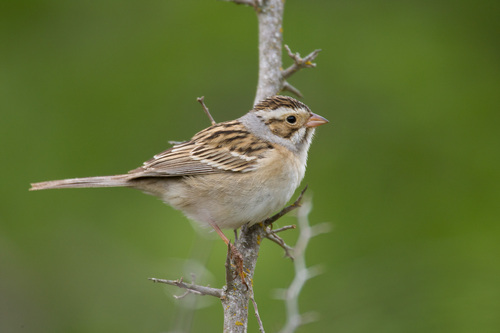
The clay-colored sparrow (also spelled clay-coloured sparrow), with the scientific name Spizella pallida, is a small New World sparrow native to North America. Adult individuals have light brown upperparts and pale underparts, with darker streaks running along their back. They have a pale stripe across a dark brown crown, a white line above the eyes, a dark line running through the eyes, a light brown cheek patch, and brown wings marked with wing bars. Their short bill is pale with a dark tip, the back of their neck is grey, and they have a long tail. Non-breeding adults and immature sparrows look very similar to chipping sparrows and Brewer's sparrows, and they often form mixed flocks with these species outside of the nesting season. Their breeding habitat consists of shrubby open areas and jack pine woods across central Canada, central northern United States extending east to the Great Lakes, and their breeding range is currently expanding further eastward. The nest is built as an open cup, placed on the ground or low within a shrub. Nests are constructed from grasses and lined with fine materials or animal hair. Females lay three to five splotched blue-green eggs, which are incubated for 11 days. These sparrows migrate in flocks to southern Texas and Mexico for the non-breeding season. They forage for food on the ground, and their diet mainly consists of seeds and insects. Outside the nesting season, they often feed in small flocks. While nesting, these birds may forage for food far from their nest, and feeding areas are not defended. Males sing from an open perch to mark their claim to a nesting territory; their song is described as Bzzzz bzzzz za za. Clay-colored sparrow nests are often parasitized by the brown-headed cowbird, and the sparrow pair may abandon their nest when this parasitization occurs.