About Spirobranchus triqueter (Linnaeus, 1758)
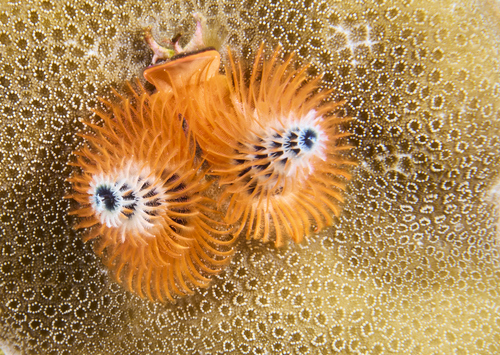
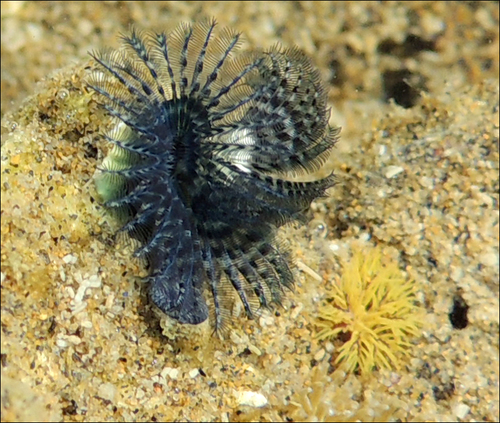
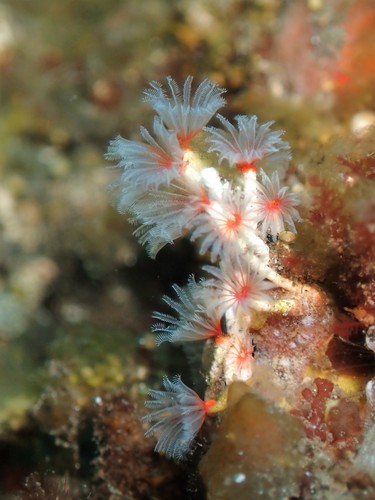
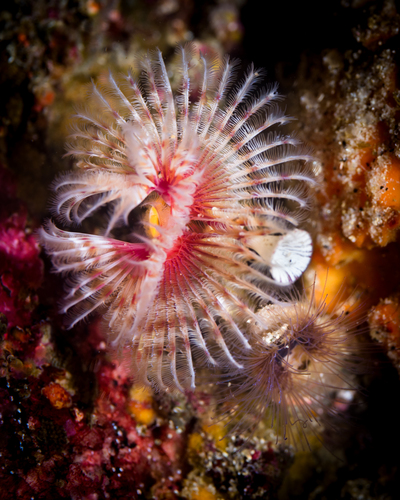
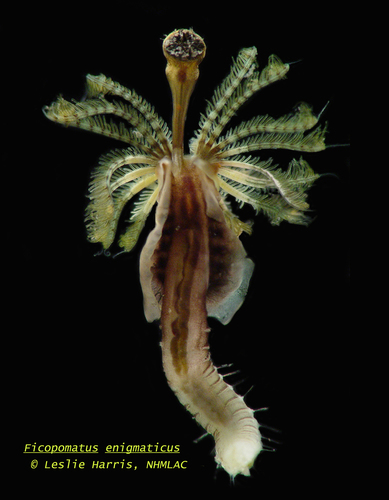
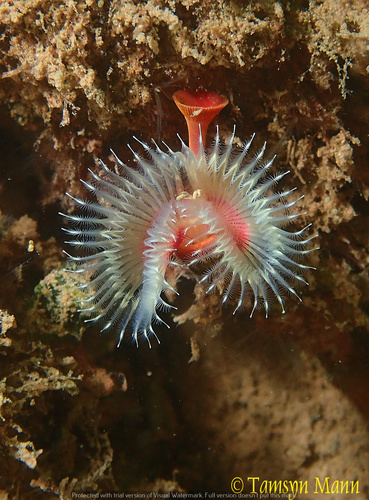
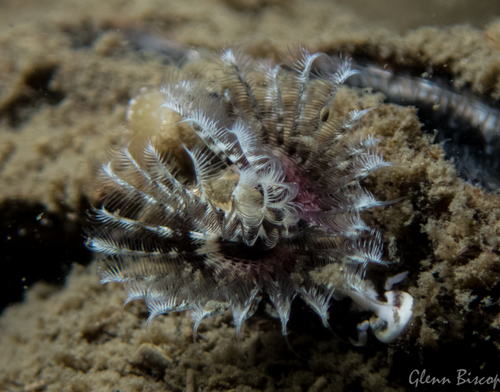
Spirobranchus triqueter (Linnaeus, 1758) is a serpulid worm that secretes a white, smooth calcareous tube. The tube measures approximately 3 millimetres wide, and can reach up to 25 millimetres in length. It is typically curved, with a single ridge running down the middle that ends in a projection overhanging the tube’s anterior opening. The worm’s operculum bears a shallow, dish-shaped plug. Its body is brightly coloured, and its crown of radioles is banded in multiple different colours. Both the body and the radiolar crown can be fully withdrawn into the protective calcareous tube. This species is closely related to Spirobranchus lamarcki, and the two are often confused with one another. This species is distributed across the Arctic, the eastern North Atlantic, the Mediterranean Sea, Adriatic Sea, Black Sea and Red Sea, the English Channel, the North Sea, Skagerrak, Kattegat, the Little and Great Belts, and Øresund, extending northeast to the Bay of Kiel.