About Spilostethus hospes (Fabricius, 1794)
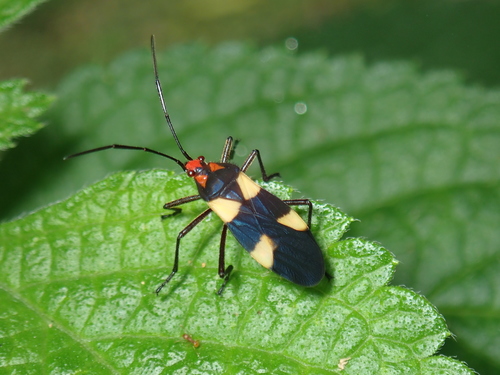
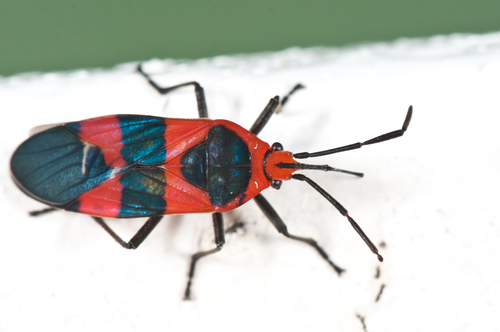
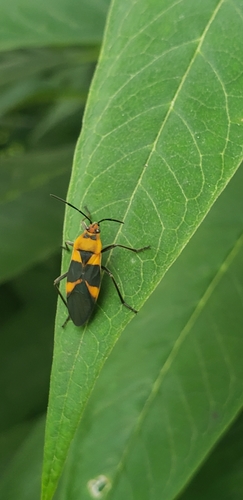
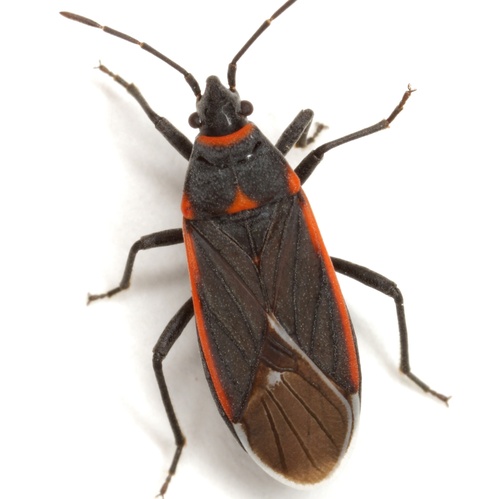
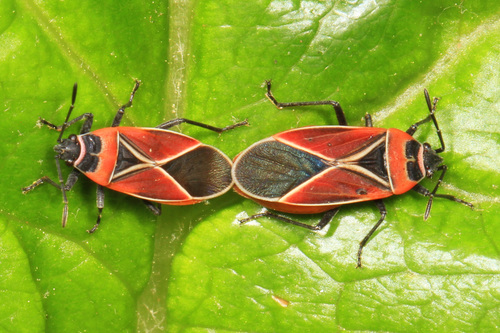
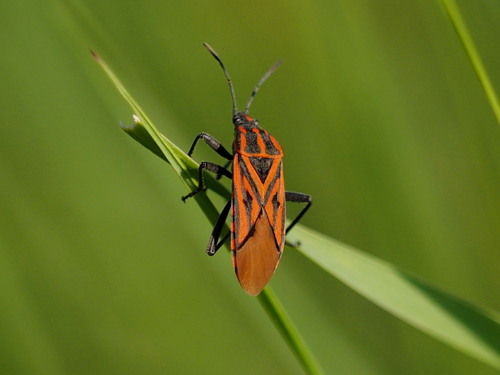
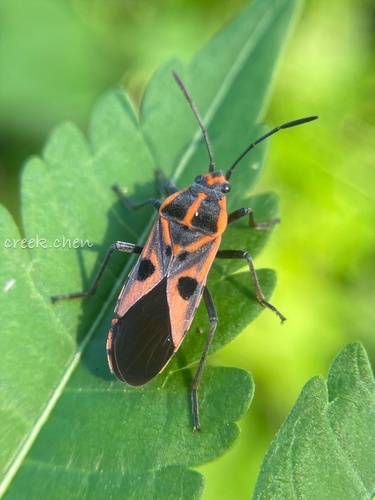
The Darth Maul Bug, scientifically named Spilostethus hospes (Fabricius, 1794), has red and black patterns on its back that act as a warning of its toxicity to potential predators. The patterns vary considerably between individual bugs. Fully mature Darth Maul Bugs reach a length of 11 to 13 millimeters. The distribution of the Darth Maul Bug is shown in the map to the right, sourced from iNaturalist data. It typically occurs in climates similar to tropical rainforests, and is commonly found feeding on plants across a range of habitats, including forests, fields, open plains, and shrublands. The conservation status of this species has not been determined. The Darth Maul Bug feeds on multiple plant organs: leaves, stems, fruits, and seeds. In Australia, it is often observed feeding on the Red-headed Cotton Bush (Asclepias currasavica), Caustic Vine (Sarcostemma viminale), and Swan Plant (Asclepias fruiticosa and Asclepias physocarpa). An image of a Caustic Vine growing in Sturt National Park is visible to the right of this page. Feeding by the Darth Maul Bug reduces the vitality and productivity of its host plant, which can result in stunted growth, wilting, and potentially lower yield for the plant. Darth Maul Bugs communicate with other members of their species through vibrations that travel through plant stems and leaves, a behavior that cannot be seen with the naked eye. To date, only one population of Spilostethus hospes has been found to host a male-killing endosymbiotic bacterium. This bacterium only kills males within this population, which may explain the higher frequency of females observed in the group.