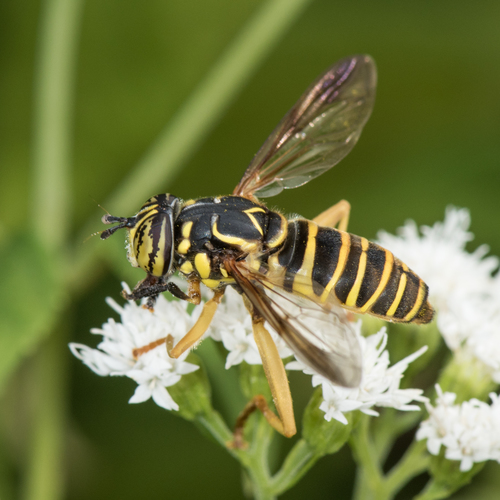
About Spilomyia longicornis Loew, 1872
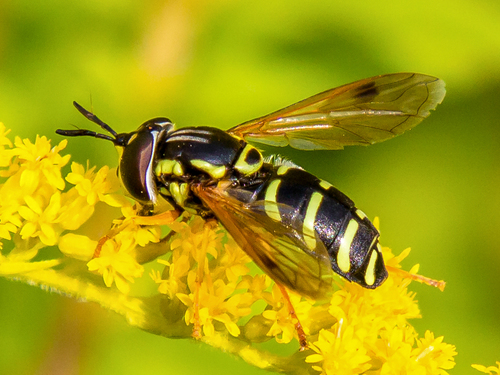
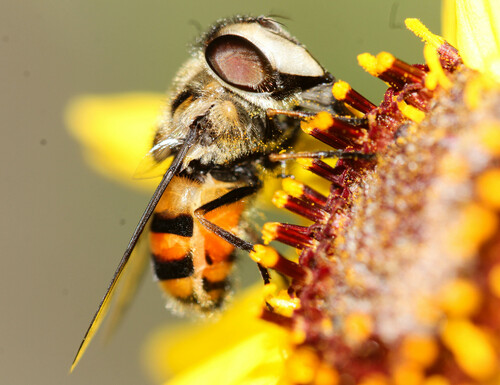
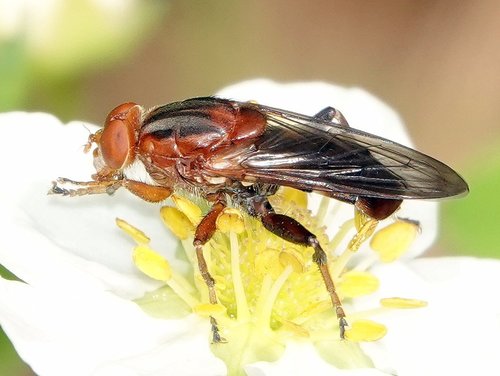
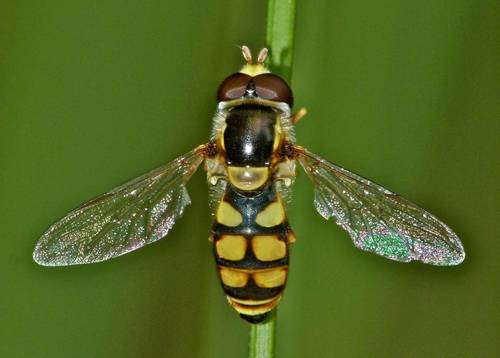
Spilomyia longicornis Loew, 1872 is typically 11–15 millimeters long. This species has a black body with yellow markings and stripes on its abdomen. Its wings are mostly clear with a dark tinge, and the anterior portion of the wings is typically darker brown. The four back legs are yellowish in colour, while the two front legs are yellow at the base and black at the ends. S. longicornis tends to rest on its four back legs and move its two front legs above its head, making them look like the antennae of the Hymenoptera species this fly mimics. This species is widespread in eastern North America. Adult flies can be found near flowers that produce pollen and nectar, which they feed on, and rotting trees are an important component of their habitat. Larvae of Spilomyia longicornis are typically found and develop in rot holes, or rotting cavities, in live trees. Rot holes can form on almost all types of trees, though they are more common on some tree types than others. These rot holes provide larvae with both a food source and protection, so the damp environments they create are ideal for larval development. Adult S. longicornis are most often found hovering over flowers that produce large amounts of pollen and nectar, which is the adult food source.