About Sphyraena borealis DeKay, 1842
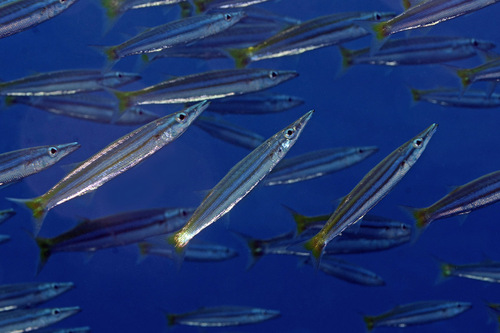
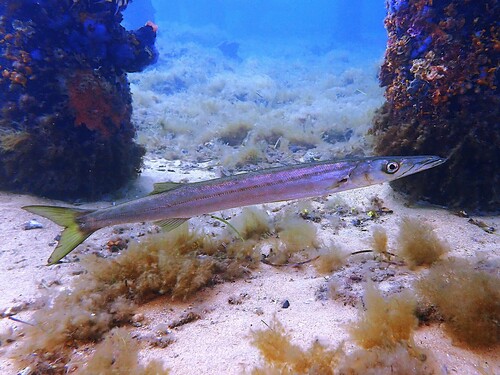
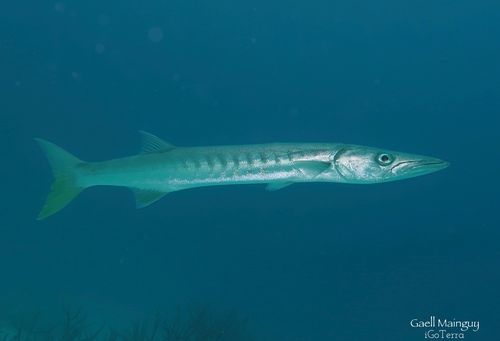
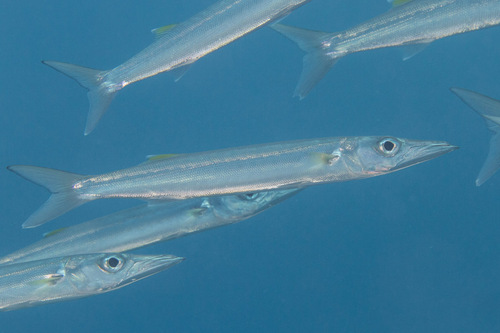
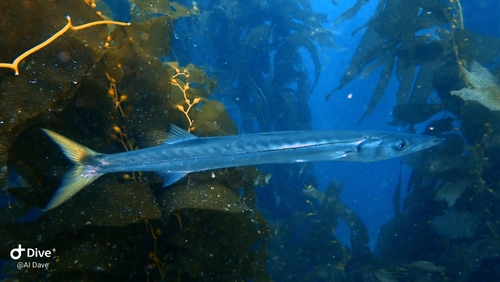
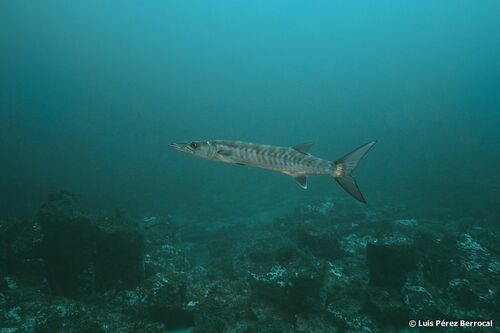
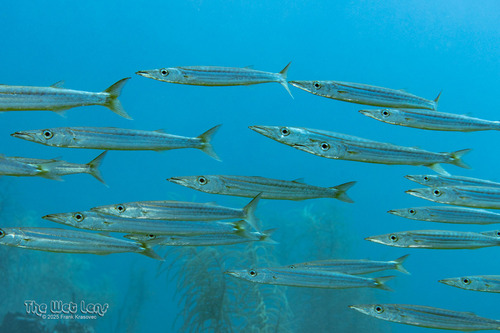
Like other members of the family Sphyraenidae, the northern sennet (Sphyraena borealis) has an elongated body, a pike-like head, and large jaws. The lower jaw protrudes slightly past the upper jaw, and both jaws hold fang-like teeth. Two dorsal fins sit widely separated along the fish's back; the anterior dorsal fin usually has spines, while the posterior dorsal fin only has rays. Northern sennet have 24 vertebrae. In total, their dorsal fins have five or six spines and nine rays. Their anal fins have only two spines and between 7 and 9 rays. Northern sennet can grow up to 46 cm in length, and are generally considered the smallest barracuda species. Many adults reach less than 1 ft (0.3 m) in length, and the greatest recorded weight for the species is only 0.93 kg. The dorsal side of a northern sennet is olive-colored, while the ventral side is silvery-white. Several dusky blotches run along the fish's lateral lines. Northern sennet are found exclusively in the western Atlantic Ocean. They normally occur in subtropical climates between 43°N and 18°N latitudes, and their range extends from Canada and Massachusetts to southern Florida, the Gulf of Mexico (where they are generally associated with reefs), and the eastern coast of Panama.