About Sphoeroides maculatus (Bloch & Schneider, 1801)
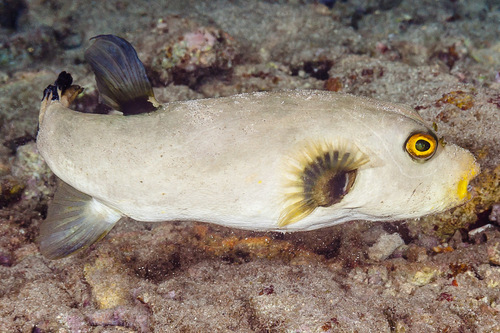
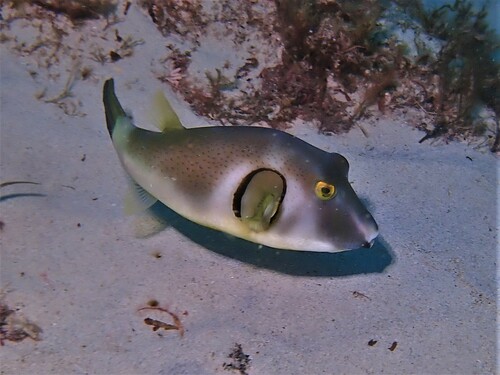
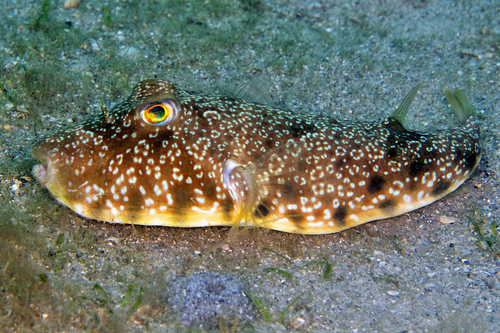
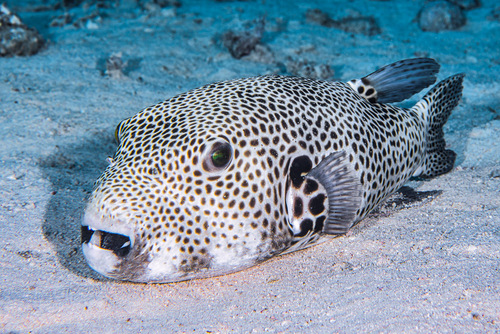
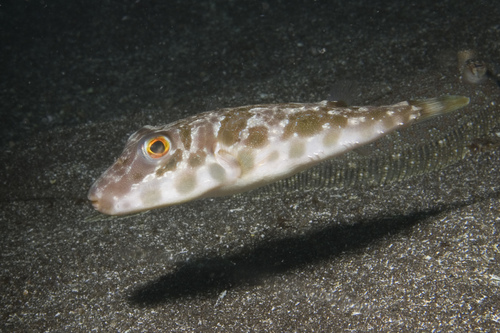
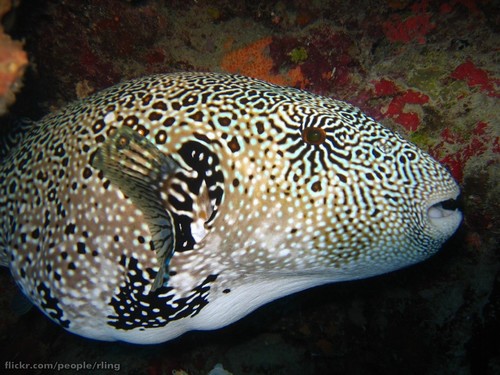
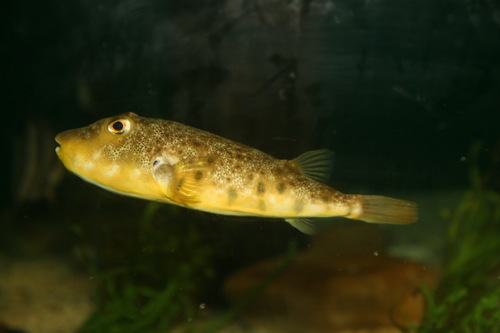
The northern puffer, Sphoeroides maculatus, has a club-like body shape. The entire body of adult individuals is covered in small spines, and the species has a tiny, beak-shaped mouth. This puffer is characterized by vertical stripes; its dorsal surface ranges from gray to brown, while its belly is yellow to white. Tiny jet-black pepper spots, roughly 1 mm in diameter, are scattered across most of its pigmented body surface, and are especially noticeable on the cheeks. A row of black, elongated, bar-shaped markings runs along the lower sides of its body. It has a small dorsal fin positioned far back on the body, close to the tail. Like other members of the puffer family, Sphoeroides maculatus puffs up into a ball as a self-defense behavior by inhaling water into a specialized chamber near its stomach. If removed from water, it will puff up using air instead. The northern puffer can grow up to 36 cm (1 ft 2 in) in total length, though most individuals reach around 20 cm (8 in). The northern puffer lives in bays, estuaries, and protected coastal waters at depths between 10 and 183 m (33–600 ft) in the northwest Atlantic. Its distribution ranges from Florida in the United States to Newfoundland in Canada. Northern puffers spawn between May and August, laying eggs in shallow water over sandy or muddy substrates. Males defend the adhesive eggs until they hatch.