About Sphenophorus interstitialis (Say, 1831)
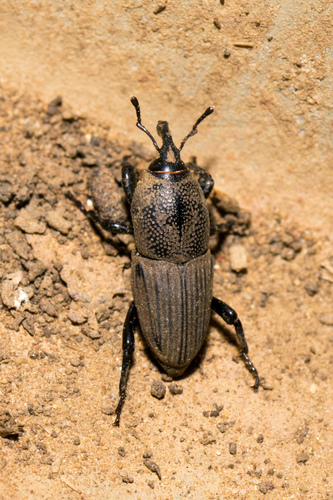
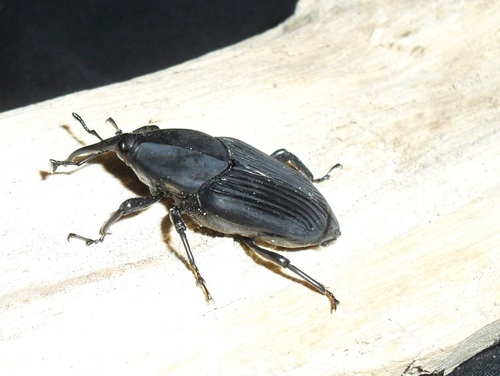
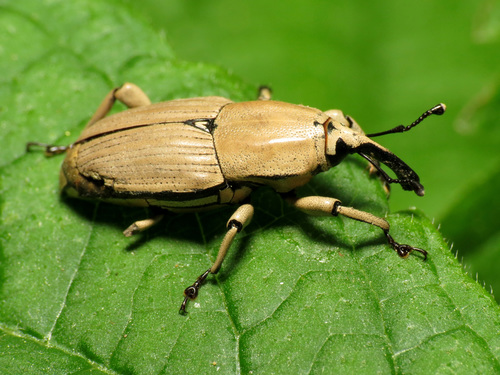
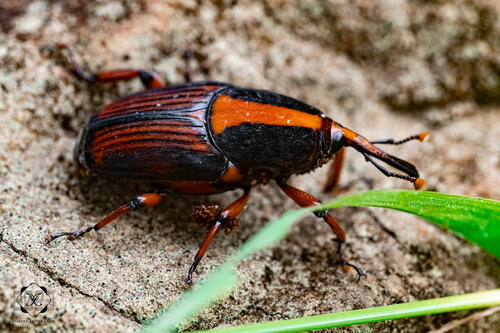
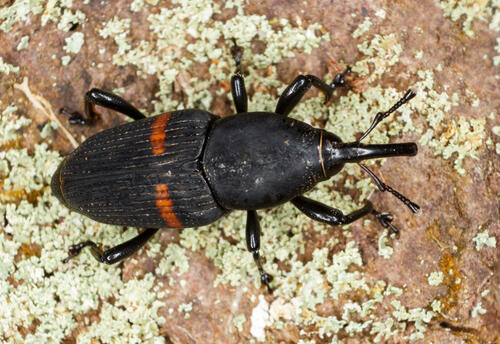
The bluegrass billbug, Sphenophorus interstitialis, has adults measuring around 0.25 inches (0.6 cm) in total length. One third of this length is made up by its long, downward-curving snout, also called a proboscis. Deep puncture marks mark the surface of its thorax, and its elytra have distinct longitudinal grooves. These billbugs typically appear in shades of brown, grey, or black. This species is native to North America. Its range stretches from Ontario and Nova Scotia in the north, south to Idaho, New Mexico, and Florida. It is most abundant across the eastern portion of its range. It occurs in grassland habitats, including residential lawns, and is particularly associated with Kentucky bluegrass. It is also found growing alongside corn and other grain crops. Adult bluegrass billbugs feed on seedlings and tender young shoots of many types of grasses. They rarely fly, and instead prefer to move by scrambling among crop plants. While Kentucky bluegrass is its most preferred host plant, the species will also feed on timothy-grass, redtop grass, maize, wheat, and other small grain crops. Feeding from this beetle leaves a distinct characteristic pattern: a row of identical small holes across an unfolding leaf blade. Breeding occurs in late spring, and the species produces only one generation per year. The female chews a hole into the stem of a grass plant and lays a single egg inside the opening. The developing larva is white and legless; it hollows out the interior of the grass stem and feeds around the plant’s root crown. Infested plants often wilt, and can become distorted, weakened, or even killed by the feeding activity of both adults and larvae. Once the larva is fully developed, it pupates either inside the grass stem or in the surrounding soil. The species overwinters either as a fully developed adult, or as a pre-emergent adult still inside its pupal case. Over a period of one to three months, an adult female can lay between 40 and 200 eggs total.