About Sphenophorus brunnipennis (E.F.Germar, 1823)
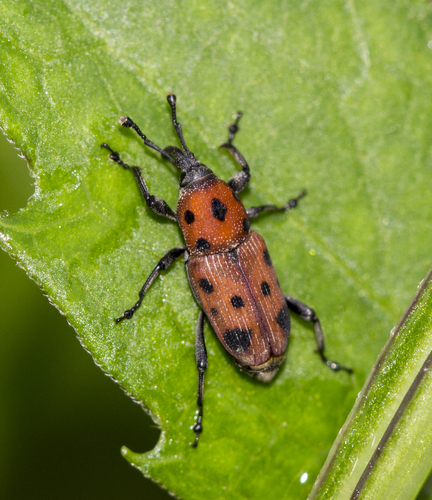
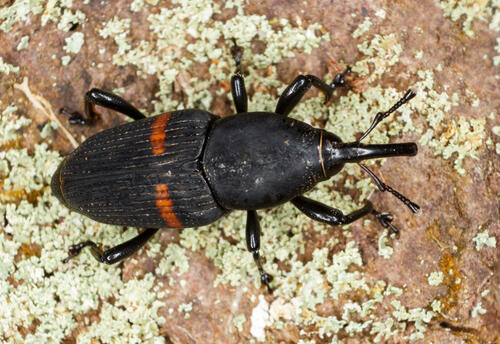
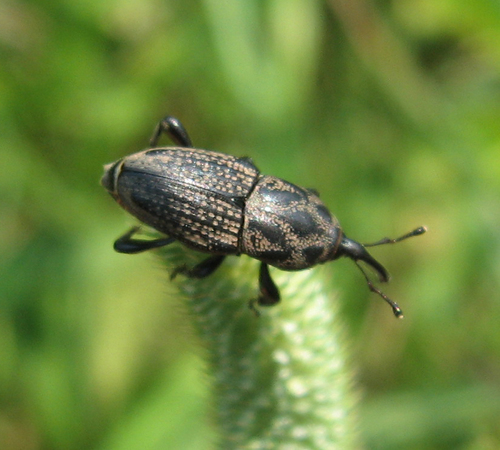
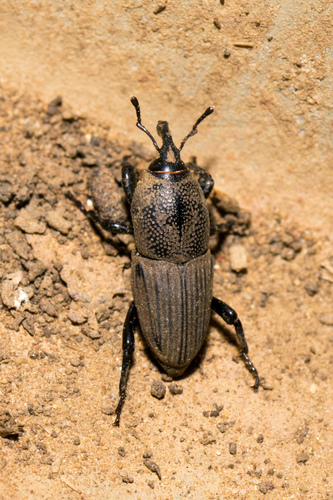
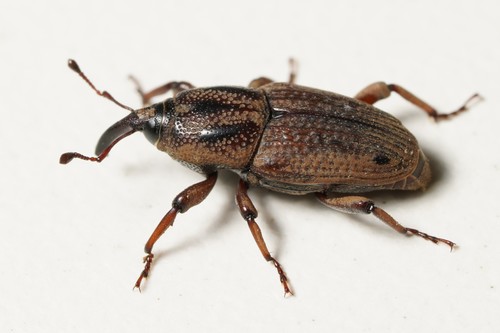
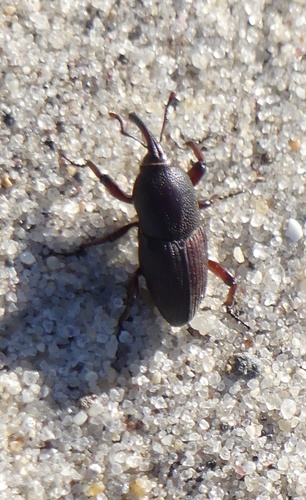
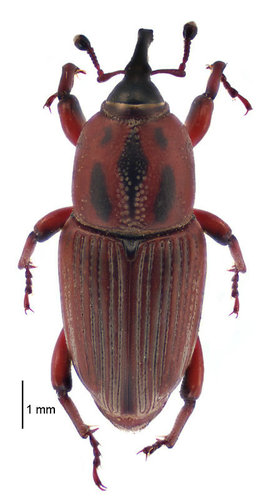
Sphenophorus brunnipennis belongs to the brunipennis species group within the genus Sphenophorus. Members of this species group differ from most other Sphenophorus species groups by having an almost entirely glabrous body surface, meaning it is smooth and lacks hairs. Adult Sphenophorus brunnipennis measure between 7 and 9 mm in length. Like most weevils, they have a rostrum, or snout, that is shorter than the pronotum, curved, and laterally compressed. The pronotum may be entirely black, or red with three black stripes that sometimes merge at the front to form an M shape. The elytral intervals can also be either red or black. The pygidium has hairs within its punctures, but these hairs are generally hidden by encrustation. The sexes can be distinguished by the shape of the pygidium apex: it is truncate in males and more rounded in females. Additionally, the ventral surface of males is depressed or concave. Larvae of S. brunnipennis reach a maximum length of 9 mm, and are creamy-white in colour. Their abdomen is distinctly expanded from the fourth through to the sixth segments. In terms of ecology, adult S. brunnipennis feed on grass stems. They do this by inserting their rostrum into the grass stem and walking backwards, which leaves a longitudinal slit behind them. Larvae feed on the roots of sedges and grasses. S. brunnipennis individuals have been found in the stomachs of toads of the genus Bufo, which indicates that these toads prey on the species.