About Sphenomorphus dussumieri (Duméril & Bibron, 1839)
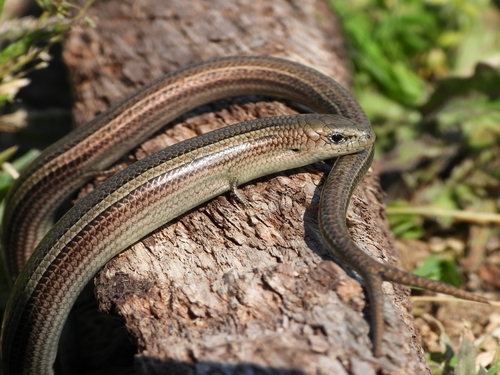
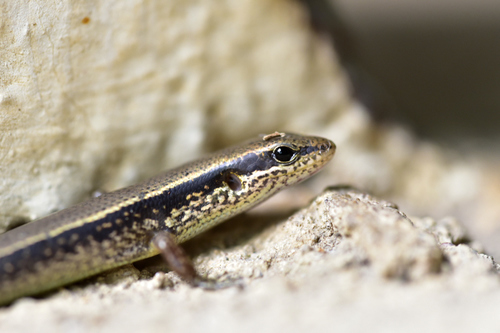
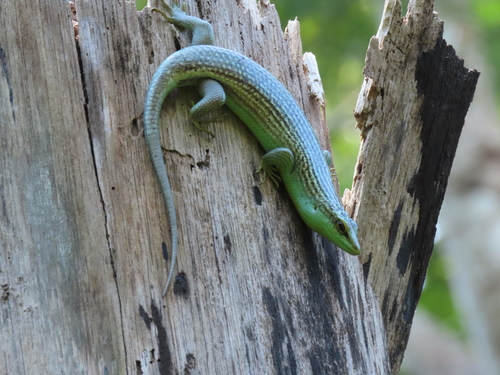
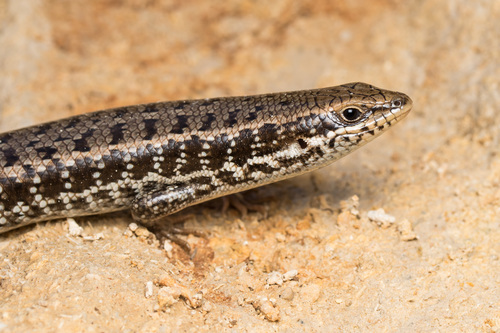
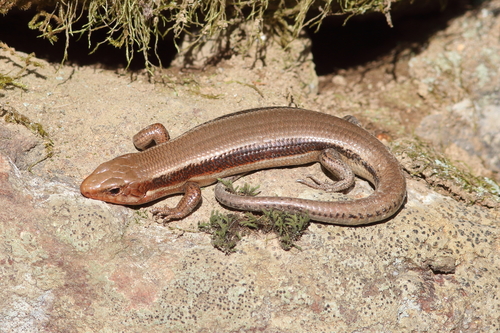
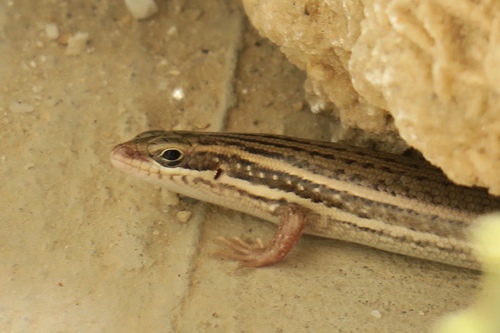
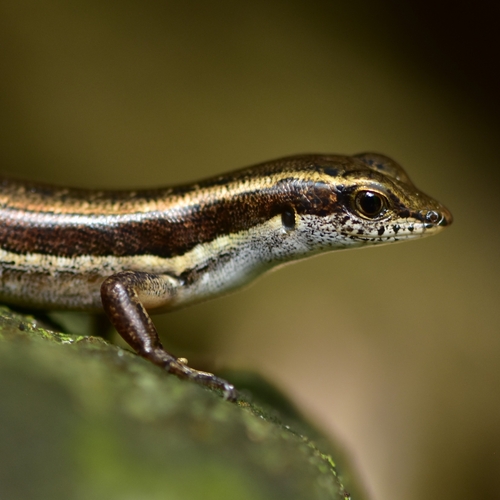
Sphenomorphus dussumieri, also known as Dussumier's forest skink, can be identified by the following physical traits. Its head is distinct from the neck, and it has a short snout. Unlike many other skinks, its tympanum sits on the surface rather than being sunken. It has a slender body, with smooth dorsal scales marked by fine striations, and relatively short limbs. The dorsal surface of this skink is bronze brown and covered with dark spots. A light dorso-lateral stripe runs from the eye along the side of the body, and the inner edge of this stripe features a dark brown streak dotted with white spots. It also has a broad stripe along the sides, which is edged with white along its lower margin. The ventral surface of the skink is creamy in color.
This species is geographically restricted to the Western Ghats of India, where it occurs in the Indian states of Kerala and Tamil Nadu.
Ecologically, Sphenomorphus dussumieri is a diurnal skink. It inhabits evergreen forests, moist deciduous forests, and plantation forests including rubber plantations, and can be found in both closed and open forest habitats. It occurs at altitudes ranging from 15 to 500 meters, or 49 to 1,640 feet.