About Spheniscus magellanicus (J.R.Forster, 1781)
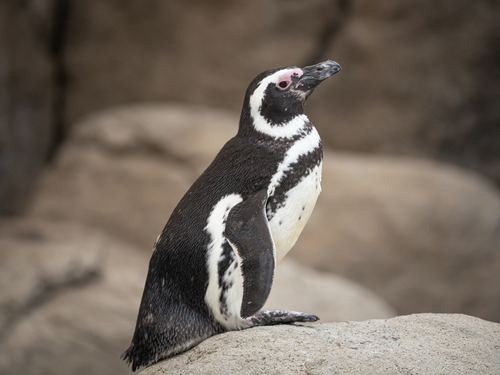
Magellanic penguin (scientific name: Spheniscus magellanicus (J.R.Forster, 1781)) is a medium-sized penguin species. Adults reach 61–76 cm (24–30 in) in height and weigh between 2.7 and 6.5 kg (6.0 and 14.3 lb). Males are larger than females, and individuals of both sexes lose weight while raising their young. Adult Magellanic penguins have black backs and white abdomens. Two black bands run between the head and the breast, with the lower band shaped like an inverted horseshoe. Their head is black with a broad white border that extends from behind the eye, around the black ear-coverts and chin, and joins together at the throat. Chicks and younger penguins have grey-blue backs and a more faded grey-blue color on their chest. In the wild, Magellanic penguins can live up to 25 years, and they can live as long as 30 years in captivity. One male individual named Captain Eo, housed at the San Francisco Zoo, died in 2022 at the age of 40. Young birds typically have a blotched pattern on their feet that fades as they mature into adulthood. By the time these penguins reach around ten years of age, their feet usually turn entirely black. Like other penguin species, the Magellanic penguin has rigid wings that it uses to swim underwater.