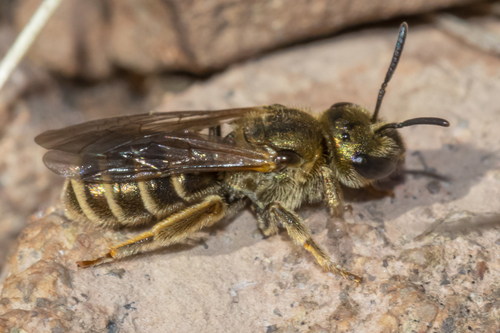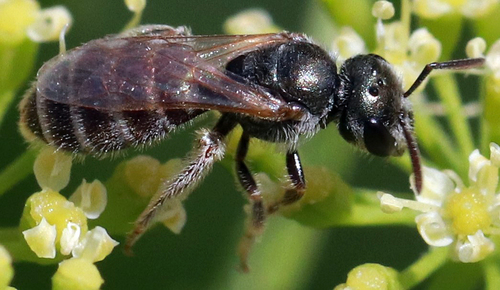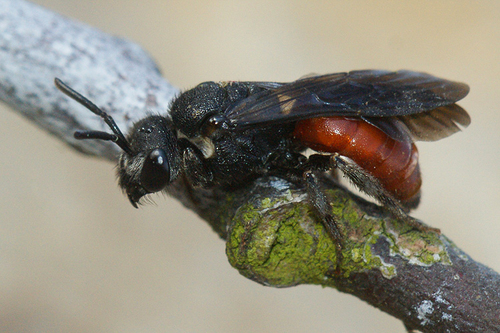
About Sphecodes albilabris (Fabricius, 1793)
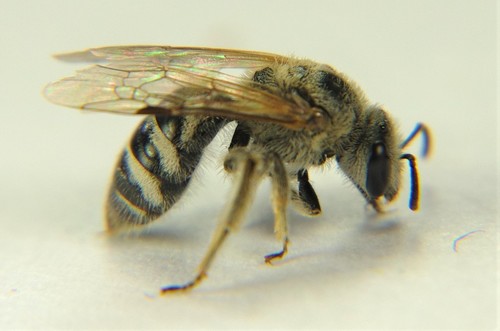
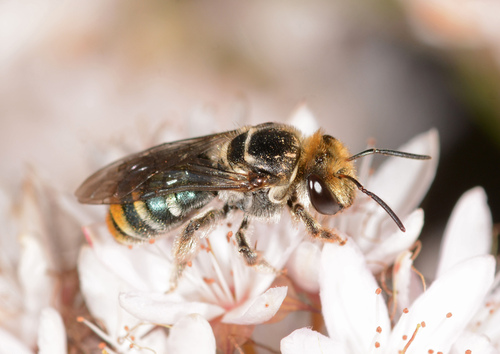
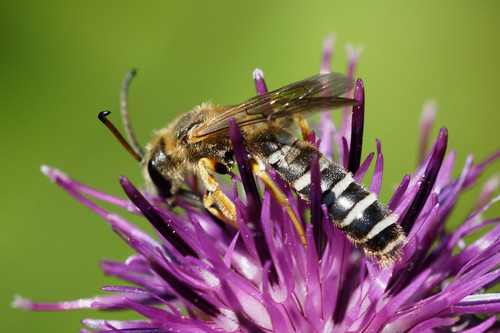
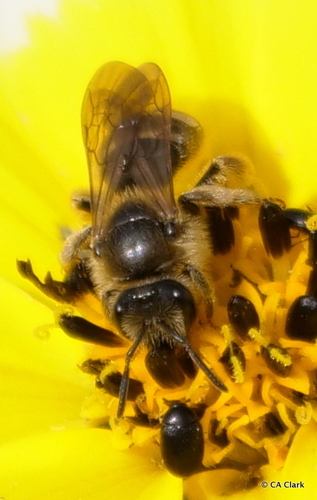
Sphecodes albilabris (Fabricius, 1793) is a bee species with a body length ranging from 11 to 14 mm. This species has a transpalaearctic distribution. It is found across North Africa, from Morocco to Egypt. In Eurasia, its range extends from Portugal through Europe, Asia Minor, the Levant, Caucasus, Central Asia and Siberia, all the way to the Pacific coast of the Far East, and reaches the oriental fauna region in northwest India (Uttar Pradesh). To the north, it occurs up to 60°N in Norway (Hønefoss), 62.5°N in Sweden (Västernorrland), 63.5°N in Finland (North Karelia), and in Russia extends to Karelia and Kirov. To the south, it reaches Sicily, Crete, Cyprus and Israel. The subspecies Sphecodes albilabris rubripes SPINOLA, 1838 is distributed in North Africa, the Levant, Iberia (including the Balearic Islands), Sardinia and Cyprus. This species inhabits inland dunes, drifting sand fields, sand pits, grasslands, and flood dams, occurring mainly in sand areas and also in loess areas. It can be found from lowland regions up to montane elevations. Adult bees of this species fly from March to October. Female flight activity occurs from March to August, while male flight activity occurs from July to October. The larvae of Sphecodes albilabris are parasites of Colletes cunicularius. This species has also been observed nesting in the nests of Halictus sexcinctus, Halictus quadricinctus and Melitturga clavicornis.