About Spheciospongia vesparium (Lamarck, 1815)
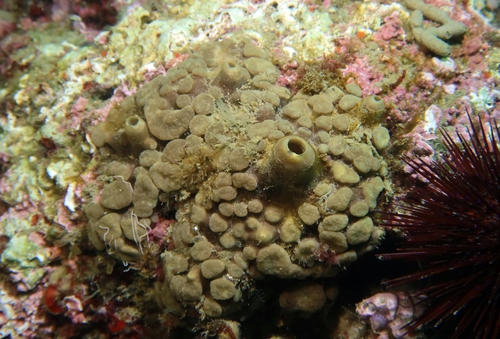
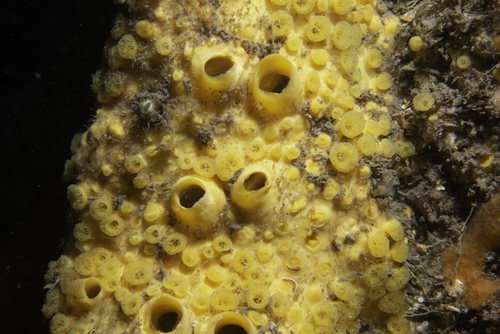
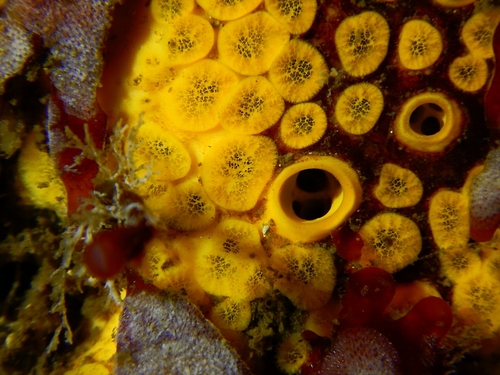
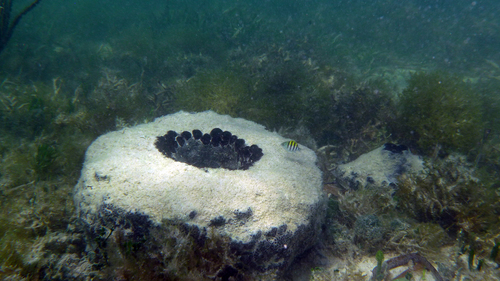
Spheciospongia vesparium is a massive sponge that takes different forms depending on where it grows. One common shape is barrel-like or cake-like with a flattened top, but it can also be roughly globular or shapeless. Its texture is firm, tough, and dense. The surface is broadly uneven and rough, with a mix of large and small osculi surrounded by clusters of fine pores, each between 1 and 2 mm (0.04 to 0.08 in) in diameter. Both the internal and external parts of the sponge are colored purplish, gray, or brownish-black, and the surface is often partially covered by sediment or growing algae. This sponge is native to the Caribbean Sea, and the coastal waters around the Bahamas and Florida. It grows on patch reefs and in lagoons; when it grows on soft sediment, it typically has a wider and deeper base than it does when growing on rock. It occurs at depths between 5 and 15 m (16 to 49 ft). While this species is toxic to many vertebrates, some fish have been observed feeding on it, a finding confirmed by the presence of sponge fragments in the fish's guts. The fish that feed on it include the queen angelfish (Holacanthus ciliaris), the rock beauty (Holacanthus tricolor), and the French angelfish (Pomacanthus paru). Other predators of this sponge are the polychaete worm Branchiosyllis oculata, the red cushion sea star (Oreaster reticulatus), and the hawksbill sea turtle (Eretmochelys imbricata). The tunnels and cavities inside the sponge provide habitat for a diverse community of invertebrates. As a suspension feeder, this sponge has been found to help control harmful cyanobacteria blooms. In Florida Bay, sites with large numbers of loggerhead sponges had few to no cyanobacteria blooms, while comparable sites with few sponges had persistent, dense blooms.