About Sphagnum teres (Schimp.) Ångstr. ex C.Hartm.
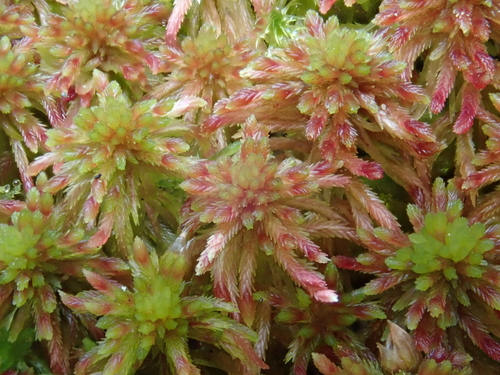
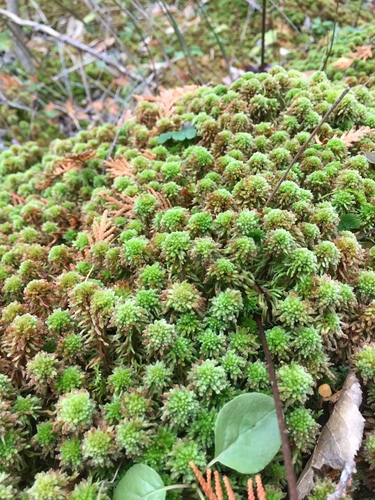
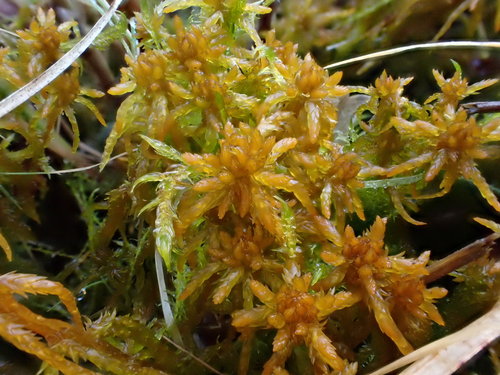
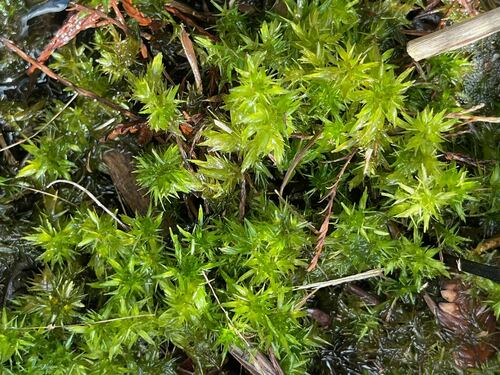
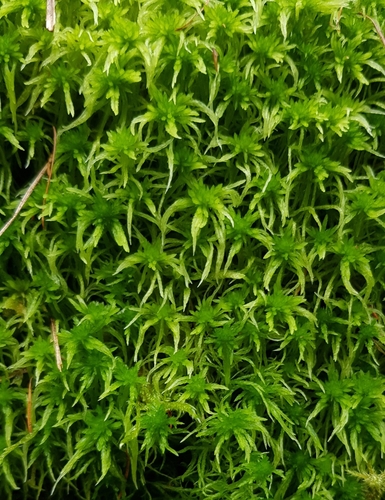
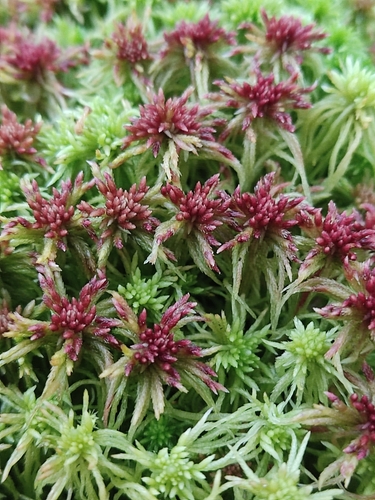
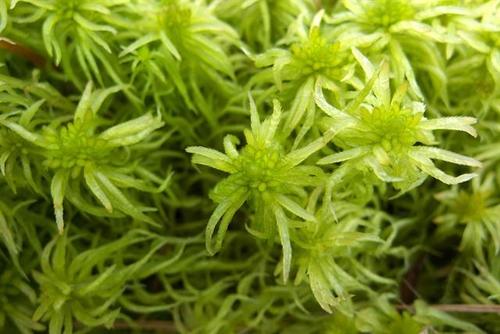
Sphagnum teres (Schimp.) Ångstr. ex C.Hartm. is a medium-sized moss that forms tufts ranging from rather loose to dense. Its color ranges from light green to yellow to reddish-brown, and it most commonly appears yellowish-green; specimens growing in sunny locations tend to be darker brown. This species is widespread across the Northern Hemisphere in polar and temperate zones. In Europe, it is common in the north (the Scandinavian Peninsula) and the east, extending to the Ural Mountains. Its compact European distribution covers areas east and north of eastern France, northern Italy, Austria, Slovakia, and northern Ukraine. In southern Europe, it only occurs in mountainous regions, including the Pyrenees, Alps, Balkan Peninsula mountains, and the Caucasus. In Asia, it grows across northern areas from Siberia to the Kamchatka Peninsula and Japan, and also grows in southern mountainous regions including the Altai Mountains and the Himalayas. It is also distributed across North America, extending south into mountainous areas of Colorado and California. Sphagnum teres has a broad trophic spectrum, and occurs in eutrophic and mesotrophic peatlands, as well as fens. All these habitats are always minerotrophically fed, meaning they are nourished by water that has previously flowed through mineral substrates. The species tolerates a range of moisture levels and shade, but prefers open areas; it rarely grows in thickets or sparse forests, and always occurs in locations that are at least damp or wet. It is frequently found in basophilic soligenous peatlands and moss-rich tundra communities. It is usually found growing alongside other Sphagnum species that prefer higher trophic status habitats: Sphagnum warnstorfii, S. subnitens, S. centrale, S. squarrosum, and S. girgensohnii. Common accompanying vascular plants include common reed, sedges, and rushes. In mountain regions, it can grow at elevations up to 2,400 meters. In Central European plant community classification, Sphagnum teres is characteristic of Caricion lasiocarpae. In 21st-century syntaxonomic classifications, the name Stygio-Caricion limosae Nordhagen 1943 is prioritized, and some communities originally placed in Caricion lasiocarpae are now included in Sphagno-Caricion canescentis Passarge (1964) 1978 and Caricion davallianae Klika 1934. Sphagnum teres gave its name to Sphagnion teretis Succow 1974, which is currently divided into Sphagno warnstorfii-Tomentypnion nitentis Dahl 1957 and Caricion fuscae Koch 1926. Sporophytes of Sphagnum teres form infrequently, and usually mature in late spring and early summer.