About Sphagnum papillosum Lindb.
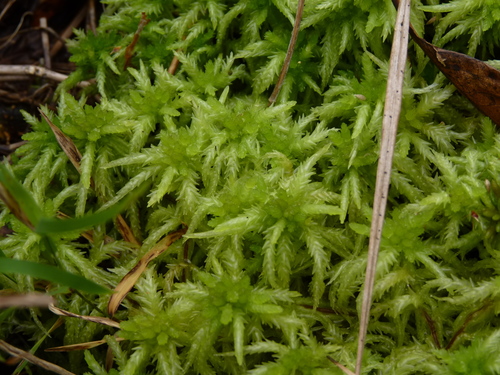
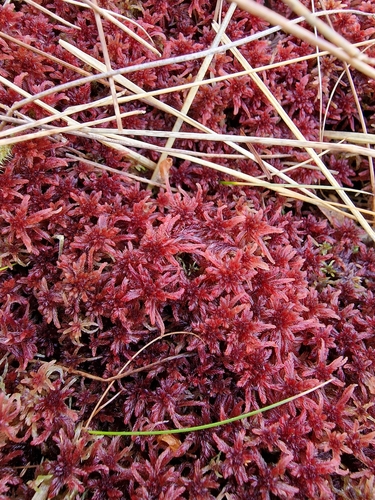
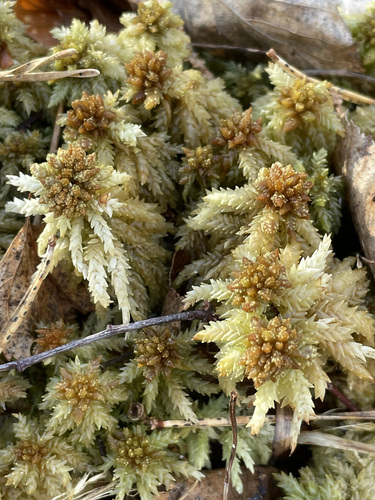
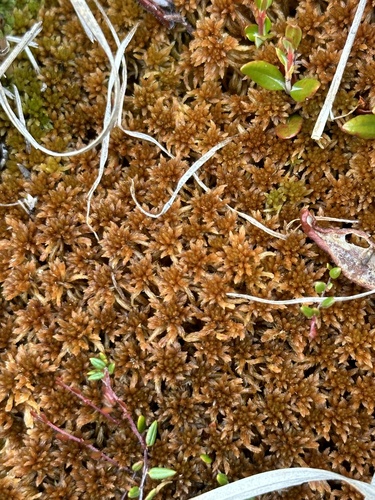
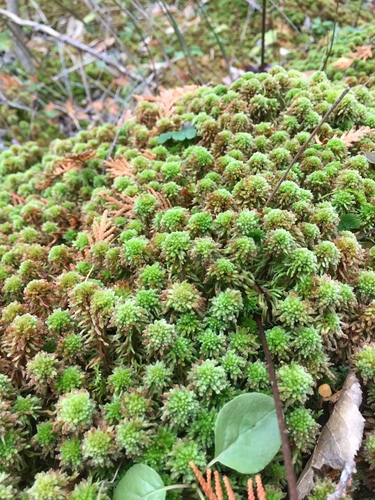
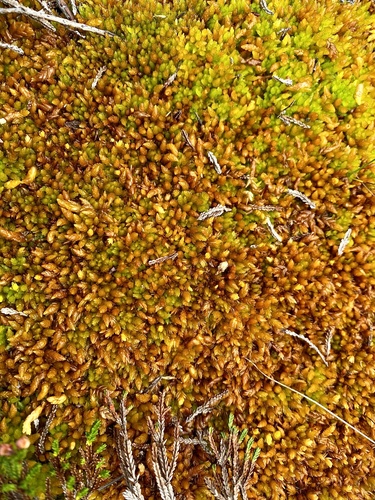
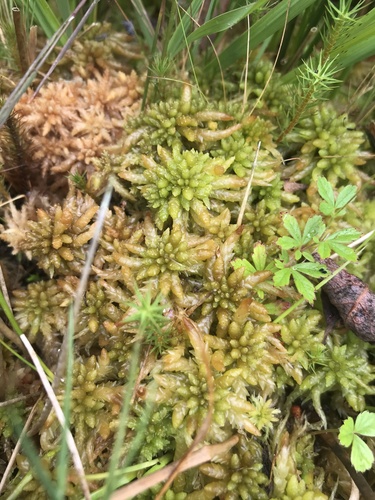
Sphagnum papillosum Lindb. is morphologically distinguished by its robust, golden brown capitulum. It usually bears 4 branches total: 2 short, blunt spreading (divergent) branches, and 2 (sometimes 3) short pendent branches. The central stem cylinder, sometimes called the “wood” of the stem, is most often dark brown to almost black, though it can sometimes be green. Stem leaves measure approximately 1.3 mm long and 0.7 mm wide, and are typically rectangular or spatulate in shape. Their abaxial surface is either resorbed or fringed, while this feature is inconspicuous on the adaxial surface. Branch leaves are spreading, can reach up to 2 mm long and 1 mm wide, and are ovate to broadly ovate in shape, usually strongly concave. The leaves of S. papillosum contain a pectin-like polysaccharide called Sphagnan, along with Sphagnum acid and phenolic compounds. These compounds contribute to the well-documented antimicrobial and preservative properties shared by Sphagnum mosses. S. papillosum is widely distributed across North America, Europe, and Asia. It is especially common in western and northern Europe, and its range extends as far south as the Himalaya mountains. Ecologically, S. papillosum is oligo-mesotrophic. It is most commonly found in shaded, nutrient-poor fen habitats, and also occurs in open, acidic peatlands. It tends to form hummocks and dense carpets. It can also grow at low to mid-elevations near streams, flushes, or transitional mires. Habitats where S. papillosum grows are primarily supplied by precipitation, so nutrients like nitrogen are naturally very low, and water availability depends on rainfall rates. Both of these factors limit the growth and productivity of S. papillosum. Although the species prefers habitats with consistent precipitation, it is relatively tolerant to water stress. Like all other Sphagnum mosses, S. papillosum is sensitive to minerals and nutrients in water, and has been observed to bioaccumulate metals including cadmium, chromium, and zinc in its tissues. Metal concentrations found in S. papillosum directly reflect the metal concentrations of the natural waters it grows in, so the species works as an effective bioindicator of environmental metal concentrations. S. papillosum can reproduce asexually via fragmentation of its stems and branches to establish new individuals. Economically, S. papillosum is a major peat-forming moss, and is dominant in peatlands mined for horticultural use, as peat is a popular growing medium for ornamental plants. An alternative to peat mining is Sphagnum farming, the commercial practice of cultivating and harvesting Sphagnum moss. S. papillosum has been observed to establish well on restored bog grasslands that could be used for this purpose. It also regenerates successfully after cutting when harvesting techniques are tested, so it may serve as a potentially renewable, environmentally friendly alternative to traditional peat mining.