About Sphagnum fimbriatum Wilson
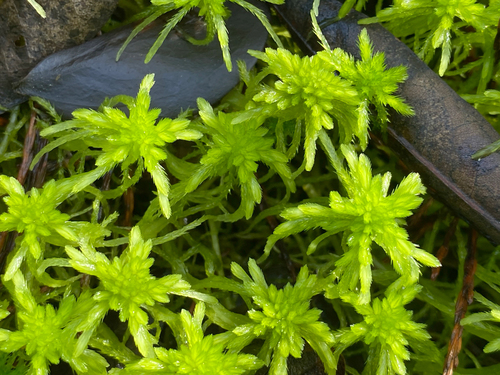
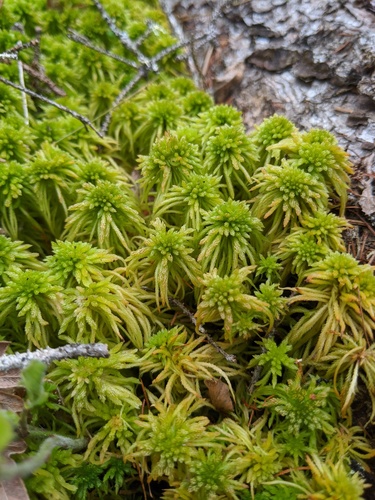
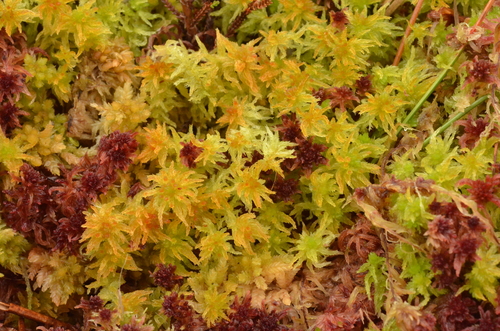
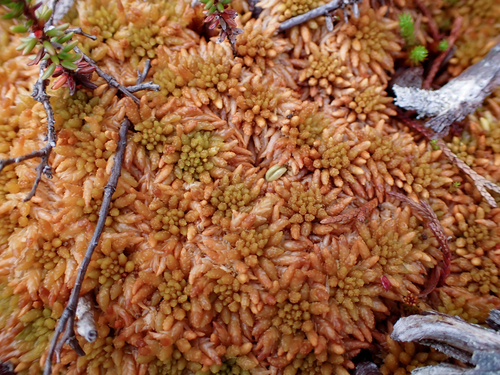
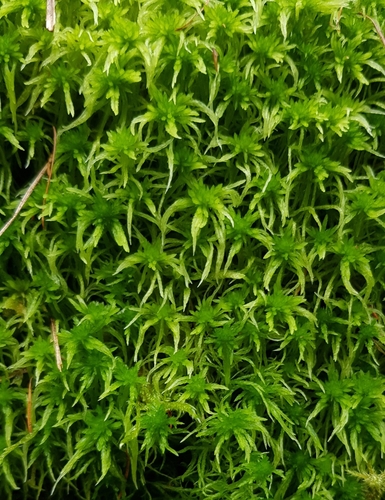
Sphagnum fimbriatum Wilson, commonly known as fringed bog moss, varies in size from small and slender to moderately robust. When dry, it has no metallic lustre, and its overall colour ranges from bright green to yellowish-brown or brown. Individual stems are typically 80–120 mm (3.1–4.7 in) long, reaching roughly 10 cm (4 in) in height at full development, and plants grow notably larger and more compact in Arctic regions. This species has small, distinctive head-like capitula with visible protruding stem buds, and capitula range in colour from bright green to pale yellowish-green. Across its range, S. fimbriatum displays considerable morphological variation; it forms either loose carpets or soft raised mounds (sods) in its habitat. Southern lowland populations are typically more slender, with branch leaves usually less than 1.7 mm long, while northern and montane populations grow as more robust forms. South American (especially Argentinean) specimens are more robust with larger stem leaves than Northern Hemisphere specimens from similar climates, though they remain the same morphological and genetic species. A defining feature of S. fimbriatum is its stem leaves, which grow upright and press closely against the stem to form a leaf sheath. Stem leaves measure 0.8–2.0 mm in length, have a spatula-like shape that is narrowest near the base, with plane leaf margins and a weak border of 2–3 rows of narrow cells limited to the base. The upper portion of each stem leaf has a distinctive fringe-like edge, which is the origin of the specific epithet 'fimbriatum'. The transparent hyaline cells of stem leaves are rhomboid (diamond-shaped), lack the internal strengthening fibrils present in other parts of the plant, and often contain one or two internal septa (dividing walls). All leaves of this species are made of a network of green photosynthetic cells interspersed with larger, transparent cells that break down to create a mesh-like structure. Branch leaves measure 1.1–2.2 mm in length, and are arranged irregularly around branches rather than in distinct rows. Each branch leaf has a lance-like shape with slightly curved edges and an inrolled (involute) apex. The cellular structure of branch leaves has regular patterns of strengthening fibrils and many small pores at cell commissures (where cells meet). These pores follow a distinctive pattern: on the convex leaf surface, pores grade from small near the leaf apex to large at the base, while the concave leaf surface has large round pores at the leaf apex and along the margins. Branch leaf hyaline cells (specialised water storage cells) vary in size: they are smaller near the leaf tip (60–90 by 15–20 μm) and larger towards the base (up to 170 by 30–40 μm). Reproductive structures of S. fimbriatum include lateral perichaetia, which are structures that protect developing sporophytes. These perichaetia have broad, spatulate, concave leaves with a truncated, lacerated apex. When produced, spore capsules are short-cylindrical, about 2 mm long, red-brown, and have a convex operculum (lid). Spores measure 20–27 μm in diameter, are finely papillose on both surfaces, and have a proximal laesura (splitting line) less than half the spore radius in length. Chemical analysis has detected 13 distinct phytochemicals in S. fimbriatum, including caryophyllene, phytol, methyl esters of hexadecanoic and heptadecanoic acids, and various phenol derivatives. Sphagnum fimbriatum most often grows in moderately nutrient-rich (mesotrophic) wetland environments, forming soft raised hummocks or loose carpets in partially shaded conditions. It is particularly characteristic of young, early-successional wetland stages, and is among the first Sphagnum species to colonise new sites. These early successional habitats usually have thin peat layers and fluctuating hydrological conditions, so they are more sensitive to weather variation than established peatlands with thicker peat accumulation. The species shows a strong preference for damp woodland habitats, especially those dominated by willow (Salix) or birch (Betula) trees, and it often grows alongside purple moor-grass (Molinia). It can also grow well in more exposed locations, including grassy stream banks, drainage ditches, lake edges, and nutrient-balanced fenland communities. It is particularly effective at colonising bare soil surfaces, including disturbed habitats, and has a distinct preference for establishing in sites with low phosphate content. While S. fimbriatum commonly grows in pure stands, it may also grow alongside other bog-moss species. Common associates include blunt-leaved bog-moss (Sphagnum palustre), spreading-leaved bog-moss (S. squarrosum), and fine bog-moss (S. angustifolium). In northern regions, it can be found mixed with Lindberg's bog-moss (S. lindbergii) or streamside bog-moss (S. riparium). In some locations such as the Selište peatlands of Serbia, it grows in mixed communities with S. palustre, S. inundatum, S. fallax and S. flexuosum. Sphagnum fimbriatum occurs across temperate regions of the Northern Hemisphere and extends into the Arctic. In the Southern Hemisphere, it grows along the Andes from northern South America to subantarctic regions. It also grows in New Zealand and South Africa, and occurs from sea level to 1,270 m (4,170 ft) in elevation. Among Sphagnum species, only S. magellanicum shares a similar geographical range. In North America, its range extends from the Arctic southward to West Virginia, Ohio, Indiana, Illinois, Iowa, and South Dakota, with western populations present in Colorado, Idaho, and California. It grows most commonly at bog edges with mineral soil and in open to wooded fens with low to medium nutrient levels. In Europe, S. fimbriatum occurs across the continent but is most common in lowland areas. It is present throughout much of Central and Eastern Europe, including Bosnia and Herzegovina, Croatia, Bulgaria, Romania, and Hungary. In Serbia, it was first discovered in 1953 on Mt. Ostrozub, but this record was not confirmed until 2016. It is absent from Macaronesia and many Mediterranean countries. S. fimbriatum has spread to new areas across Europe in recent decades; this spread reflects its pioneer characteristics and reproductive success, patterns also seen in its post-glacial colonisation. In the British Isles, the species is widespread and generally common, though it occurs less frequently in central southern England, north-western Scotland, and western Ireland. In South Africa, the species' distribution suggests a possible historical introduction pathway. While it was initially reported from George in the Cape region, subsequent examination of herbarium specimens showed the species was actually collected from Belfast in the Transvaal region. Its presence may have resulted from early 20th-century European trout introductions, which could have transported spores or plant fragments. Microsatellite studies show regular genetic exchange between S. fimbriatum populations via spore dispersal. This genetic connectivity helps explain how the species has maintained coherence across its extensive global distribution, despite developing local adaptations to different environmental conditions. Genetic patterns suggest S. fimbriatum mostly reproduces via self-fertilisation rather than outcrossing with other plants. This self-fertilisation ability may have helped it spread quickly after the last ice age. This reproductive strategy, combined with effective spore dispersal, helps explain the species' success in colonising new territories despite potential genetic bottlenecks. The same colonisation mechanisms that enabled post-glacial spread support current range expansion in Europe. The species' successful colonisation of new areas in recent decades follows the same pattern as its post-glacial expansion, indicating its recent spread is a natural response to changing environmental conditions rather than a new behaviour. As a pioneer species, S. fimbriatum colonises wetland habitats. It grows in moderately calcareous waters and tolerates pollutants, including heavy metals and chloride salt levels up to 300 milligrammes per litre. It often grows in nutrient-rich (minerotrophic) conditions that are uncommon for Sphagnum species. When grown under forest canopies or in minerotrophic rich fens, it has relatively low productivity compared to other Sphagnum species, which may reflect suboptimal growth conditions such as low light, limited water availability, or high pH in these habitats. Its success as a pioneer appears linked to specific genetic adaptations that improve its colonisation ability, competitive capacity, and vegetative growth, particularly in northern regions. In temperate regions, S. fimbriatum is typically found in the shade of Betula spp. and Salix spp. in fen carr, in flushed zones in woodland, or in the central zone of valley mires, where water pH may range from 6–7 and calcium concentrations reach around 1 milliequivalent per litre. Unlike other Sphagnum species, S. fimbriatum tolerates higher pH and calcium levels, though combined high levels of both significantly reduce its growth. Annual biomass production in this species is typically lower than in many other Sphagnum species, ranging from approximately 50–250 grams of dry mass per square metre per year. This relatively low productivity is characteristic of Sphagnum species that grow in shaded, forested habitats. Plants growing in shade or high water become elongated with less biomass. When submerged, stems become weaker, and capitula often settle and float at the water surface with stems bending below the water. Compared to other Sphagnum species, S. fimbriatum has relatively low desiccation tolerance, and shoots may die after just three days of mild desiccation. This vulnerability reflects its adaptation to young wetland habitats that lack thick peat layers and have variable water conditions. These early-succession sites typically have lower water-holding capacity and are more sensitive to weather fluctuations than established peatlands. A high and stable water level is the most critical factor for S. fimbriatum growth, while nutrient availability has only minor effects on its development. S. fimbriatum grows fastest at 25°C, at three times the rate it grows at 15°C. While the species grows best in bright light conditions, it maintains effective chlorophyll production even in dim light. Unlike many other Sphagnum mosses, which can produce red or brown protective anthocyanin pigments, S. fimbriatum stays bright green because it lacks these protective compounds. After harvesting, new capitula can cover 80% of cleared areas within twelve months. The species' success as a pioneer is supported by several adaptations: high photosynthetic capacity, rapid growth rate (especially during summer months), and relatively quick decomposition compared to other Sphagnum species. However, despite being an effective coloniser, S. fimbriatum is not a strong competitor once established, and can be displaced by other species better adapted to stable conditions in later succession stages. This ecological strategy explains both its historical patterns of post-glacial colonisation and its current distribution patterns. Growth measurements show S. fimbriatum has higher metabolic rates compared to later successional Sphagnum species, though measurements of its photosystem II efficiency indicate it experiences some physiological stress in its variable habitat. These characteristics align with its role as an early coloniser in wetland succession. This moss hosts nitrogen-fixing bacteria called diazotrophs. Most of these bacteria belong to the group Alphaproteobacteria, particularly the order Rhizobiales, while only about 6% are cyanobacteria (blue-green bacteria). Water levels affect nitrogen fixation rates, with submerged plants showing higher rates than emergent plants. Plants growing underwater have much higher rates of nitrogen conversion compared to those growing above water. One study found nitrogen fixation in S. fimbriatum is largely unaffected by the specific composition of its diazotrophic bacterial community, which is predominantly composed of Rhizobiales bacteria within Alphaproteobacteria. Methane availability does not appear to influence nitrogen fixation rates in S. fimbriatum, indicating water level and habitat type are the primary drivers of nitrogen fixation in this species. These bacterial communities vary considerably between different habitats, but maintain similar composition within the same site. In Hungarian peatlands, S. fimbriatum characterises early succession in grey willow wetlands (Salici cinereae–Sphagnetum recurvi). Within this community, S. fimbriatum commonly co-occurs with Sphagnum squarrosum in nutrient-rich areas and contributes to the developing peat layer. As succession progresses, other Sphagnum species such as S. fallax and S. palustre often become more dominant, supporting the gradual formation of bogs in continental climates. Sphagnum fimbriatum reproduces successfully through both sexual and vegetative means, which supports its spread as a pioneer species. It produces more abundant sporophytes than any other Sphagnum species, and regenerates effectively through vegetative growth. S. fimbriatum is monoecious, meaning it bears both male and female reproductive structures on the same plant. In temperate regions, its reproductive cycle follows seasonal patterns: it begins in late summer with the development of male antheridia (reproductive structures) that form in the angles between leaves near branch tips. Female archegonia (reproductive structures) begin developing in September. The protective archegonial bracts (leaves around female structures) are larger than normal branch leaves. Perichaetial leaves, which develop later around the developing spore capsule, have fewer internal strengthening threads in their transparent cells compared to archegonial bracts. These perichaetial leaves surround and protect both archegonia and young sporophytes throughout their development. Mature antheridia have a single-layer jacket around androgonial cells, and grow on stalks that develop before the main antheridial structure. Compared to other Sphagnum species, particularly members of section Squarrosa which may produce up to five archegonia per branch, S. fimbriatum typically produces fewer archegonia per branch. Fertilisation typically occurs in March, after sperm release during the first temperature increases in February. After fertilisation, the developing plant embryo first grows within the protective archegonial venter (base of the female structure) before moving into the tip of the branch. Spore development continues through spring, with distinctive black spore capsules maturing in early July. Mature smooth spores measure 24–27 μm in diameter, and are produced in greater abundance than in other Sphagnum species. The species releases spores via an 'air-gun' mechanism that launches spores 15 cm (5.9 in) high at speeds up to 3.6 m (12 ft) per second (about 8 miles per hour). This mechanism, combined with the spores' slow settling speed, enables effective long-distance wind dispersal. When spores land, they can start growing immediately. They first develop into a flat, single-layer-thick structure called a protonema that produces tiny root-like rhizoids to attach to the growing surface. Usually, a single gametophyte develops from each protonema. Molecular evidence indicates S. fimbriatum predominantly reproduces through self-fertilisation, a strategy that may have aided its rapid post-glacial spread by allowing single spores to establish new populations. Though rarely observed in the field, wind-dispersed spores enable colonisation of distant sites.