About Sphagnum cuspidatum Ehrh. ex Hoffm.
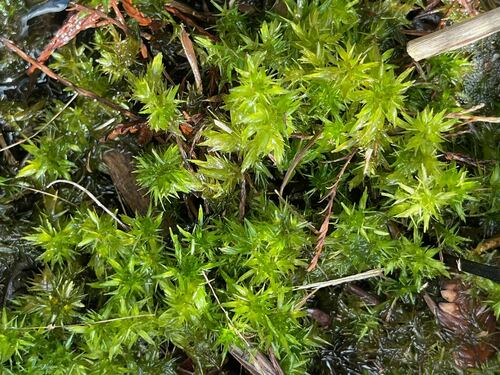
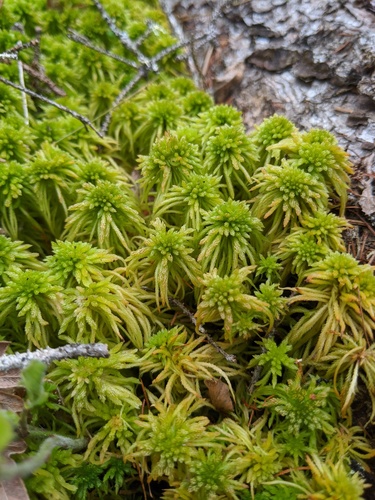
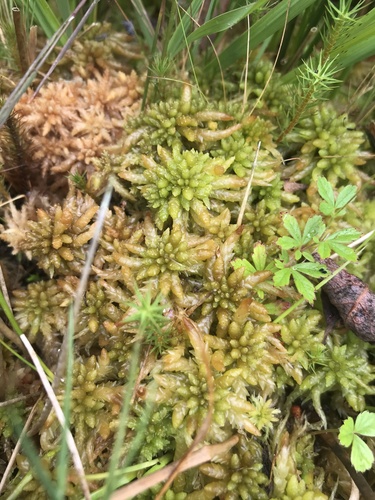
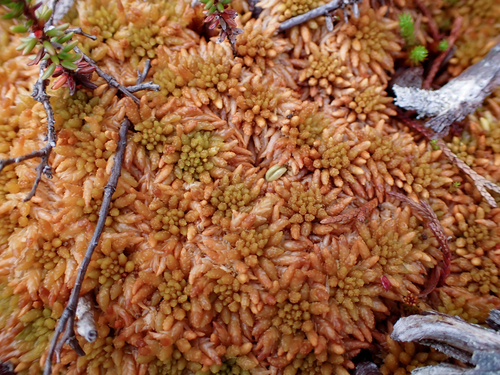
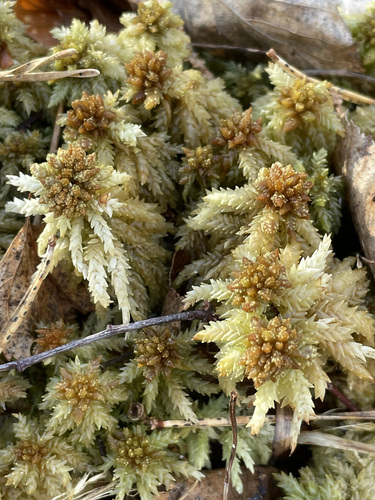
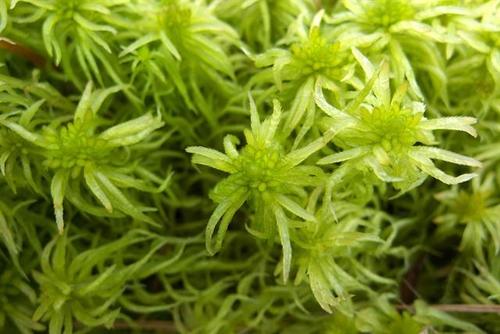
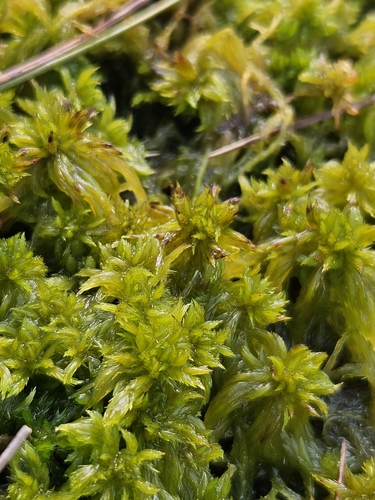
Sphagnum cuspidatum Ehrh. ex Hoffm. ranges in color from brown to greenish brown, with narrow green stems. Individual plants are slender with weak stems, and are moderately sized compared to other peat mosses. Aquatic forms of this moss are flaccid and plumose, giving a feathery appearance, while emergent forms are much more compact. Branches are arranged in clearly visible sickle-shaped patterns, which gives the capitulum a twisted look. Capitula are most often green to yellow, tinged with red-brown. Stem leaves are triangular-ovate, typically slightly longer than 1.2 mm, and often lie very closely packed together. Stem leaves end in sharp points. Meristem tissue is commonly fibrillose. Branch stems are green, with pinkish coloration at their proximal ends, and have an enlarged cortex region. Branch leaves are ovate-lanceolate to lanceolate, ranging between 1.6–5 mm in length. These leaves curve falcate back toward the branch tips. When dry, they are often undulate and recurved. In submerged forms, branch leaves may sometimes have faint serrations. S. cuspidatum is a dioecious species. Its spores are 29–38 μm, covered with large papillae on both surfaces, and are pusticulate (appearing covered in small blisters). S. cuspidatum grows as wet carpets in ombrotrophic to weakly minerotrophic mires. It can sometimes be hard to distinguish from Sphagnum viride, as both species share a similar geographic range and both grow in wet carpets. S. cuspidatum can be told apart by its narrower branch leaves and the distinct red tinge usually found at the base of branches within the capitulum. This moss prefers damp conditions and is relatively hardy in peat bogs. It does not grow well when fully permanently submerged: it cannot produce enough chlorophyll for extensive growth, and natural factors also cause the death of any new shoots it produces. S. cuspidatum is a dominant species in the bogs it inhabits. In wetland habitats, it consumes methane through symbiosis with partly endophytic methanotrophic bacteria, enabling highly effective in situ methane recycling that prevents large-scale methane release into the atmosphere. These bacteria live in the plant's hyaline cells. Sphagnum moss can sometimes be infected by another type of fungus that causes sporotrichosis. This fungus can enter the body through skin cuts or scrapes, and causes ulcerous skin lesions. It is therefore recommended to wear gloves and long sleeves when handling sphagnum moss, and to avoid contact between the moss and broken or cut skin. Like most Sphagnum species, this moss has mild antiseptic properties. It is highly absorbent and acidic, creating an environment unsuitable for bacterial growth. Up through World War I, these mosses were used to pack battlefield wounds to prevent infection. Sphagnum is also used to decorate hanging baskets, as a packing material in shipping, and in some parts of Africa it is used to pad cushions and mattresses. Because the moss can hold many times its own weight in water, it works well as a potting material for new plants by providing consistent moisture. It can also be combined with decaying organic matter to make an effective medium for germinating seeds. Some Sphagnum moss species in general have been used as a fuel source in temperate climates. Sphagnum moss has also been used as a "green" alternative for water purification in public swimming pools; it inhibits bacterial growth and greatly reduces the amount of chlorine needed to keep water sanitary.