About Sphaerium corneum (Linnaeus, 1758)
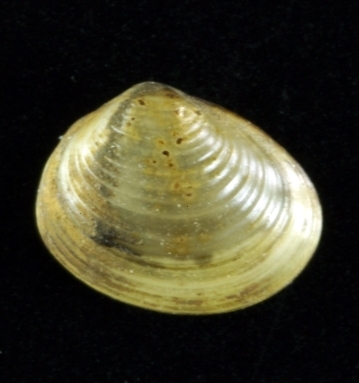
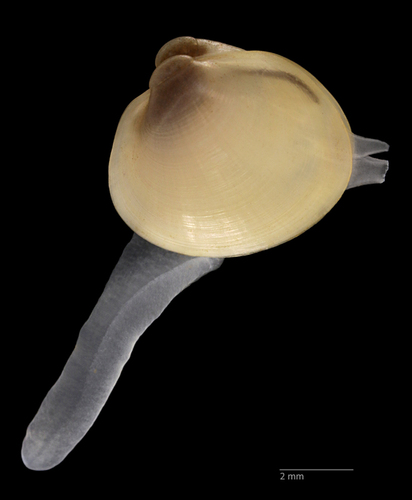
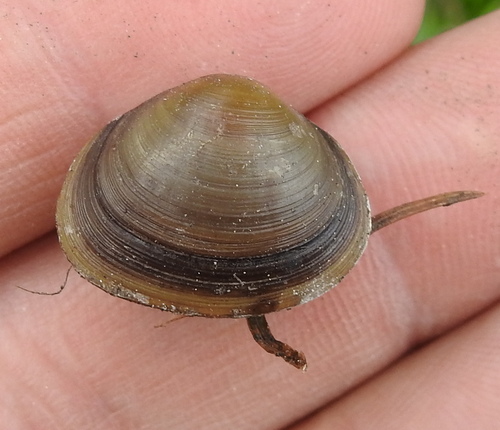
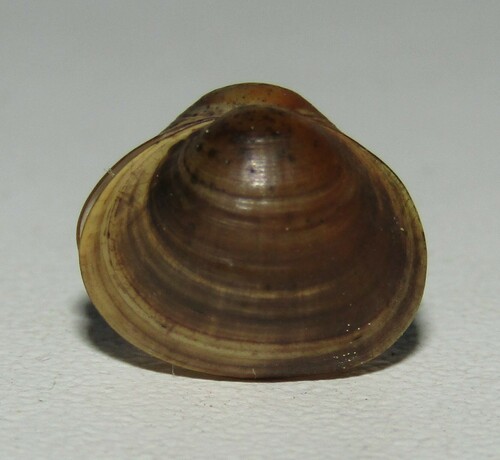
Sphaerium corneum, first described by Linnaeus in 1758, has a fairly globular shell that reaches 9–13.5 mm in adult size. The shell is typically brown to gray, while juvenile individuals have yellow shells. The shell surface features striae, which are thin parallel rows of elevated lines. This species is native to the Palearctic realm. Confirmed regional occurrences include Bohemia and Moravia in the Czech Republic, where it holds a least concern (LC) conservation status; all regions of Finland; most of Germany (where it is common, but listed as endangered, or gefährdet, in Thuringia); lowland areas of Norway; all regions of Sweden; and the Netherlands. It is a nonindigenous species in the United States, and has been recorded in many other countries. Per Kuiper et al., the species does not occur in the Faroes or Iceland. It lives in freshwater, specifically standing water and slow-running rivers. These small clams occupy shallow, slow-moving freshwater habitats including lakes, rivers, and creeks. Like most bivalves, Sphaerium corneum is primarily a filter feeder, and therefore prefers more eutrophic waters that offer a larger food supply. This species has a unique ability to climb plants and structures in its habitat to reach more optimal feeding locations. It can also engage in deposit feeding during periods of low current or low food availability. It prefers habitats with slow current (within lotic ecosystems), which deliver a steady supply of food. Its primary food sources are diatoms and other phytoplankton. S. corneum is sensitive to high pollution levels, especially organic pollutants that foul the water and prevent effective feeding. For this reason, it acts as a bioindicator species: its presence generally indicates that water is relatively unpolluted. It is tolerant of anoxic (low-oxygen) locations, and can survive up to 400 days at 0 °C (32 °F) without oxygen, and up to 9 days at 20 °C (68 °F) without oxygen. This tolerance allows it to burrow into low-oxygen sand, mud, gravel, and other inorganic substrates to avoid predation and access new food sources. Anoxic tolerance also helps it survive periods when low water levels cause rapid oxygen depletion. However, the species is sensitive to desiccation (drying out), and cannot survive extended periods without water. These clams can live up to three years, though geographic location strongly influences their survival rates. Individuals in native habitats often reach the full maximum lifespan, while in non-native areas such as the United States, the average lifespan is only 1 to 1.5 years. Individuals are considered sexually mature once they reach 4 mm in shell size; maturity can occur as early as three months in their native habitat.