About Spermophilus major (Pallas, 1778)
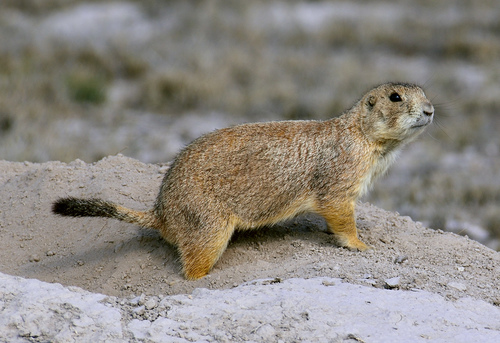
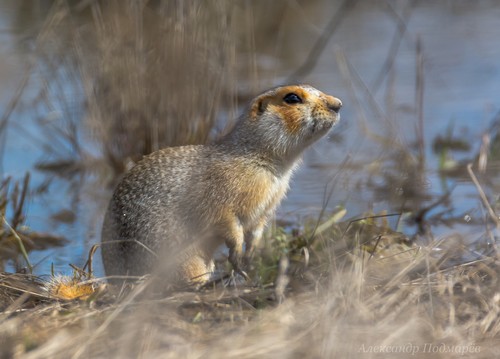
The russet ground squirrel, with the scientific name Spermophilus major (Pallas, 1778), has a stout, low-slung body, short legs, and a thickly furred tail. Its back is dark ochre-brown, marked with bars or mottling of light ochre. The top of the head and the bridge of the nose are silvery-gray, and it has rufous patches on the cheeks and above the eyes. The underside of the tail is reddish, and the tail tip is pale. Adults reach a maximum body length of 340 millimetres (13 in), a maximum tail length of 105 millimetres (4.1 in), and weigh approximately 500 grams (1.1 lb). This ground squirrel is native to steppe habitat between the Volga and Irtysh rivers in Russia and northern Kazakhstan, as well as the northwestern part of the Volga Hills west of the Volga River. While there have been reports of it occurring in Xinjiang, these records are most likely misidentifications of the closely similar species Spermophilus brevicauda. The species' range is currently expanding southward and westward, a change thought to be driven by roads and other development that increase the amount of water channels and long grass. The construction of dams in four locations along the Volga has also allowed the squirrels to cross the river; the dams create areas of still water that retain ice cover for longer periods, enabling individuals to move into new areas. It occurs at altitudes up to 600 metres. Russet ground squirrels inhabit plains, sub-mountain steppes, and semi-deserts, and are often found along river valleys, at forest edges, on ravine slopes, along roadsides, in pastures, and on uncultivated land. They dig two types of burrows: permanent burrows that reach about one metre in depth, have a vertical entrance, and have a total passage length of around two metres, and simpler, temporary burrows that are shallower and have slanted entrance passages. This species is active during the day; older individuals are most active in the morning and evening, while young squirrels are active throughout the whole day. Winter hibernation lasts between six and a half and eight and a half months, and the date squirrels emerge from hibernation depends on spring conditions, varying by up to twenty-five days. Their diet is made up of the green parts of plants, roots, bulbs, grass seed, cereals, and other agricultural crops. Reproduction occurs in summer, with gestation lasting approximately 23 days and an average litter size of seven to eight young. The young grow quickly and reach full adult size in two and a half months. Russet ground squirrel populations experience periodic fluctuations, where periods of high population numbers are followed by population lows. During these low periods, single individuals may occupy burrows that were previously home to large colonies. The main factors driving mortality are unusually cold weather during hibernation, late spring arrival, human disturbance, predators, and disease outbreaks.