About Spea hammondii (Baird, 1859)
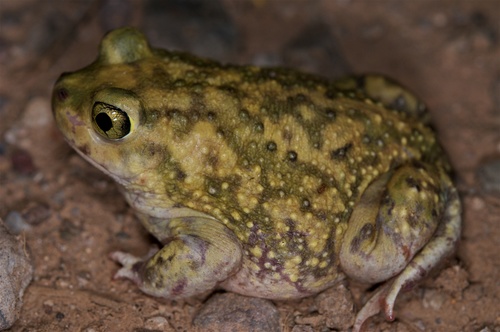
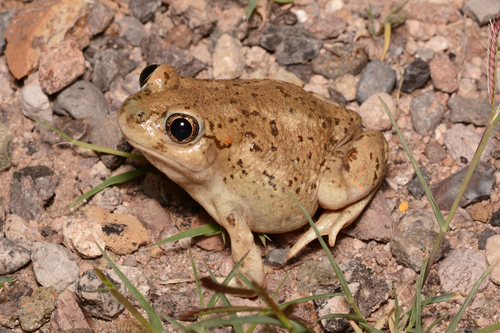
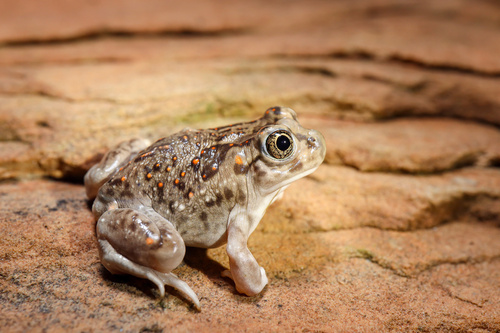
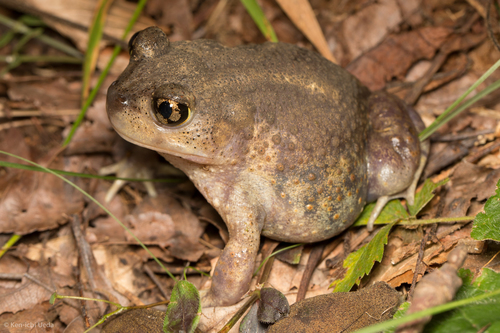
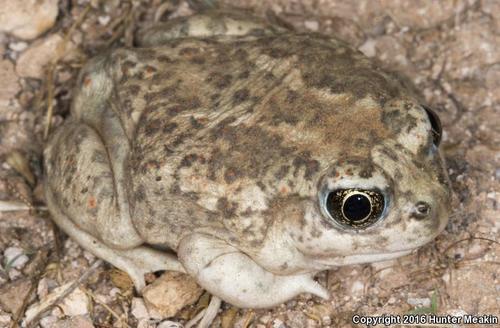
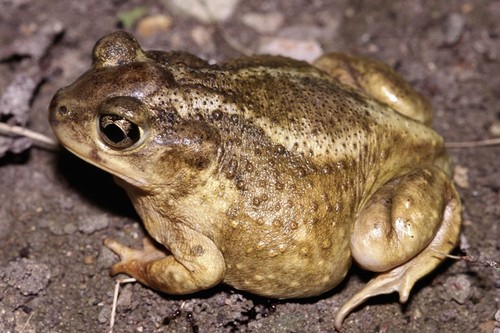
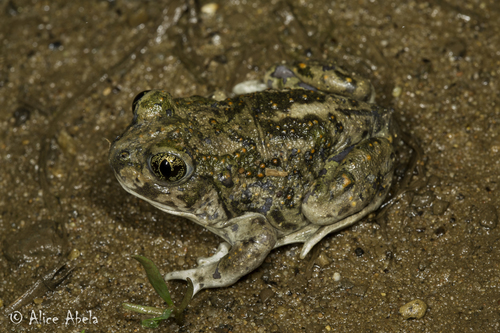
Spea hammondii, commonly called the western spadefoot, is a relatively smooth-skinned species of American spadefoot toad. Its eyes are pale gold with vertical pupils. It has a green or grey back, often with orange-tipped skin tubercles, and a whitish abdomen. Each hind foot bears a wedge-shaped black spade. Adult toads measure 3.8 to 7.5 cm (1.5 to 3.0 in) in length. Juveniles look similar to adults, but have more distinct spotting. Populations of Spea hammondii are localized but widespread. It occurs across California's Central Valley, extends south to San Diego, and lives in some parts of the desert. This species prefers local grassland, scrub, and chaparral habitats, but can also be found in oak woodlands. It is nocturnal, and active only during the wet season, summer storms, or on evenings when substrate moisture levels are elevated. It can be handled easily, and produces less skin secretion than similar toad species. Its secretions smell like peanut butter and may cause sneezing. While Spea hammondii is experiencing some habitat loss, it remains common across its range, and population declines are very minor. Despite this, it is listed as near threatened in some California counties. The average lifespan of Spea hammondii is about 12 years. Individuals reach sexual maturity in their third year. Breeding and egg-laying normally takes place from late winter to the end of March, and males can be heard calling during this period. Sources conflict on the number of eggs females lay per season: one source notes females can lay up to 2,000 eggs per season, while another states females may lay more than 500 eggs in one season. Females lay multiple small, irregular clusters that hold between 10 and 42 eggs each. Egg clusters attach to underwater objects in temporary puddles or ditches, and males deposit sperm onto the eggs. Tadpoles can emerge in as little as 15 hours. After hatching, tadpoles must complete development into toads before their puddle habitat dries up. Development from egg to fully transformed toad takes 8 to 16 days, most commonly 12 to 13 days. This is the fastest metamorphosis recorded for any frog or toad.