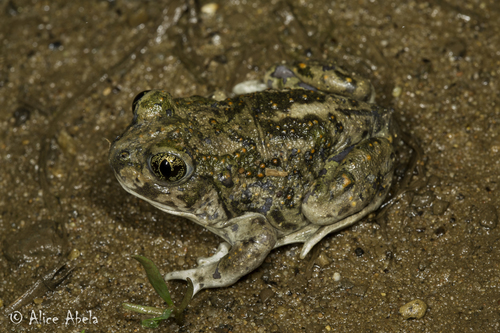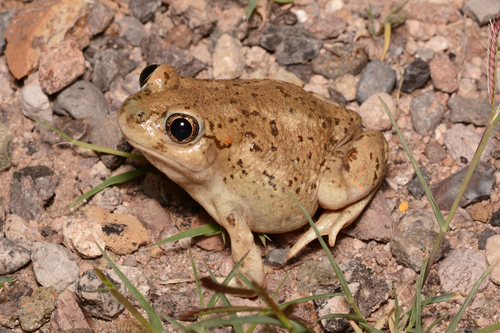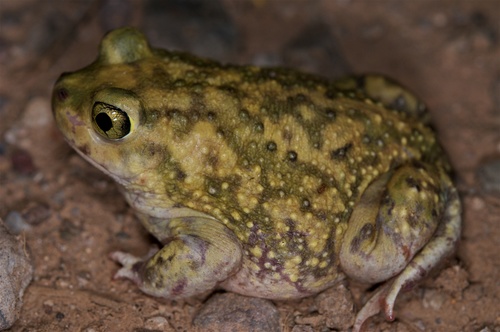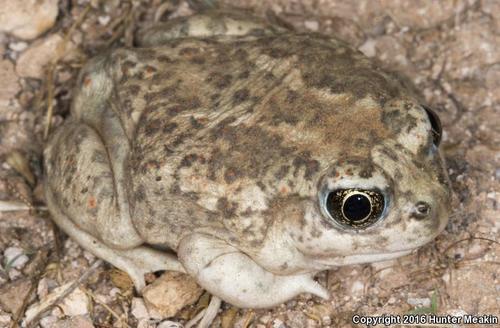
About Spea bombifrons (Cope, 1863)
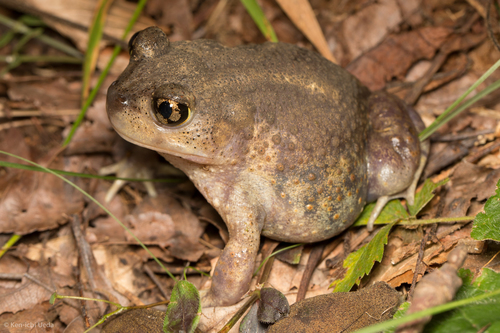
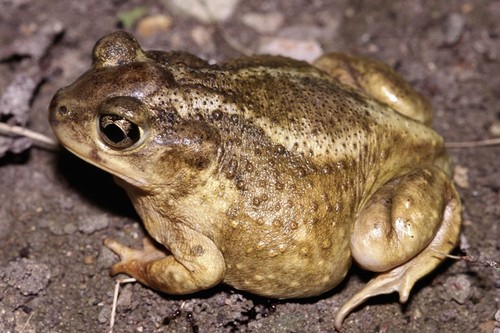
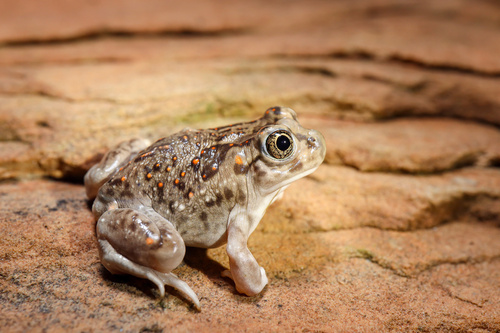
The plains spadefoot toad (Spea bombifrons) generally grows 1.5 to 2.5 inches (3.8 to 6.4 cm) in length, with a round body and relatively short legs. These toads are usually tannish to dark brownish, with visible orange spots, and sometimes have light striping on their backs. Their unique appearance makes them one of the easiest anurans to recognize in their range. This species is found across the Midwest, from Alberta in Canada down to Mexico, in any area with suitable soil for its underground burrowing lifestyle. The IUCN listed Spea bombifrons as a species of least concern in its 2015 assessment, and the species appears to be expanding its range northward into Alberta, Canada. Spea bombifrons is well known for thriving in dry, xeric environments, while the related species Scaphiopus holbrookii has similar adaptations but does not live in such extreme environments. Adult plains spadefoot toads spend most of the year living underground, and only become active on land during warm, wet periods. They only enter water to breed when nocturnal temperatures reach their annual maximum, within 2 to 3 days after rain. Tadpoles hatch from eggs after 2 days and complete metamorphosis within 2 weeks. Young froglets hide in cracks and shade, surviving off stored tissue from their tails until they are able to feed as adults. Plains spadefoot toads can only survive in areas with ground suitable for burrowing, and they always reproduce within 1 kilometer of where they aestivate. Like all amphibians, they become immobilized at low temperatures. This species prefers to burrow near large objects such as logs or rocks, and likes to live near a water source, which can be an underground patch of wet sand. The plains spadefoot toad has many predators, most notably the western hognose snake (Heterodon nasicus). Garter snakes prey on most of the species' tadpoles, but are typically absent from desert areas, as they prefer riparian habitats. Many birds are opportunistic predators of this toad, including burrowing owls and most wading birds. Tadpoles are also preyed on by cannibal morph tadpoles of the species, dragonfly larvae, giant scavenger beetles, and mosquitofish. Occasional predators also include Swainson's hawks and burrowing rodents. At least one study has recorded four types of parasites from this species: Polystoma nearcticum, Aplectana incerta, Aplectana itzocanensis, and Physaloptera spp.