About Sparodon durbanensis (Castelnau, 1861)
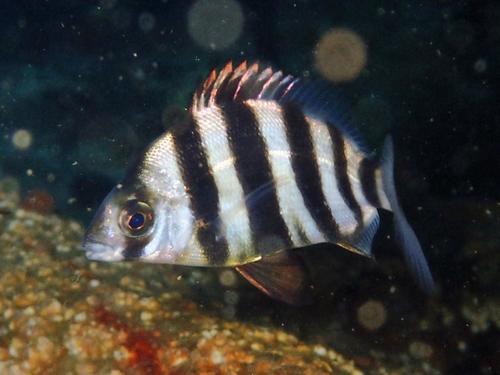
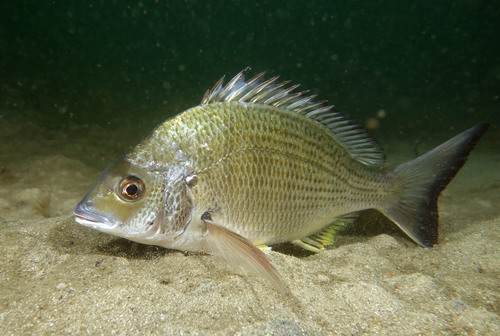
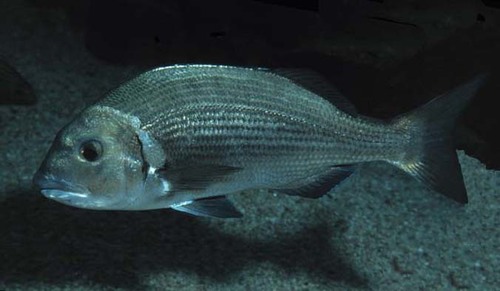
Sparodon durbanensis can reach a maximum length of 120 centimetres (47 in) and a maximum weight of around 22 kilograms (50 lb). Its head and body are colored silver or gray, with darker fins and a white belly. It has large teeth and strongly developed jaws that make it easier for it to consume prey. Its body has an elongated oval shape, with body depth that equals 2.5 to 3 times its standard length. The lateral line of this species holds between 58 and 61 scales. There are no scales in the area between the eyes, or on the flange of the preoperculum. The dorsal fin is supported by 11 spines and 11 or 12 soft rays, while the anal fin has 3 spines and 10 soft rays. This species occurs in the Southeast Atlantic Ocean, and primarily inhabits coastal waters of Southern Africa; it has not been recorded any further north than KwaZulu-Natal province. It lives in shallow coastal tropical waters at depths of up to 80 metres (260 ft). The population of Sparodon durbanensis is currently declining, and the species is listed as Near Threatened by the IUCN. Several conservation actions are currently in place for this species, most notably a daily bag limit that allows people to catch only two fish per day.