About Sparassis crispa (Wulfen) Fr.
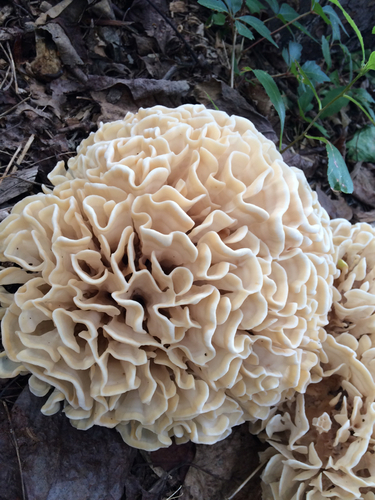
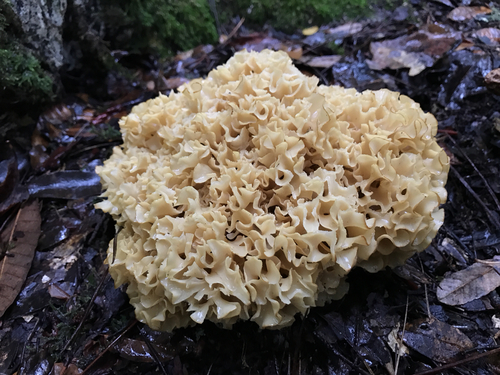
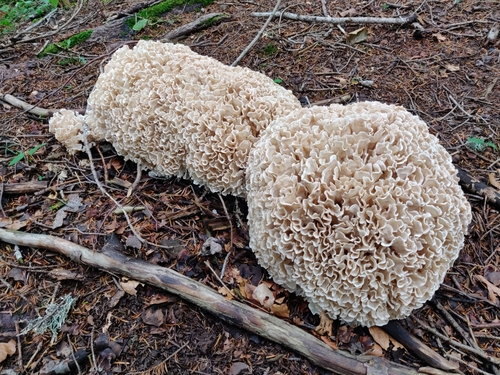
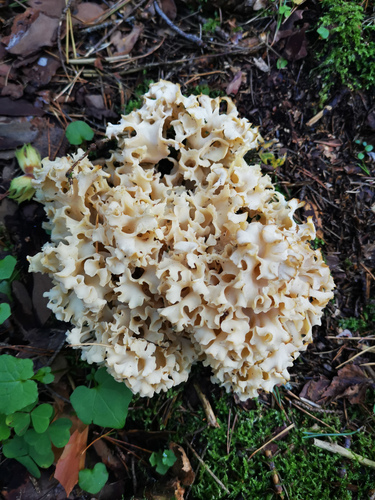
Sparassis crispa (Wulfen) Fr. forms an entangled, globe-shaped structure that can reach up to 24 centimetres (10 inches) in diameter, and larger specimens can weigh 14 kilograms (30 pounds) or more. The lobes that hold the spore-bearing surface are flat, wavy, and resemble lasagna pasta, with colour ranging from white to creamy yellow. Young specimens are tough and rubbery, becoming soft as they mature. This fungus is monomitic, has a pleasant odour, and mild-tasting flesh. It produces a cream-coloured spore print, with smooth oval spores measuring 5–7 μm by 3.5–5 μm. The flesh contains clamp connections.
In distribution and habitat, this species is fairly common in Great Britain and temperate Europe, though it does not grow in the boreal zone, and it fruits from July to November. It is a brown rot fungus that grows parasitically at the base of conifer trunks, most often pines, and also on spruce, cedar, larch and other conifers.
For uses, S. crispa is considered a good edible mushroom when young and fresh, but it is difficult to clean; a toothbrush and running water are recommended for cleaning. A French cookbook that includes four recipes for this species notes that grubs and pine needles can become trapped in the gaps of its jumbled flesh mass. The fungus should be blanched in boiling water for 2–3 minutes before being added to other dish ingredients, and cooked slowly. It can be preserved in oil, cold water, or by drying. Stored specimens may attract maggots.