About Sousa plumbea (G.Cuvier, 1829)
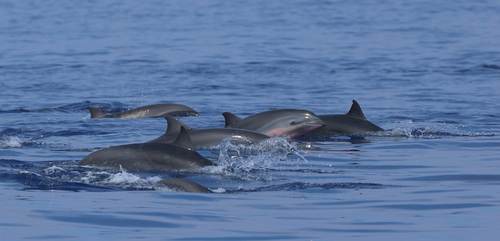
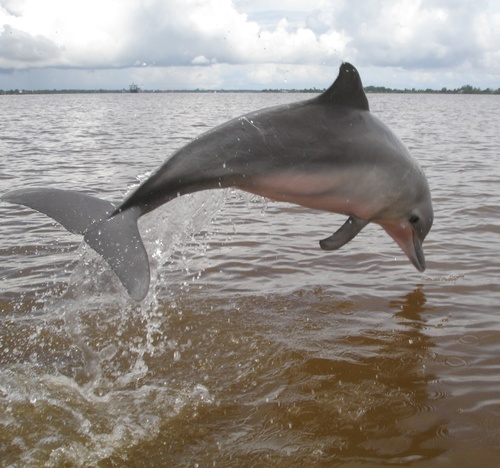
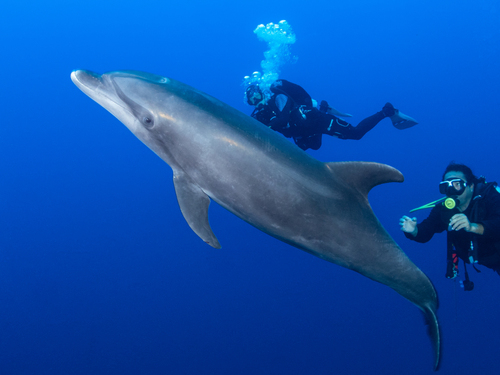
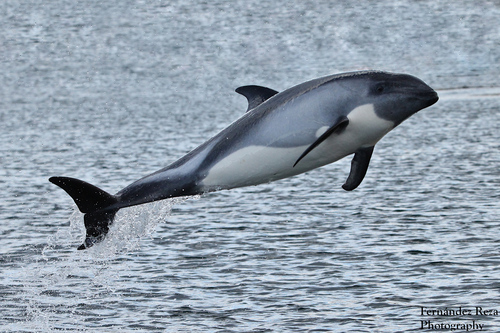
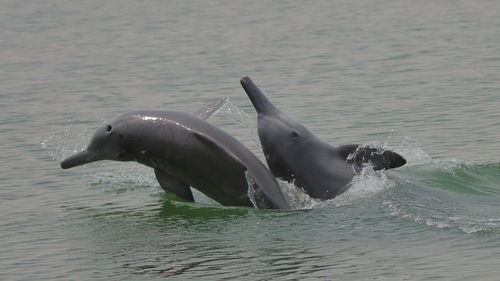
The Indian Ocean humpback dolphin (Sousa plumbea) is a medium-sized dolphin. Adults range from 2 to 2.8 metres (6.6 to 9.2 ft) in length, and 150 to 200 kilograms (330 to 440 lb) in weight. This species has a characteristic fatty hump on its back, which distinguishes it from Sousa chinensis: S. chinensis has a more prominent dorsal fin, and no hump. It also differs from Indo-Pacific bottlenose dolphins, which are similar in appearance but lack this hump. Young individuals are generally gray, with darker gray coloring on the upper body than on the lower body. Adults are typically dark gray overall, with different varieties showing distinct coloration patterns. All humpback dolphins have a distinctive surfacing motion: they rise to the surface at a 30- to 45-degree angle, showing the rostrum (and sometimes the entire head) before arching their back, and sometimes exposing their flukes. This species’ distribution extends from Southern Africa to Western Indochina, covering coastal areas along East Africa, the Middle East, and India. A studied population is found in the Menai Bay Conservation Area of Tanzania’s Zanzibar Archipelago. Critically important populations have been recorded in Southeast Asia, especially along the southern coastlines of China. Recent research has also identified critical populations along the coasts of the Arabian peninsula, including the Sultanate of Oman and the United Arab Emirates. While S. plumbea and S. chinensis are genetically distinct, delphinids have a high capacity for hybridization, leading to hybrid populations in areas where their ranges overlap. Genetic analysis shows that S. chinensis individuals sampled from Indochina are more closely related to S. plumbea than to S. chinensis from Australia. This species does not display large-scale migratory behavior.