About Sonchus fruticosus L.fil.
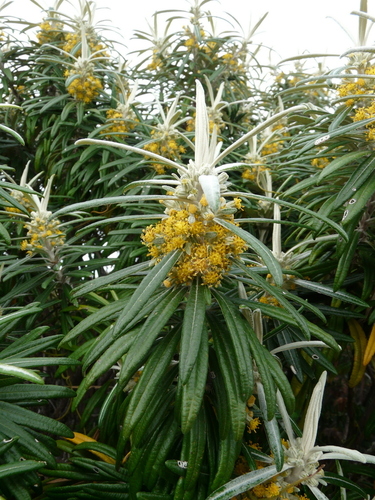
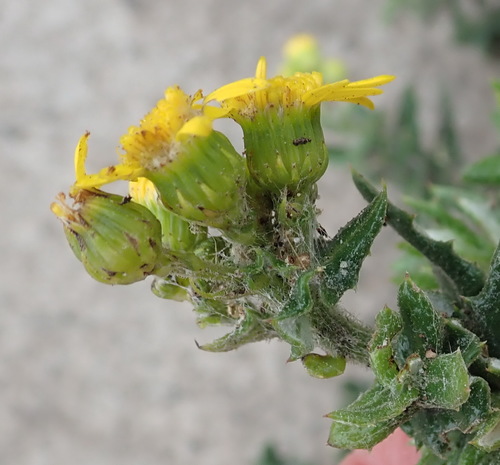
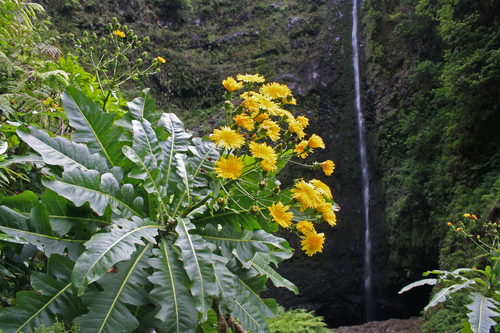
Sonchus fruticosus, commonly called giant sow thistle, is a perennial subshrub and one of the few perennial shrubby species in the genus Sonchus. It belongs to subgenus Dendrosonchus, a group of giant sowthistles from the Macaronesian region that also includes Sonchus acaulis, Sonchus arboreus, Sonchus canariensis, Sonchus congestus, Sonchus hierrense, and Sonchus palmensis. This species grows from a woody trunk. Most sources note it reaches up to 1.8 metres (6 feet) in height, while some reports document heights of up to 4 metres (13 feet). Most accounts state it takes 2 to 5 years to reach full peak height, though other reports put this timeline at 20 to 50 years. It is partially evergreen in its native habitat, and deciduous in other locations where it loses all its leaves during winter. It grows at elevations between 800 meters and 1200 meters in its native range. Its long, glossy green leaves have toothed, sinuate, denticulate margins; leaves grow up to 50 centimetres (1.6 feet) long, and are arranged in a rosette that spans 0.5 metres (1.6 feet) to 1 metre (3.3 feet) across. It flowers during the summer months of June, July, and August, producing yellow flowers that resemble dandelions. The flowers attract bees, butterflies, and birds, and the species' seeds are dispersed by wind. Giant sow thistle is native to the island of Madeira, where it grows in northern laurisilva cloud forest habitat at 800-1200 meters elevation. Rare occurrences have been reported on the nearby island of Porto Santo. Unreliable records list the species from the Canary Islands, but it is doubtful that S. fruticosus is native to the Canaries. Due to its striking unusual appearance, which resembles a giant dandelion, this plant is often grown as an attraction in gardens and parks, especially in Western European botanical gardens.