About Solidago missouriensis Nutt.
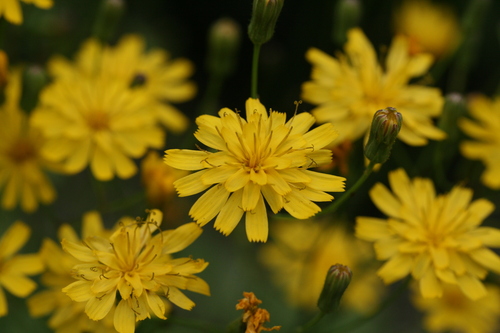
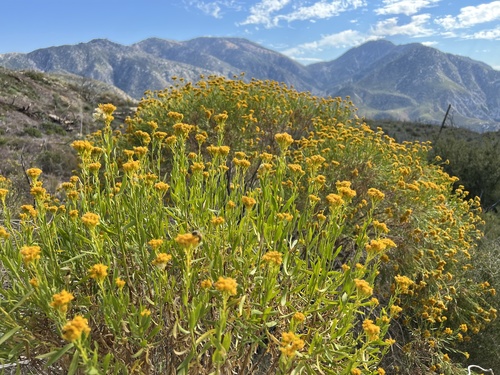
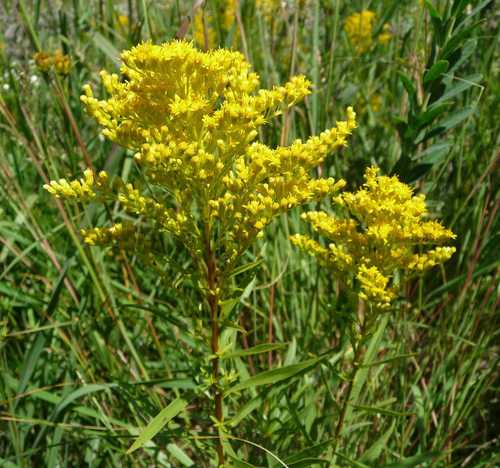
Solidago missouriensis Nutt. is variable in appearance, and has multiple recognized varieties. Generally, it is a perennial herb that grows from an underground caudex, a rhizome, or both. It can reach a maximum height of one meter (40 inches), and its roots can grow as deep as 2 meters (6.6 ft) into soil. Its rigid leaves grow up to 30 centimeters (12 inches) long, and leaves become smaller further up the stem. The inflorescence is a branching panicle that holds many yellow flower heads at the top of the stem; some individuals produce over 200 small heads. Each flower head holds around 5 to 14 yellow ray florets that are a few millimeters long, surrounding 6 to 20 disc florets. The fruit produced is an achene tipped with a pappus made of bristles. Solidago missouriensis grows in many types of habitat, and is common on the Great Plains. It prefers to grow in dry, open habitat, and can occur at high elevations. It readily colonizes disturbed soils. During the Dust Bowl-era drought, when many native grasses and other plants died, this goldenrod flourished in the dry, cleared soil. After the drought ended and native grasses returned, this goldenrod became less common, and disappeared from many areas. It grows in soils disturbed by burrowing animals, as well as on roadsides and mining sites. This goldenrod is common across a number of specific regions, including tallgrass prairie in west-central Missouri, sandhills prairie in southeastern North Dakota, the Cypress Hills of southeastern Alberta, riparian habitat in northwestern Montana, and the Niagara Escarpment of northern Wisconsin.