About Solenopsis richteri Forel, 1909
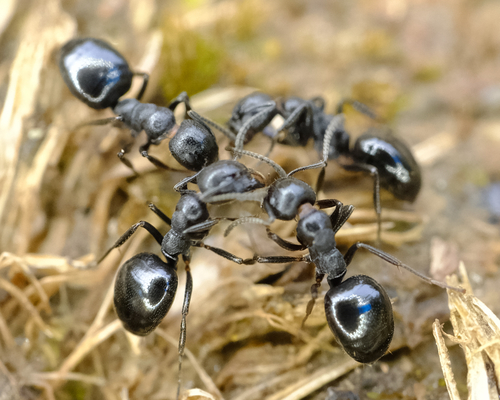
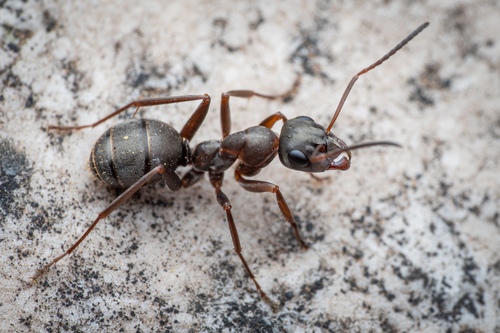
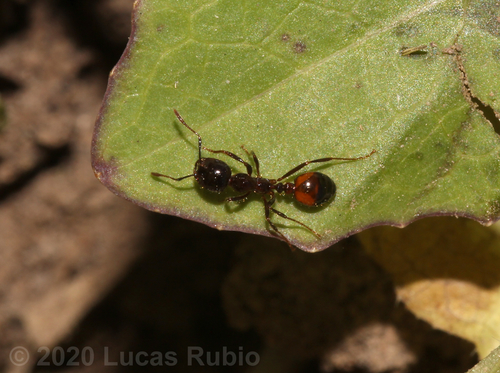
The black imported fire ant, Solenopsis richteri, commonly abbreviated as BIFA, is a fire ant species belonging to the genus Solenopsis. For a long time, it was considered either a subspecies or a color variant of the red imported fire ant, Solenopsis invicta, which is often abbreviated as RIFA. It is now recognized as a distinct species, with clearly different geographic range and living habits from RIFA. BIFA is more tolerant of cold temperatures and is a less dominant species than RIFA. Studies have concluded that BIFA's higher body water content compared to RIFA contributes to the difference in their living regions. This species is native to South America, and has been introduced to North America. In the United States, official assessments have found that BIFA is currently limited to extreme northeastern Mississippi, northwestern Alabama, and a small number of southern counties in Tennessee, though this range is likely underestimated. As of April 2013, BIFA has been recorded as far north as the tidewater area of Virginia, and as of July 2016, it has been reported near coastal South Carolina. Since the 2013 records, this species has also been collected in multiple localities in Craighead County, northeastern Arkansas. These collections are assumed to be the result of recent landscaping work done for new construction projects. All stings from imported fire ants produce a sterile pustule, a feature that helps distinguish these stings from stings or bites caused by other insects. The pustule is surrounded by reddened swelling called a wheal, with redness (erythema) extending further out in what is called a flare. The severity of a reaction to an imported fire ant sting varies based on how much allergic IgE antibody an individual has already produced. There may also be differences between the venoms of the two species that lead to more pronounced wheal and flare formation after a sting from BIFA.