About Solanum quitoense Lam.
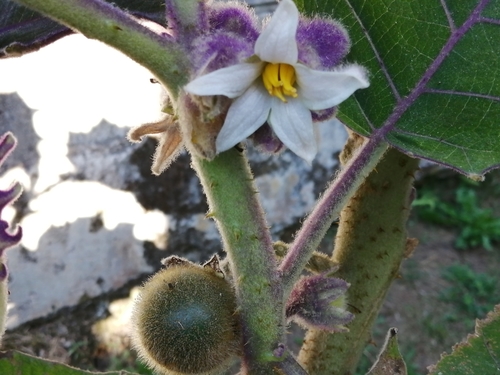
Solanum quitoense Lam. is a tropical perennial nightshade plant native to northwestern South America. Its specific epithet quitoense means "from Quito". This species is commonly called naranjilla, meaning "little orange", in Ecuador, Costa Rica, Nicaragua, and Panama, and lulo, a name derived from Quechua, in Colombia. Mature lulo plants grow to 2.5 meters (8 feet 2 inches) tall. They produce large, elongated leaves that are either heart-shaped or oval-shaped, reaching up to 60 centimeters (24 inches) in length, and the leaves are covered in short purple hairs. Naranjilla plants require protection from strong winds and direct sunlight, and grow best in partial shade. The species' fruit has a citrus flavor, often described as a blend of pineapple and lime. The juice of the naranjilla is green, and is used as a beverage on its own or to make a drink called lulada. Naranjilla is not well-adapted to large-scale cultivation. Like tomato fruits, ripe naranjilla fruits damage easily, so they are typically harvested while still unripe. Unripe fruits can be found at markets, and local people commonly make beverages from the freshly squeezed fruit by adding sugar and water. Lulo fruit pulp is 87% water, 1% protein, 6% carbohydrates, and contains negligible fat. The pulp also includes minerals, vitamin C, and carotenoids. The nutritional composition of lulo fruit varies based on growing conditions such as region, plant genotype, and cultivation practices. The most common use of lulo fruit is for its juice. The fruit is also eaten fresh, used in desserts, and added to a range of native dishes.