About Solanum mauritianum Scop.
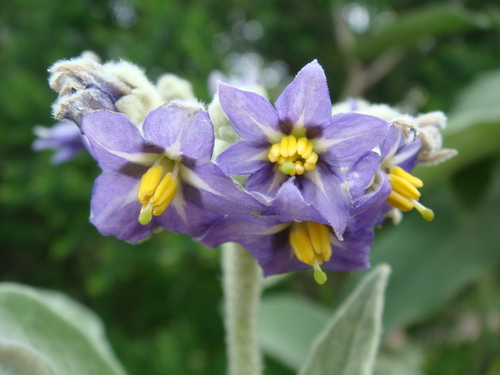
Woolly nightshade (Solanum mauritianum Scop.) is a multi-branched shrub or small tree that typically grows 2 to 4 meters high, though it can reach up to 10 meters (33 feet) tall under favorable conditions. It produces a strong odor and can live up to thirty years. Its large, simple, entire ovate-elliptical leaves grow up to 40 centimeters long and 30 centimeters wide, and are grey-green in color. Each leaf has a pointed tip, a wedge-shaped base, and attaches to the stem via a 3 to 9 centimeter long petiole. Leaves are densely covered in tomentose hairy yellowish, long-stemmed star-shaped trichomes. There are claims that all parts of the Solanum mauritianum plant are poisonous to humans, with unripe berries being especially toxic. Reports note that human fatalities have occurred after consumption of the berries, fatal pig poisoning and cattle illness have been recorded in Queensland. However, mountain possums appear to eat the plant with no ill effects, and their feeding on bark, leaves, and terminal shoots has destroyed entire pure stands of S. mauritianum. Watt & Brandwijk note that horses, domestic chickens, and all birds eat the fruit of this species without harm, and also state that no records of child poisoning exist, which casts doubt on published claims of human toxicity. The main toxic compound found in Solanum mauritianum is the alkaloid solasodine, which reaches its highest concentration (2–3.5% of dry weight) in unripe green berries. The compounds solauricine, solauricidine, and solasodamine have also been identified in the plant.