About Solanum jamesii Torr.
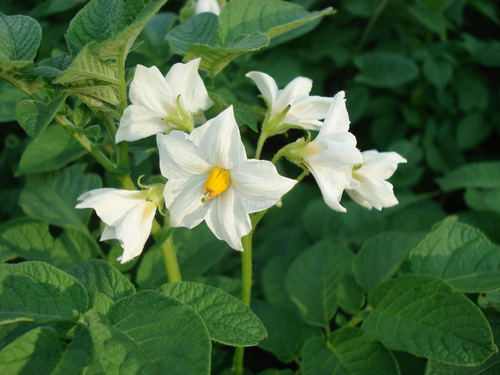
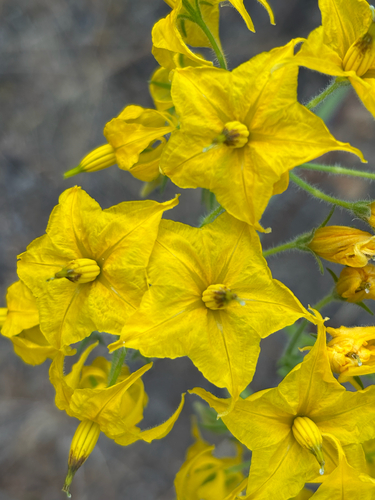
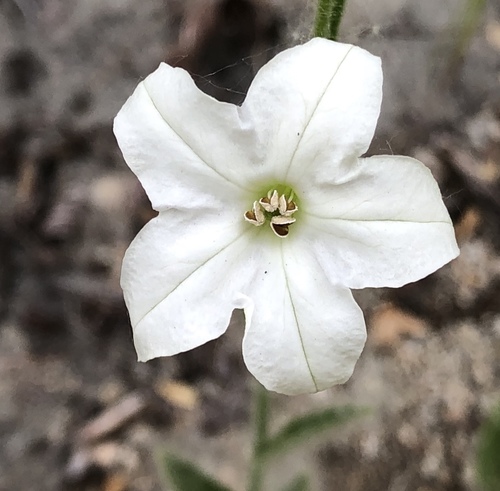
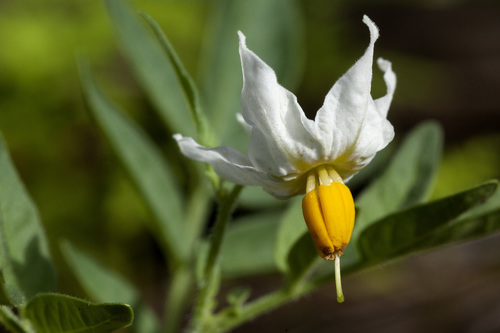
Solanum jamesii Torr., commonly called wild potato or Four Corners potato, is a species of nightshade native to the southern United States. All parts of this plant, especially the mature fruit, are toxic because they contain solanine. Several Native American tribes have eaten the plant's tubers raw or cooked, but the tubers must undergo leaching and boiling in clay to become safe to eat. These tubers are smaller than the tubers of common domesticated potato (Solanum tuberosum) varieties. Escalante Valley in Utah contains the oldest archaeologically recorded cultivation sites of the Four Corners potato, with sites dated to over 7,000 years old. The plant grows so commonly in this valley that the area was formerly called "Potato Valley". S. jamesii is sometimes cultivated as an ornamental plant in yards and gardens. Recent experiments in Escalante, Utah have attempted to reintroduce cultivation of this plant as an edible food crop, using lower-alkaloid cultivars originally selected by native peoples. Per cultivariable.com, the primary glycoalkaloid found in this species is tomatine, unlike domesticated potatoes, whose primary glycoalkaloids are solanine and chaconine.