About Solanum dulcamara L.
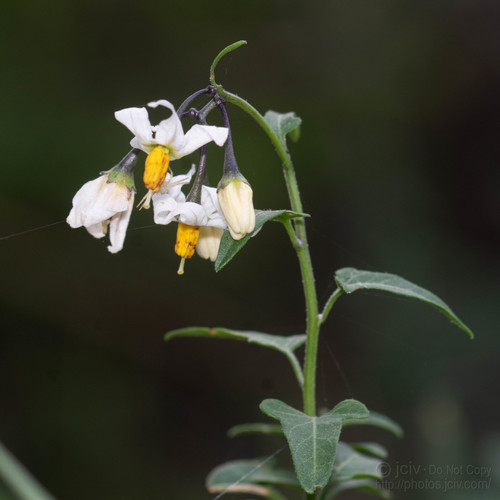
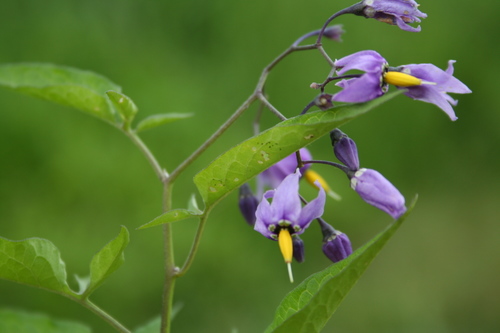
Solanum dulcamara L. is a vine species in the genus Solanum, which also includes potatoes and tomatoes, of the plant family Solanaceae. Its common names are bittersweet, bittersweet nightshade, bitter nightshade, blue bindweed, Amara Dulcis, climbing nightshade, felonwort, fellenwort, felonwood, poisonberry, poisonflower, scarlet berry, snakeberry, trailing bittersweet, trailing nightshade, violet bloom, and woody nightshade. The species is native to Europe and Asia, and is widely naturalised in other regions including North America.
Solanum dulcamara has a variety of documented medicinal uses, but all medicinal use of this plant requires proper caution because the entire plant is considered poisonous. You should always consult a healthcare professional before using this plant medicinally. Documented medicinal use of this plant exists only for adults, not for children, and some people may have an allergic reaction to Solanum dulcamara; medicinal use is not advised for children or people with an allergy to this plant.
The stem of Solanum dulcamara is thought to be considerably less poisonous than other parts of the plant, and has mostly been used to treat skin conditions. There are records of its use to treat mild recurrent eczema, psoriasis, scabies, and dermatomycosis. Stems are harvested when they have no leaves, either before leaves grow or after leaves have fallen, then shredded into small pieces. Most often, prepared stem is applied as a liquid directly to the skin; it can also be infused into a drink, though this method is not recommended. The stem has also been used to treat bronchitis, asthma, and pneumonia.
The leaves of Solanum dulcamara have been used to treat warts and tumors, while the fruit has been used to treat conditions of the respiratory tract and joints. There are documented records that Indigenous people of North America used the roots of this plant to relieve fever and nausea.