About Solanum caripense Humb. & Bonpl. ex Dunal
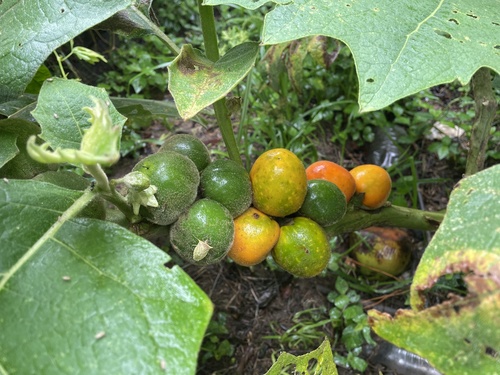
Solanum caripense Humb. & Bonpl. ex Dunal, commonly known as tzimbalo, is a species of evergreen shrub native to South America, grown for its edible fruit. It is rare in cultivation. Its fruit closely resembles that of the related pepino (Solanum muricatum), and it has been speculated that Solanum caripense may be the wild ancestor of the pepino. Like the pepino, tzimbalo is a relative of other nightshades cultivated for their edible fruit, including the tomato (S. lycopersicum), the naranjilla (S. quitoense) and the eggplant (S. melongena). Solanum caripense belongs to the Basarthrum clade within the broader Potato clade. The fruit is infrequently cultivated within its native range, which covers Colombia, Ecuador, Bolivia, Peru and Chile, but has been rediscovered on a small scale by heirloom gardeners in other parts of the world. Tzimbalo is presumed to be native to the temperate Andean regions of Colombia, Ecuador, Peru and Chile. Like the pepino, tzimbalo can bear fruit within 1 to 2 years after being grown from seed. The fruits are round berries that grow up to 2 cm in size, ripening to yellow or pale green with dark longitudinal stripes. While its flavor and texture are similar to pepino, tzimbalo fruit tends to be tangier and juicier. Like the pepino, tzimbalo grows best in warm, relatively frost-free climates. The plant can survive a low temperature of -2.5 °C (27 to 28 °F) if the freeze is very short, though it may drop many of its leaves. Like its close relatives, this species is a perennial. However, its sensitivity to chilling, pests, and diseases, combined with its relatively long growing season, act as barriers to large-scale commercial cultivation. Tzimbalo does adapt well to greenhouse cultivation. Like most edible nightshades, tzimbalo is highly attractive to pests including aphids, white flies, beetles, and spider mites.