About Solanum aethiopicum L.
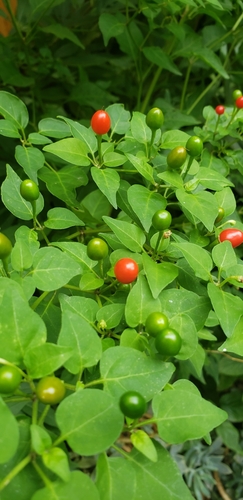
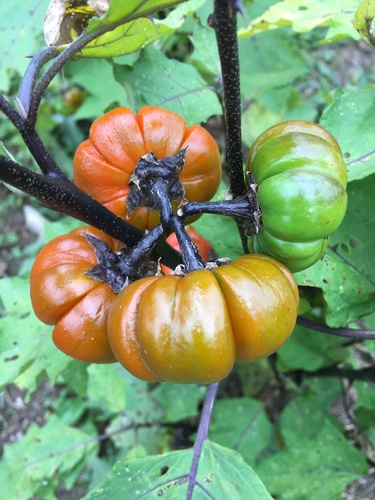
Solanum aethiopicum L., commonly called bitter tomato, Ethiopian eggplant, or nakati, is a fruiting species in the genus Solanum. It is mainly found in Asia and Tropical Africa, and has other common names including Ethiopian nightshade, garden eggs, pumpkin-on-a-stick, and mock tomato. It is a popular vegetable in northeast India. In Manipuri it is called khamen akhaba, in Mizo it is called samṭawk, and in Darjeeling, Sikkim and Nepal it is called Titay bii or simply bii, where it is commonly served and enjoyed with meat, especially pork. The wide range of common names comes from the species' varied morphology: ripe fruit often resembles a cross between an eggplant and a tomato, both of which are also members of the genus Solanum. Historically, Ethiopian eggplant was heavily confused with the ordinary eggplant, leading some botanists to classify the ordinary eggplant as a variety violaceum of Solanum aethiopicum. The leaves of Solanum aethiopicum are eaten as a leaf vegetable, and are more nutritious than the plant's fruit. The species produces highly variable fruit, which is eaten both raw and cooked, and is growing in popularity as a cultivated crop. Fruits are usually harvested while they are still green, before their skin thickens. Bitterness in the fruit increases with higher saponin levels, so some varieties are sweet while others are very bitter. When the berries mature, they turn bright red due to a high carotene content. In Asia, Solanum aethiopicum is grown as an ornamental plant. Among the Igbo people of Nigeria, the species is used as a substitute for kola nut, especially for people who prefer not to chew kola nut. In this cultural context, it is used to welcome guests into the home, or before a traditional ceremony begins. In Nigeria, where the species is commonly known as garden egg, it is sometimes used to make a tomato-based sauce to eat with yam. There is currently a major push to expand cultivation of Solanum aethiopicum in West Africa. The species grows year-round and can produce high fruit yields, but low germination rates remain an obstacle to wider cultivation. The only area in Europe where Solanum aethiopicum is grown on a significant scale is Rotonda, in the Basilicata region of South Italy, where the plant has some commercial importance. It was likely introduced to this area by veterans returning from East Africa after the colonial war in the late 19th century.