About Solanum aculeastrum Dunal
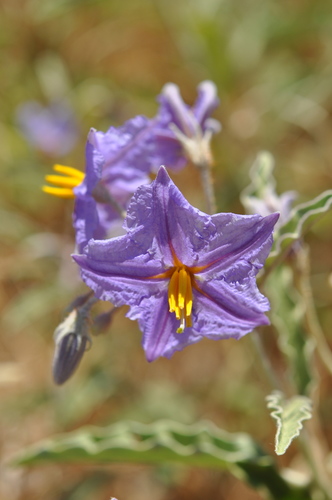
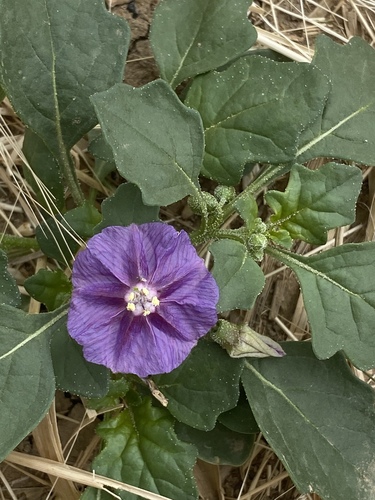
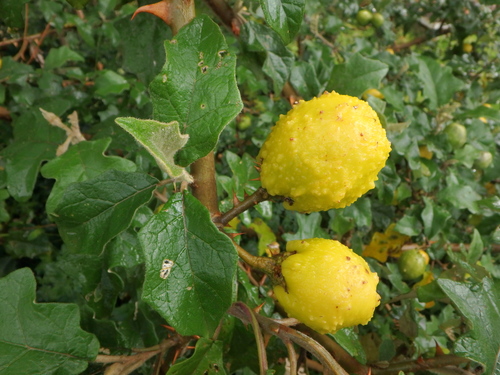
Solanum aculeastrum Dunal is a highly branched shrub or small tree native to tropical Africa, ranging from East Africa to South Africa. It grows across a wide variety of soil, terrain, and climatic conditions, reaching 1 to 5 meters in height. Most parts of the plant are covered in numerous sharp, hooked brown thorns; the species epithet aculeastrum refers specifically to these thorns. Its leaves are ovate, with lobed margins and downy undersides, growing up to 15 cm long and 13 cm broad. Within its South African range, flowering occurs from September to July, with peak flowering between November and March. The flowers have white to pale violet petals surrounding the ovary, and produce a bitter, sour scent. Fruiting follows from April to January, with peaks in June and November. Fruits are smooth, round berries up to 6 cm in diameter, which change color from green to yellow as they ripen. These berries contain high levels of the poisonous alkaloid solanine. Common names include soda apple. Due to its dense growth and prickly texture, it is often planted as a hedge and living barrier to contain livestock. It is high in saponin, so it is frequently used as a replacement for soap. In traditional Zulu herbal practice, the fruit (prepared fresh, boiled, or charred) is used to treat a wide range of conditions including cancer, toothaches, and ringworm. The Taita tribe of southern Kenya uses ripe yellow fruit of this species to treat paronychia. To alleviate stomach aches, the roots are chewed and the resulting sap is swallowed.