About Solanum abutiloides (Griseb.) Bitter & Lillo
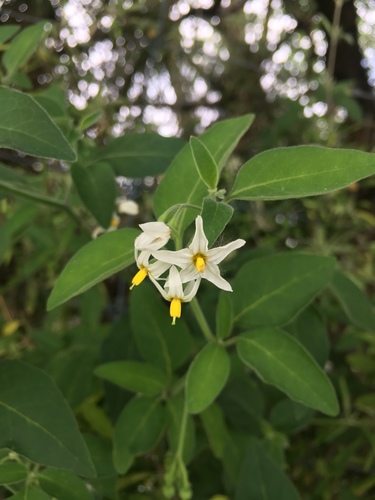
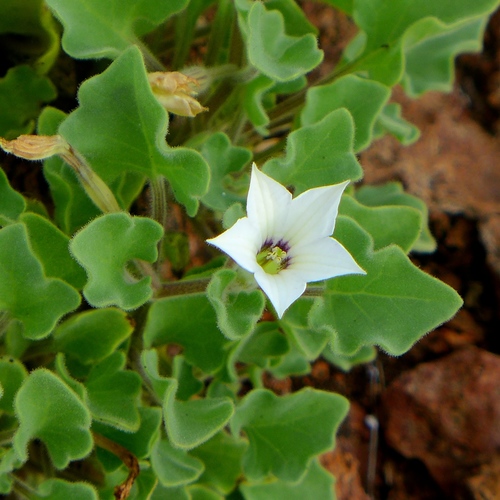
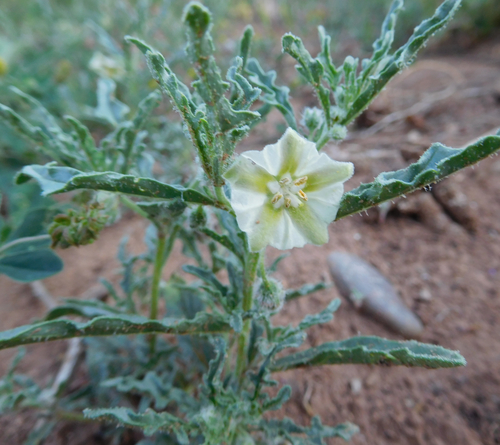
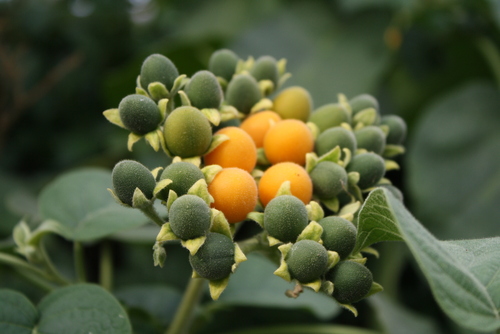
Solanum abutiloides (Griseb.) Bitter & Lillo is a plant species in the Solanaceae family. It is endemic to Argentina and Bolivia, growing as a weedy plant in rocky areas, stream banks, and scrubland at elevations between 900 and 3,600 metres (3,000–11,800 ft). It is commonly called dwarf tamarillo, because of its superficial resemblance to Solanum betaceum. Both species are noted for very rapid growth from seed, and both have strongly fragrant foliage. Solanum abutiloides also has an outdated synonym, Cyphomandra abutiloides. This species matures quickly into a shrub or small tree, reaching up to 9 m (30 ft) tall, though most individuals grow much smaller than this. Small flowers grow along branches across the plant, and single flower clusters can hold up to 60 blooms. After flowering, the plant produces small oblong berry fruits that ripen to a yellow-orange color. The berries have a diameter of about 1 cm (0.39 in), or slightly larger. Unripe berries are mildly toxic, just like unripe tamarillo fruits, but ripe berries are edible. The ripe fruits of Solanum abutiloides are edible, but the species is rare in cultivation and has not been bred to improve flavor. As a result, the fruit often has an unpredictable or unpleasant flavor, so the species is most often cultivated as an ornamental plant, because its clusters of ripe fruit are very decorative. Like other plants in the Solanaceae family, Solanum abutiloides trees attract common pests including aphids, spider mites, and white flies.