About Smilax laurifolia L.
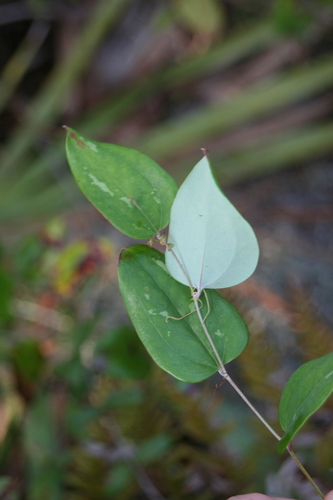
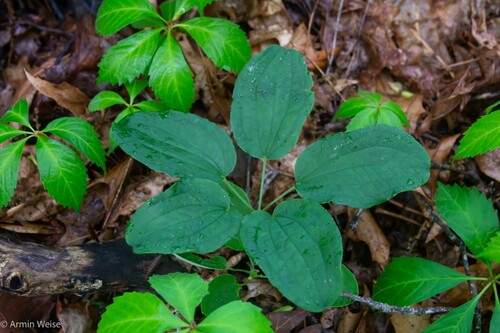
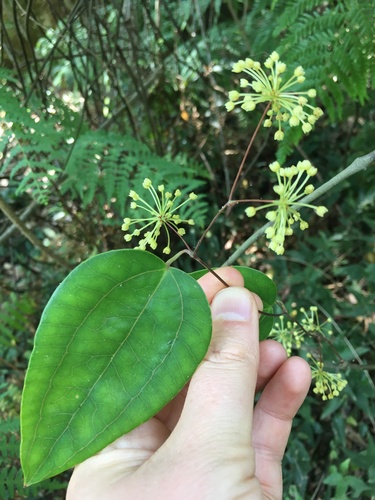
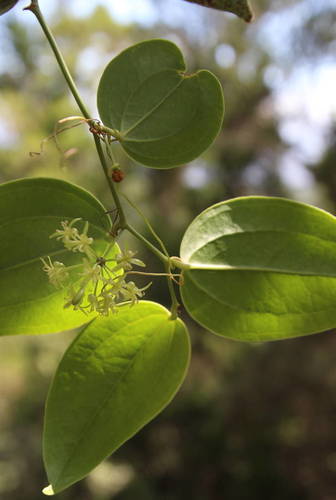
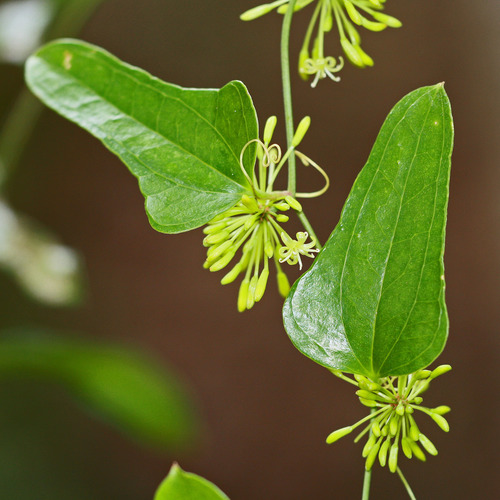
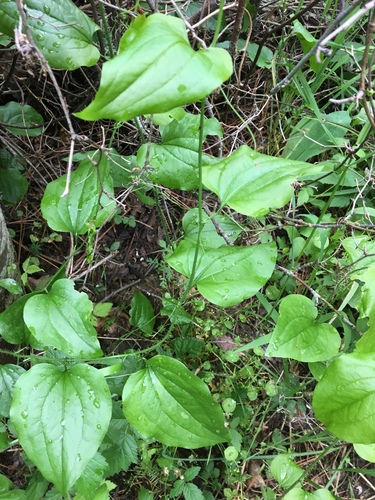
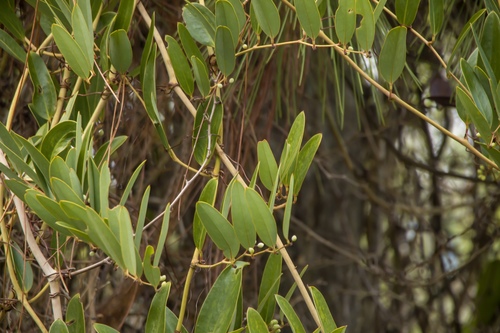
Smilax laurifolia L. is a monocotyledonous woody vine that forms dense colonial thickets and climbs over other vegetation. Stems can reach five meters or more in length, and are viciously armed with prickles that may be over one centimeter long. This species grows from a large, woody, tuberous rhizome, and its sprouts can grow up to 7 centimeters per day. Its leathery evergreen leaves are linear, lance-shaped, or oval, reaching up to 13 centimeters long and 6 centimeters wide. Petioles twist to hold the leaves in an erect position. The inflorescence is an umbel of up to 25 flowers that grows from leaf axils. Each flower has whitish or yellowish tepals around half a centimeter long. The fruit is a shiny, waxy black berry 5 to 8 millimeters long, which matures during the second growing season after it first appears. This plant grows in bogs, swamps, and marshy areas, and is a dominant species in pocosins. It grows in wet to saturated soils that are often flooded. It is common in the Everglades, and is a characteristic part of the understory flora of the Okefenokee Swamp. It grows beneath cypress, swamp blackgum (N. sylvatica), white bay (Magnolia virginiana), loblolly bay (Gordonia lasianthus), sweet bay (Tamala borbonia), red maple (Acer rubrum), cassena (Ilex cassine), titi (Cyrilla racemiflora), and southern white cedar (Chamaecyparis thyoides). In the understory, it associates with hurrahbush (Lyonia lucida), leucothoe (Leucothoe racemosa), sweetspire (Itea virginica), poor-man's soap (Clethra alnifolia), coral greenbrier (S. walteri), and honeycup (Zenobia pulverulenta). Smilax laurifolia competes with and inhibits tree seedlings, including those of southern white cedar. It grows better in sunny sites, where it can form very dense thickets. If burned or damaged, it resprouts vigorously from its large rhizome. This rapidly climbing vine is considered a silvicultural pest. This plant provides habitat for many types of animals, including white-tailed deer, bobcat, gray squirrel, Eastern diamondback rattlesnake, American alligator, Pine Barrens tree frog, and the endangered red-cockaded woodpecker. It grows alongside a number of rare plant species, including white wickey (Kalmia cuneata), arrowleaf shieldwort (Peltandra sagittaefolia), spring-flowering goldenrod (Solidago verna), and rough-leaf loosestrife (Lysimachia asperulifolia). Native American groups used this plant for medicinal purposes. For example, the Cherokee used it to treat sores and burns. Its tuberous rhizome was also used as a food source; the Choctaw processed it into fried cakes and bread.