About Smilax glyciphylla J.White
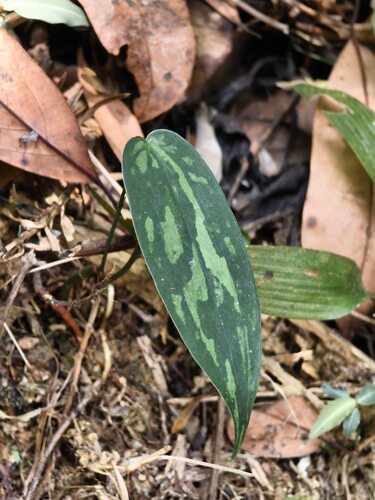
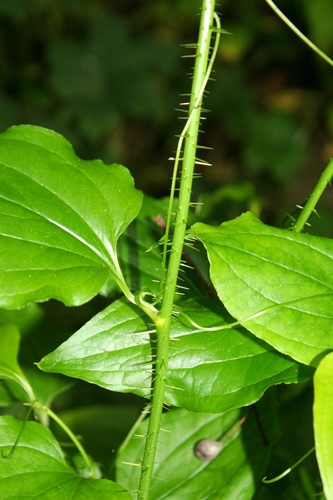
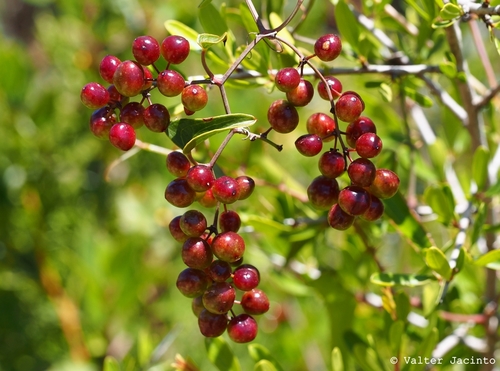
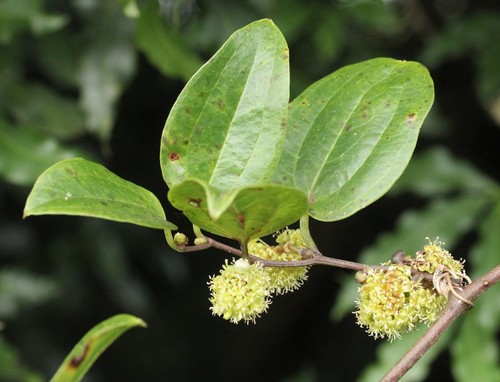
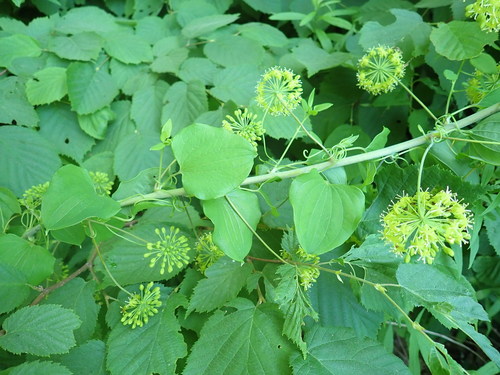
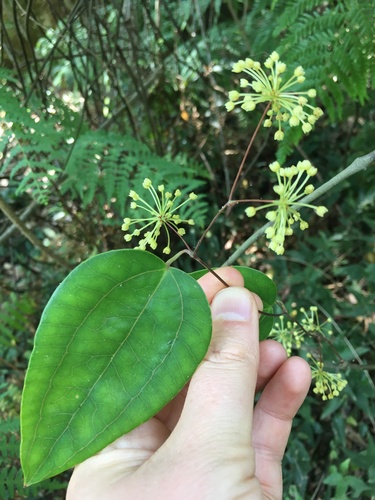
Smilax glyciphylla J.White, commonly known as sweet sarsaparilla, is a dioecious climbing plant native to eastern Australia. It is widespread across rainforest, sclerophyll forest, and woodland, primarily found in coastal regions of the area. Its leaves are distinctly three-veined, lanceolate in shape, with a glaucous underside, and measure 4 to 10 cm long by 1.5 to 4 cm wide. It produces coiling tendrils that can grow up to 8 cm long. The plant bears globose black berries 5 to 8 mm in diameter, each containing a single seed. The fruit of Smilax glyciphylla is edible. The sweet-flavored leaves have been used medicinally by Indigenous Australian people and non-Indigenous colonists, including being used as a tea substitute. In the earliest days of the Port Jackson colony, the plant was used medicinally to treat scurvy, coughs, and chest complaints. In a letter sent to England in November 1788, Dennis Considen wrote: "I have sent you some of the sweet tea of this country which I recommended and is generally used by the marines and convicts as such it is a fair antiscorbutic as well as a substitute for tea which is more costly." It has been recommended as a tea alternative, a tonic, and an antiscorbutic, and was still traded by Sydney herbalists at least up until the late 19th century. It is claimed to have similar medicinal properties to Jamaican sarsaparilla, Smilax regelii. The leaves, stems, and flowers of this species contain the glycoside glyciphyllin, which has a bitter-sweet taste and is thought to be the active medicinal component. Recent research has confirmed that S. glyciphylla has antioxidant activity.