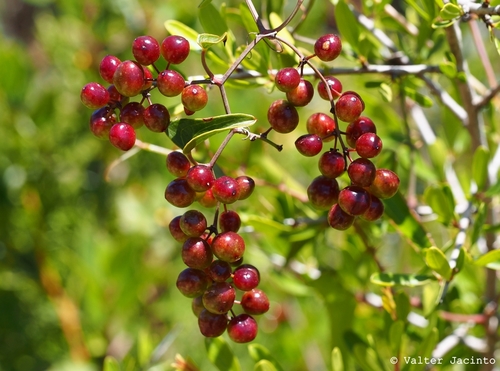
About Smilax aspera L.
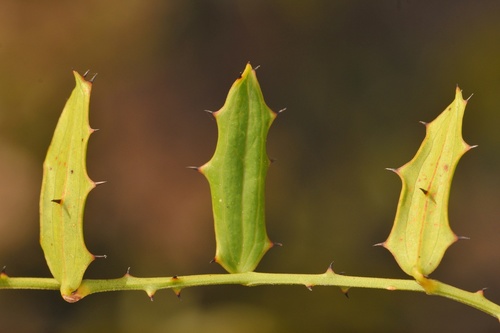
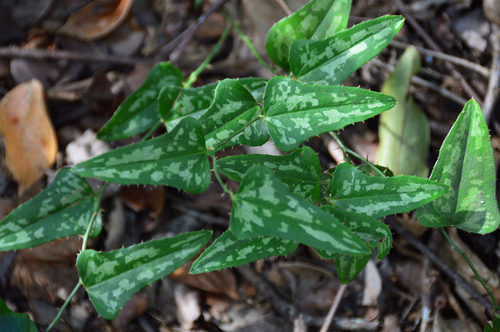
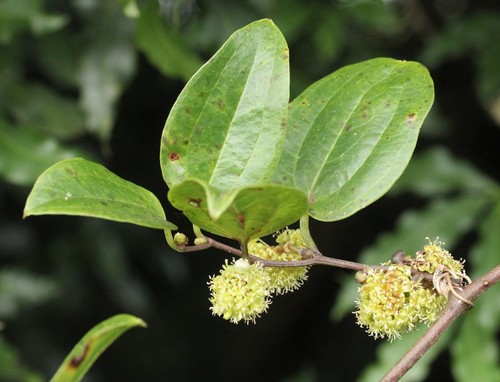
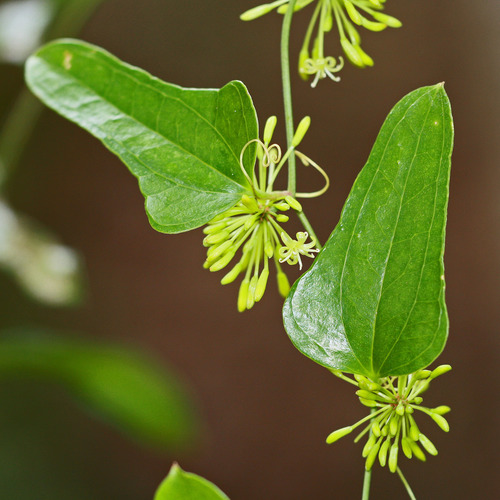
Smilax aspera L. is a perennial evergreen climbing plant. It has a flexible, delicate stem covered in sharp thorns, with climbing stems reaching 1 to 4 meters (3 feet 3 inches to 13 feet 1 inch) in length. Its leaves are 8 to 10 centimeters (3.1 to 3.9 inches) long; they grow on stalks, arranged alternately, and are tough, leathery, and heart-shaped, with toothed, spiny margins. As a monocot, Smilax aspera has reticulate leaf venation. The underside of the leaf midrib also bears spines. The species produces small, very fragrant yellowish or greenish flowers clustered in axillary racemes. In Mediterranean regions, its flowering season runs from September to November. After flowering, it forms clusters of globose berry fruits that ripen in autumn. The berries start out red, then turn black when fully ripe. They are 8 to 10 millimeters (0.31 to 0.39 inches) in diameter and hold 1 to 3 tiny, round seeds. These berries are tasteless and unpalatable to humans, but provide food for many bird species. Smilax aspera is widespread across Central Africa (Democratic Republic of Congo, Kenya, Ethiopia), Mediterranean Europe (Cyprus, Albania, Croatia, Greece, Italy, Malta, Montenegro, France, Portugal, Spain), temperate Asia (Israel, Jordan, Lebanon, Syria, Turkey) and tropical Asia (India, Bhutan, Nepal). It is also naturalized in additional regions outside its native range. It grows in woodland and scrub habitats at altitudes between 0 and 1,200 meters (0 to 3,937 feet) above sea level.