About Smicrornis brevirostris (Gould, 1838)
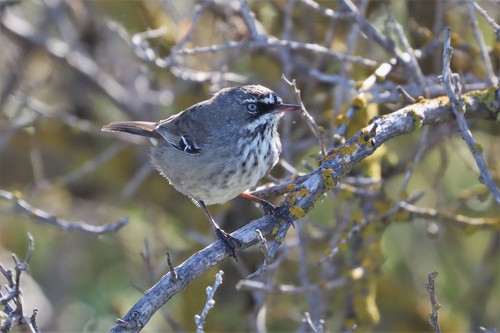
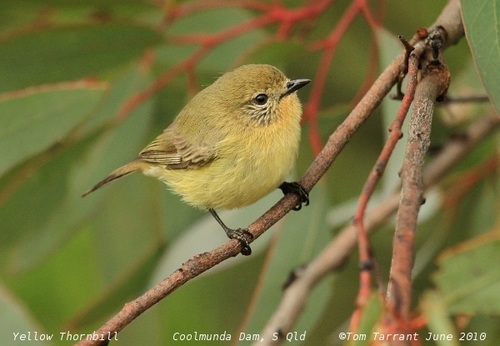
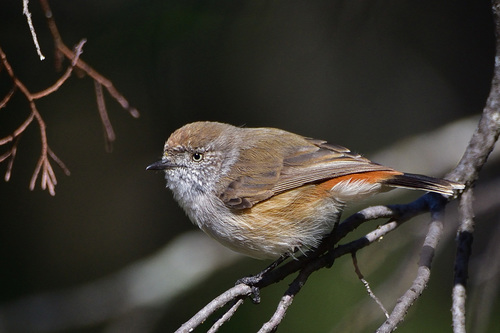
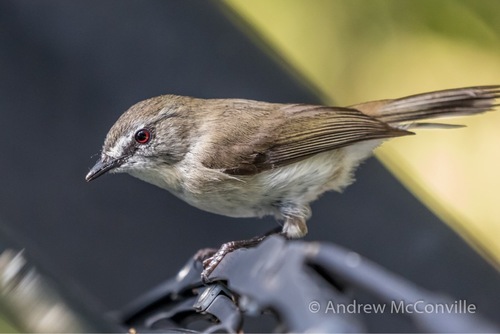
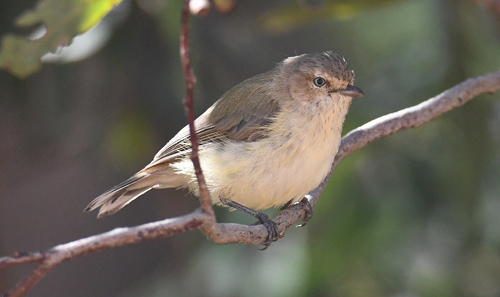
Weebill, the species with the scientific name Smicrornis brevirostris (Gould, 1838), is Australia's smallest bird. Adult individuals measure approximately 8 to 9 cm (3.1 to 3.5 in) in length, average 6 grams in weight, and have a wingspan of approximately 15 cm (5.9 in). Weebills have inconspicuously colored plumage that shifts from yellowish-grey on the front to olive-brownish-grey on the back. The two main feather pigments behind this color variation are yellow phaeomelanin and olive-brown eumelanin. Geographical variation in plumage exists across the four recognized subspecies. Adult weebills have pale yellow eyes and a faint cream-colored supercilium. Their throat feathers are grey and often marked with striation, while their wing flight feathers are pale brown. Their tail feathers are brown with a black bar and a white spot on the tip of all rectrices, except the central pairs, which are completely dark. Both sexes have identical plumage coloration. The weebill's bill is short, pale grey, and its stubby shape helps distinguish it from thornbills. Weebills have grey legs and feet, and like all passerines, they have an anisodactyl toe arrangement adapted for perching. Juvenile weebills have similar plumage to adults, but can be identified by their brighter yellow bill and greyer eye. The four recognized subspecies show slight variations in feather pigmentation linked to their distribution. In southern and eastern Australia, subspecies occidentalis and brevirostris are light brown; in southwestern Australia, subspecies occidentalis has greyer plumage; subspecies flavescens found in northern and inland Australia is paler and more yellow. Additionally, weebills from northern Australia are smaller than those from southern Australia. The weebill's call is a loud, clear, musical sequence that sounds like pee-pee p'wee, wee bit, or wee willy weetee, and can often be heard from a considerable distance. The weebill inhabits woodlands and forests across most of mainland Australia, and is not found in Tasmania. All four subspecies are sedentary across their ranges, and population numbers remain steady throughout the year. Weebills are most commonly found in the canopies of dry, open eucalyptus forests, woodlands, and mallee. They occasionally move down to the midstory to feed, primarily on small insects and their larvae, and prefer to forage in the canopy foliage of healthy eucalyptus trees, where they are more likely to find insects. The weebill is widespread across all Australian climates, though it is restricted to watercourses in arid zones. It is somewhat gregarious, associating with other small insectivorous passerines such as thornbills, silvereyes, and pardalotes. Weebills build dome-shaped pendant nests from fine, pliable materials like grasses and plant fibers. The nests are suspended from branches and concealed in dense foliage in the tree canopy. Weebills use cobwebs, insect cocoons, and animal hair to bind, strengthen, and further conceal their nests. The weebill's breeding season changes based on latitude and climatic conditions. While they can breed at almost any time of year, most breeding occurs between July and May. Courtship displays have been observed in weebills: males ruffle their cheek and head feathers with outstretched wings to present to females. It is thought that both males and females display to each other at the nest site with tail-fanning, slight bowing, and wing quivering. Females usually lay two to four tapered-oval shaped cream-colored eggs with brown speckles. Only the female incubates the eggs, which hatch after 10 to 12 days, after which both parents care for the chicks. Weebill eggs in the nest are occasionally vulnerable to small brood parasites such as the Horsfield's bronze-cuckoo: the female cuckoo removes weebill eggs and lays one or two of her own eggs in the host nest for the weebill to raise.