About Sitta castanea Lesson, 1830
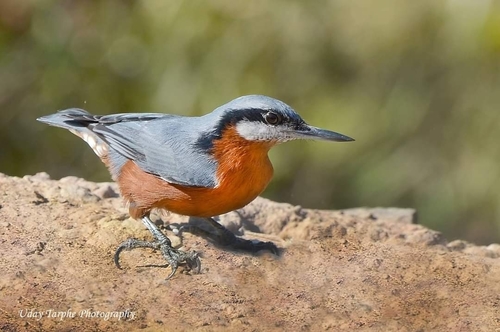
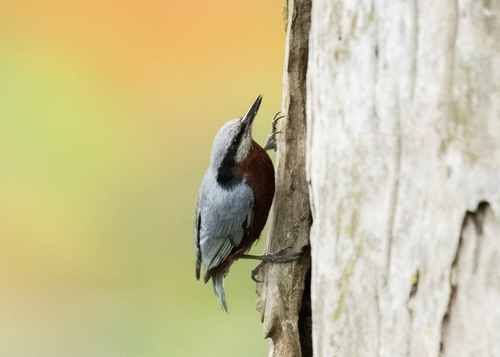
The Indian nuthatch, scientifically named Sitta castanea, is a bird species that belongs to the nuthatch family Sittidae. Its natural habitats include subtropical or tropical dry forests, subtropical or tropical moist lowland forests, and subtropical or tropical moist montane forests. It can be found in Bangladesh, India, and Nepal. In 2005, Rasmussen and Anderton split this species from the chestnut-bellied nuthatch. Populations of Indian nuthatch, including the older subspecies prateri of the Eastern Ghats, occur south of the Ganges river. This is the only grey-backed, rufous-bellied nuthatch found on the Indian peninsula. It is similar in appearance to the chestnut-bellied nuthatch, but it has a smaller bill and a frosty, paler crown that is lighter in color than its mantle. It lacks contrast in its wing and tail patterns, and has grey centers on its chestnut undertail coverts. It is a resident species, with a range covering the Terai, Gangetic plain, central India, the Eastern Ghats, and the Sunderbans, and it also has a disjunct population in the Western Ghats. It breeds between February and July, and its vocalization differs from that of the chestnut-bellied nuthatch.