About Sitophilus granarius (C.Linnaeus, 1758)
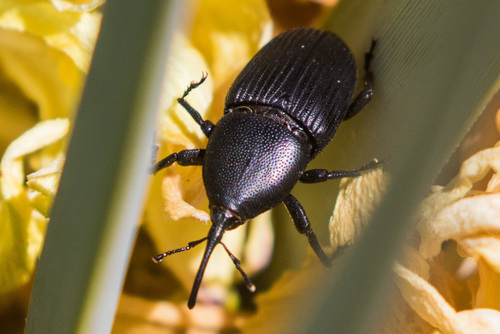
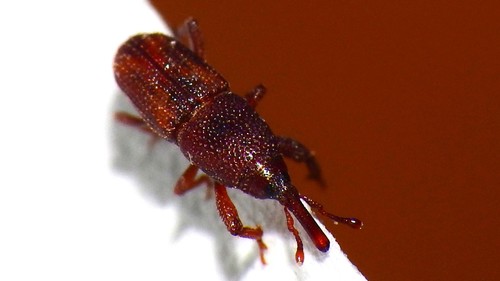
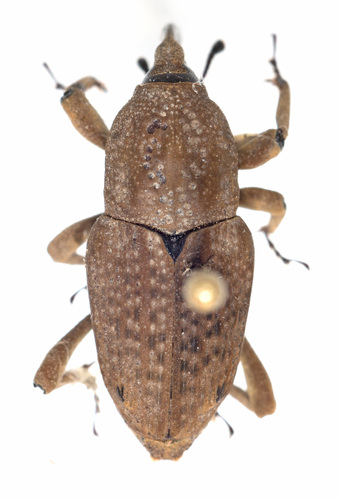
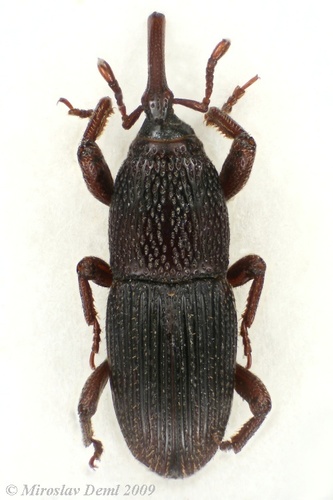
Scientific name: Sitophilus granarius (C. Linnaeus, 1758). Identification: Adult wheat weevils are around 3–5 mm (0.12–0.20 in) long, and have elongated snouts and chewing mouthparts. Their size changes depending on the type of grain kernel they develop in. Individuals growing in small grains such as millet or grain sorghum stay small, while those growing in maize (corn) reach a larger size. Adult wheat weevils are reddish-brown and have no distinct identifying markings. Adults of this species cannot fly. Larvae are legless, humpbacked, white in color, with a tan head. Pupal-stage weevils have snouts that match the shape of adult snouts. Life cycle: Female wheat weevils lay between 36 and 254 eggs total, and typically deposit just one egg per individual grain kernel. All larval stages and the pupal stage develop inside the grain kernel. Larvae feed inside the grain until they are ready to pupate. After pupation, they bore an exit hole through the grain and emerge as adults. They are almost never seen outside of grain kernels during their immature life stages. The full life cycle takes approximately five weeks to complete during summer, but can take as long as 20 weeks when temperatures are cool. Newly emerged adults can live for up to eight months.