About Sitobolium punctilobum (Poir.) Desv.
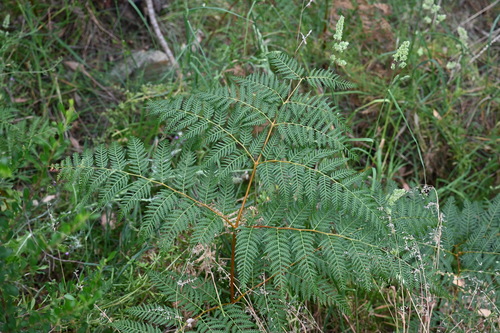
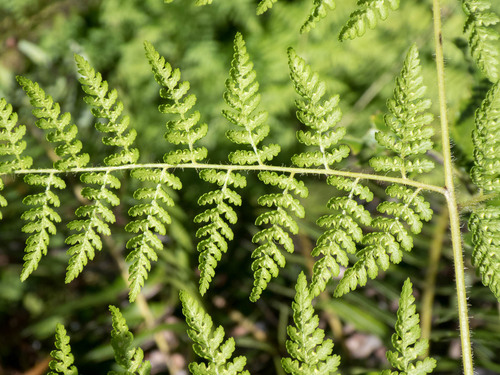
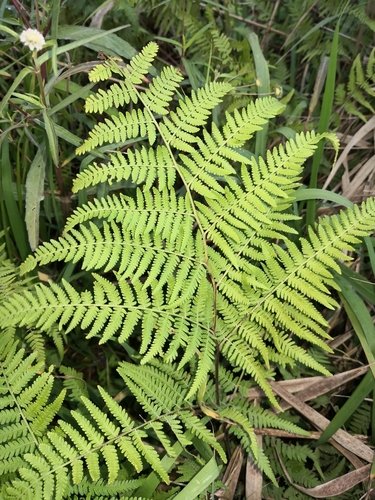
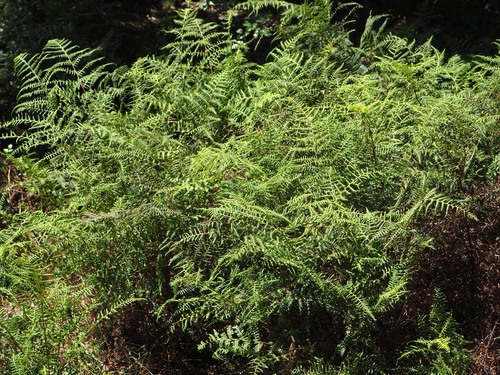
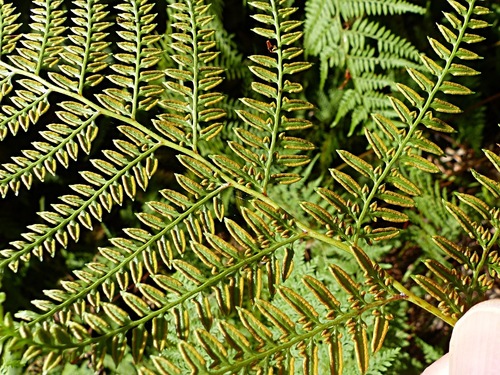
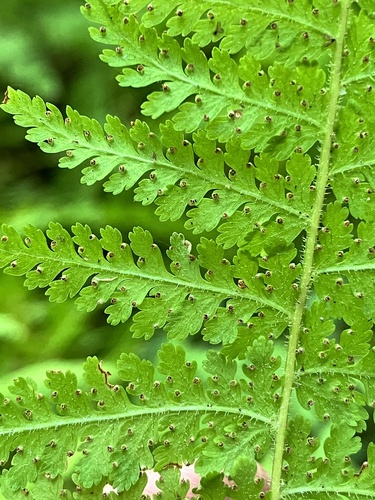
Sitobolium punctilobum, commonly known as eastern hayscented fern or hay-scented fern, is a fern species native to eastern North America. Its natural range extends from Newfoundland west to Wisconsin and Arkansas, reaching south through the Appalachian Mountains to northern Alabama. It is most abundant in the eastern portion of its range, and only occurs in scattered populations in the western parts of its range. This is a deciduous fern that produces fronds that grow 40–100 cm tall, rarely reaching up to 130 cm, and 10–30 cm broad. Its fronds are bipinnate, with pinnatifid pinnules that are roughly three times as long as they are broad. The species grows in acidic soils that can be either damp or dry, in woodland or open woodland habitats, ranging from sea level up to 1,200 m in altitude. Sitobolium punctilobum can show varying degrees of phototropism. Its common name "hay-scented fern" comes from the scent of fresh hay released when the plant is crushed. The presence of this species influences understory vegetation dynamics in many forests of the eastern United States. An abundance of Rubus allegheniensis in open areas supports the growth of new tree seedlings. Where herbivorous animals such as deer reduce the abundance of Rubus allegheniensis, Sitobolium punctilobum, which deer do not browse, becomes dominant in the area. When Sitobolium punctilobum becomes common, it restricts the growth of tree seedlings. It was first formally described as Nephrodium punctilobulum by André Michaux in 1803, and the species has been known under a range of synonyms.