About Sirex juvencus (Linnaeus, 1758)
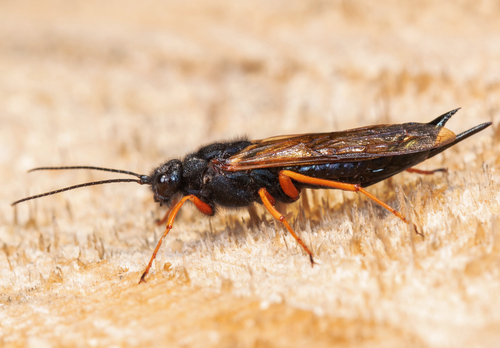
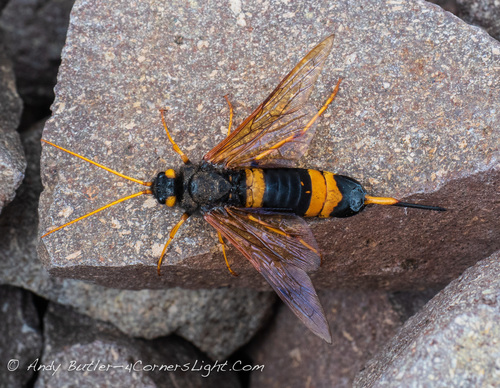
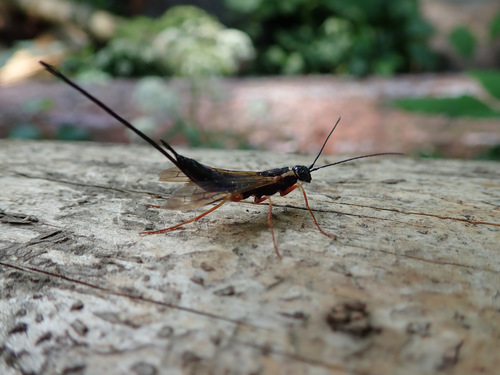
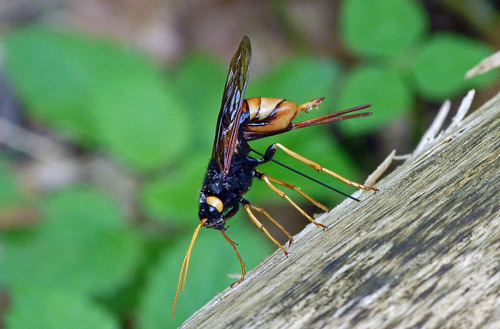
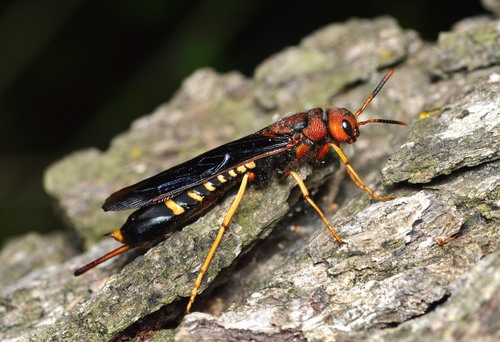
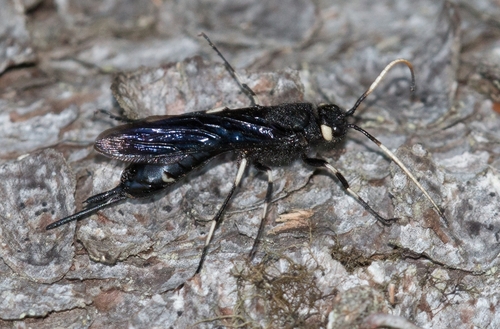
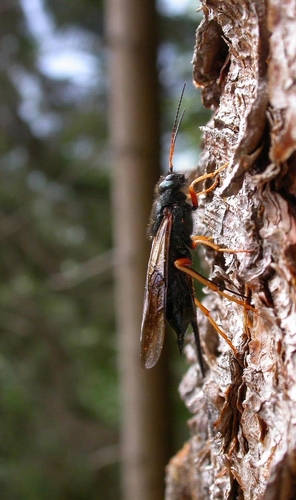
Scientific name: Sirex juvencus (Linnaeus, 1758). Male adults of this species measure approximately 8–28 millimetres (0.3–1.1 in) in length, while female adults measure 15–32 mm (0.6–1.3 in) long. Their antennae are a combination of red and brown, or red and black. This species displays clear sexual dimorphism, meaning males and females differ in morphology. The female body is metallic bluish-black, with yellowish or reddish legs. The final segment of the female abdomen is triangular and wide at its base. The ovipositor, the structure that deposits eggs, is as long as the abdomen or slightly longer. Eggs of Sirex juvencus are white and elongated. Larvae are cylindrical, white, and can grow up to 40 mm (1.6 in) long. The male body is metallic black; the first two pairs of legs are reddish, while the hind legs are black. The male abdomen is black, with bluish-black dots on some sections and brownish dots on others. For reproduction, adult Sirex juvencus fly to mate between July and August. After mating, the female drills multiple holes into wood and deposits one to five eggs into each hole. A single female can lay up to 100 eggs total. When larvae hatch, they feed on the wood. By mid-summer, they dig deeper into the wood, reaching a depth of 15–17 mm (0.6–0.7 in). Larvae remain at this depth through the winter, and begin feeding on tree sap in April. Next, the larvae create horizontal tunnels lined with shredded wood. Before pupation, they have constructed tunnels 80–230 mm (3.1–9.1 in) long, where they stay over the second winter. They finally pupate the following summer. Once they reach adulthood, they chew through the wood surface, leaving behind an exit hole 4–6 mm (0.16–0.24 in) in diameter. Most individuals of this species complete one full life generation every two years.