About Sipia laemosticta (Pelzeln, 1868)
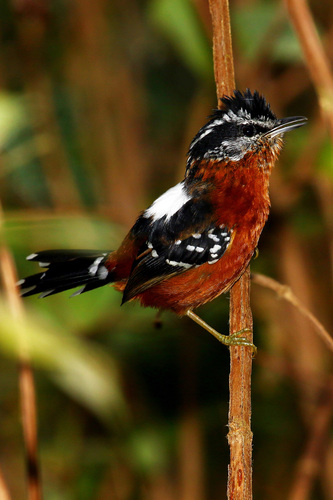
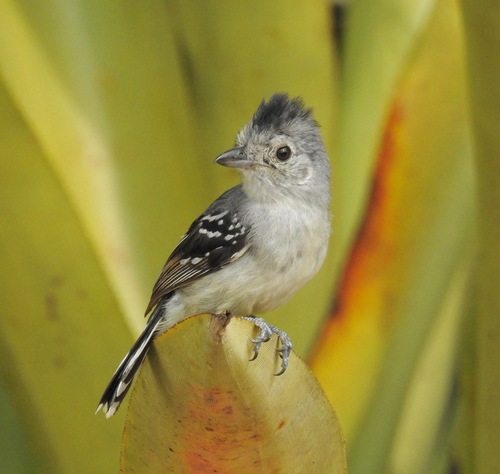
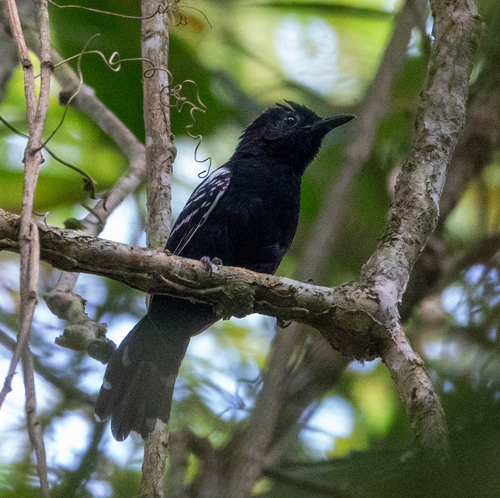
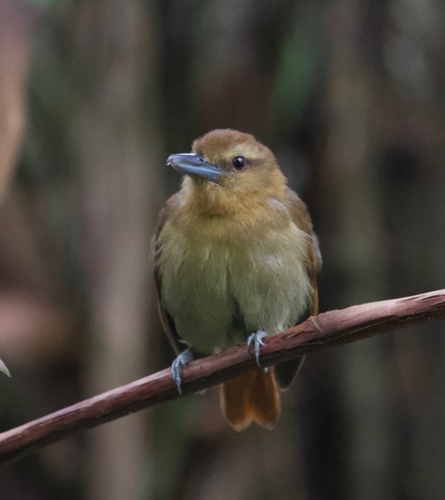
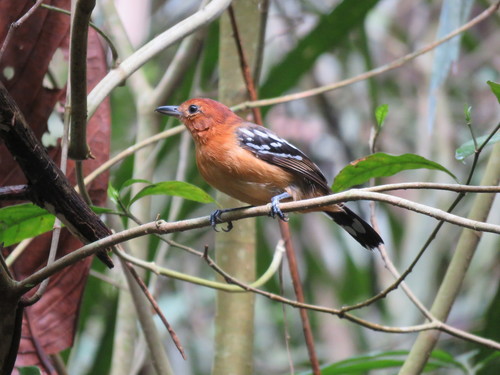
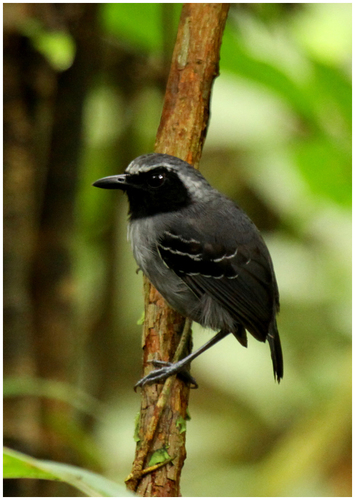
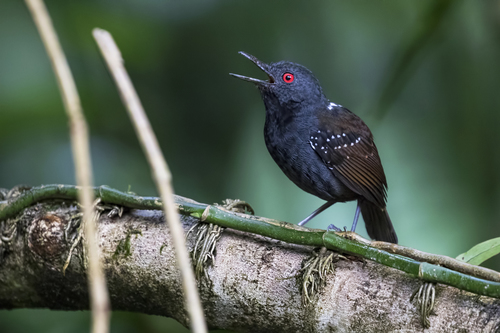
The dull-mantled antbird, scientifically named Sipia laemosticta (Pelzeln, 1868), measures 12.5 to 15.0 cm (4.9 to 5.9 in) long and weighs approximately 25 g (0.88 oz). Adult males have a blackish gray to slate-black head, neck, and upper mantle. The remainder of their upperparts are dark reddish brown, chestnut, or olive, with a usually hidden white patch between their scapulars. Their flight feathers and tail are blackish brown with dark reddish brown edges. Their greater wing coverts are dark reddish brown with cinnamon or rufous tips; their median and lesser coverts are black with white tips. Their throat and chin are black, their sides, flanks, and undertail coverts are reddish brown, and the rest of their underparts are dark gray or slate. Adult females are similar to males, but their gray areas are somewhat less blackish than the male's. Their interscapular patch is much smaller than the male's, their median wing coverts have a cinnamon tinge, and their black throat has many white spots or bars. Both sexes have a red iris and gray legs and feet. Based on one description of each sex, males apparently have a black bill, while females have a black maxilla and gray mandible. Young males have a brown wash on their head, faint buff mottling on their throat, and no black on their underparts. The dull-mantled antbird has a disjunct distribution. It is found on the Caribbean slope of Costa Rica, from the Cordillera de Guanacaste south, at elevations between 300 and 900 m (1,000 and 3,000 ft). In Panama, it occurs on both the Caribbean and Pacific slopes, in Bocas del Toro and Veraguas provinces, and from Guna Yala south to Colombia, ranging from near sea level to 1,000 m (3,300 ft). At least one sighting has been documented in extreme northwestern Colombia. This species primarily inhabits the floor and understorey of wet foothills evergreen forest, and also occurs in lowlands. It favors ravines and slopes along streams with dense vegetation, as well as regenerating vegetation in landslide scars and tree-fall openings.