About Siphonochilus aethiopicus (Schweinf.) B.L.Burtt
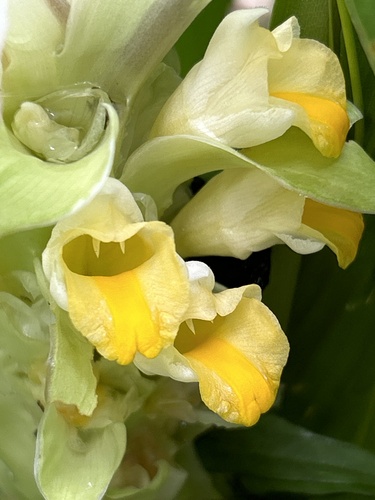
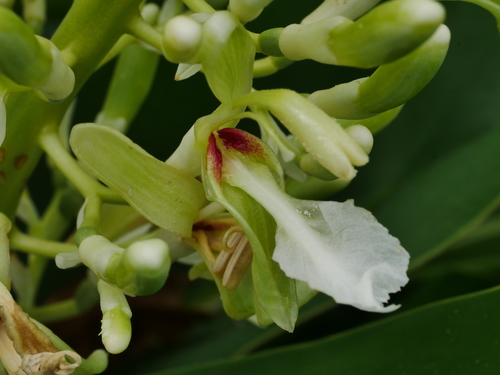
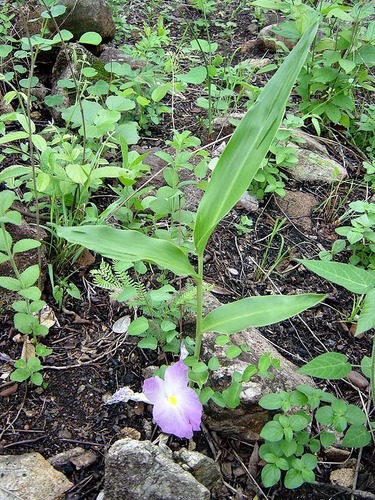
Siphonochilus aethiopicus (Schweinf.) B.L.Burtt is a deciduous flowering plant in the Zingiberaceae (ginger) family. It was first described by Georg August Schweinfurth, and its current accepted name was given by Brian Laurence Burtt. The genus name Siphonochilus combines two words both meaning tube, referring to the shape of this species' flower, while the specific epithet aethiopicus is an archaic term referring to Africa. This species is native to west and south Africa. Over-harvesting has reduced its current range to approximately 10% of its historic range. It grows naturally in woodland, wooded grassland, and bushland habitats. It produces large, light green, lance-shaped leaves. The South African variety of the species bears white or pink flowers, while the Nigerian variety bears purple flowers. All flowers are funnel-shaped and grow directly from ground level. The species regrows annually from small underground rhizomes, and can reach a total height of around 60 centimetres (24 in). It produces small fruit after a very short flowering period that usually lasts only one day. Siphonochilus aethiopicus is used in traditional medicine across sub-Saharan Africa, and the African Herbal Pharmacopoeia lists it as one of the 51 most important medicinal plants in the region. Its rhizomes are used to treat coughs, influenza, pain, inflammation, and malaria, among other conditions, and are sometimes prepared as a contraceptive tea. Both its rhizomes and leaves are used to relieve menstrual pain. Extracts from the plant are also included in some commercial medicines, including products for asthma and allergies. A 2021 literature review confirmed that the rhizome has anti-asthmatic, anti-inflammatory, and antiplasmodial properties, as well as limited antimicrobial effects. The roots and rhizomes contain siphonochilone and eucalyptol, which have been used to treat asthma and allergies, and the plant's extracts contain natural anti-inflammatory mediators. There are very few studies investigating the actual efficacy of this plant when used as practiced in traditional medicine. Due to ongoing over-harvesting, Siphonochilus aethiopicus is classified as critically endangered. While the species can be grown in cultivation, some traditional healers hold the belief that only wild-harvested plants have the intended medicinal properties. In some markets in South Africa's Limpopo Province, Siphonochilus aethiopicus was the most expensive plant by weight, reaching a price of up to R800 per kilogram in 2011.