About Siphateles bicolor (Girard, 1856)
The scientific name of the Tui chub is Siphateles bicolor (Girard, 1856).
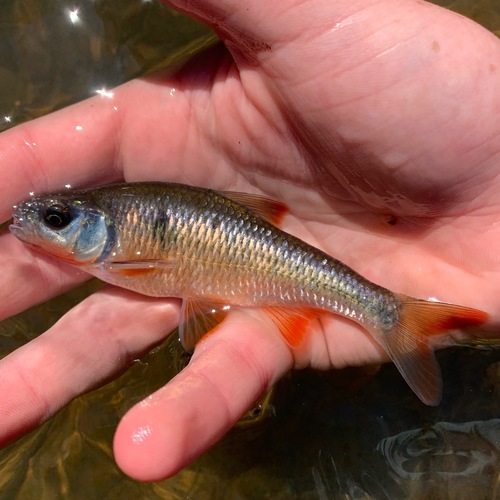
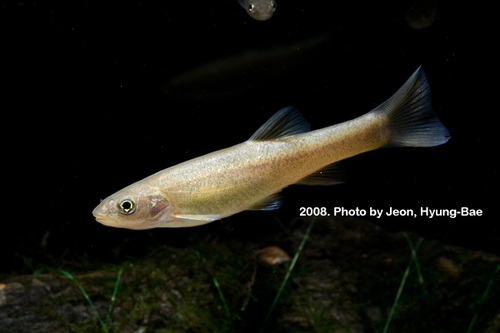
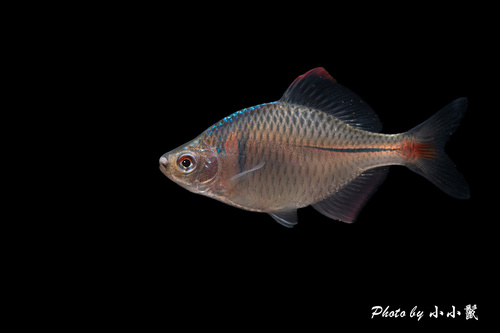
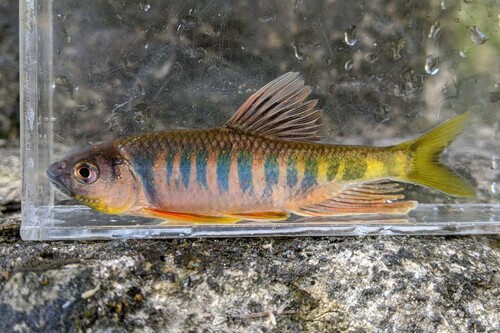
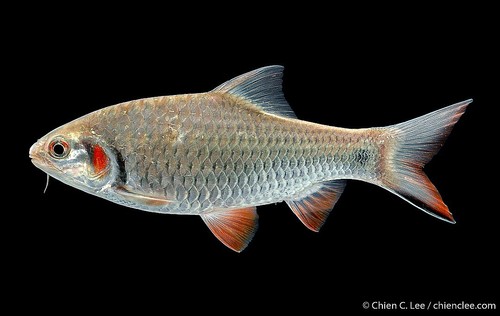
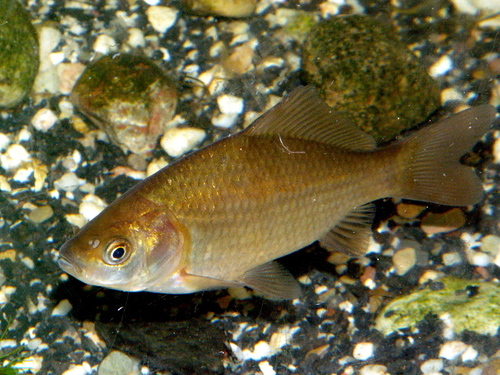
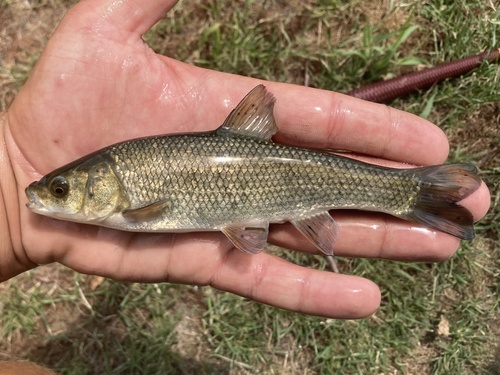
The form and appearance of the Tui chub is variable. J. O. Snyder originally described many distinct forms as separate species, but these have since been reclassified as subspecies. The species occurs in two common body shapes: more slender or more plump. In general, mature individuals have deep olive coloration on their upper body and white on their lower body, with smooth shading variation along the sides and a brassy sheen. Tui chub have broad scales and a relatively large head compared to their body. Their fins are olive, and sometimes tinted red. Pectoral fins are positioned far forward and low on the body. The maximum recorded length of the species is 45 centimeters (18 inches), though a typical adult length is 20 to 25 centimeters. The species does not display sexual dimorphism, meaning females and males have the same appearance.
During the Pleistocene epoch, Tui chub lived in the large pluvial lakes of the Great Basin. Over time, these lakes shrank, leaving different Tui chub populations geographically isolated. The modern range of Tui chub includes the Lahontan and Central systems of the Great Basin, as well as the Owens, Truckee, Carson, Quinn, Humboldt, Columbia, Klamath, and Mojave Rivers. It is also found in the Pit River and Goose Lake in the upper Central Valley of California. Tui chub can be very abundant in parts of their range; for example, they are the most abundant fish species in Pyramid Lake. Historically, they were abundant enough in the western Great Basin to be a valuable food source for Indigenous peoples living in the area.
The native range of the Tui chub has been debated by researchers. There is strong evidence that the species is native to Nevada and southern Oregon. It was once thought to be native to Idaho, but this is no longer considered accurate. Evidence from natural history records and the discovery of Tui chub bones in the Columbia River Basin, Washington confirms the species is also native to the Columbia River Basin region.
Tui chub occupy a wide variety of habitats, including small fast-flowing streams, meandering rivers, springs, ponds, and lakes. Their adaptability lets them live in both high, cold lakes such as Lake Tahoe and warmer desert streams. Their preferred water temperature range is 15 to 30°C, but they can survive in temperatures between 2 and 36°C. Despite their ability to thrive across a wide range of environments, they are most commonly found in slow water with abundant vegetation. In lake habitats such as Walker Lake, Tui chub are heavily preyed upon. They are a key prey species for Lahontan Cutthroat trout in Walker Lake, and are also preyed on by fish-eating birds.
Tui chub have a varied diet. Young fish eat mostly invertebrates, and add plant material — especially algae — to their diet as they mature. Young Tui chub begin feeding almost immediately after hatching. Diet also varies based on location and available food sources; for example, in some regions zooplankton is a fundamental, essential food source for maturing Tui chub. Overall, the species is classified as an opportunistic omnivore in its feeding habits. While zooplankton is important for juvenile Tui chub, some subspecies have different adult diets. For example, Siphateles bicolor obesa relies more on aquatic macroinvertebrates as it matures, while Siphateles bicolor pectinifer becomes an obligate planktivore in adulthood. Both of these subspecies can live in the same lakes, but have distinct feeding habits.
Feeding habits can also be predicted by the fineness of the fish's gill rakers. Fine-rakered Tui chub in Pyramid Lake feed more on plankton in open water, while coarse-rakered forms that live near the bottom eat more plants and algae. The largest adult Tui chub will also eat other fish, and there is evidence that the species regularly feeds on benthic organisms.
Tui chub spawning occurs between late April and early August, depending on water temperature. In Pyramid Lake, spawning peaks in June. Males move inshore first, then congregate around arriving females in shallow water, preferring areas with sandy substrate and heavy vegetation. Females scatter their eggs randomly across a wide area, where the eggs are fertilized by multiple males. In some populations, the first spawning occurs in the spring of the fish's third year of life. During spawning, coloration intensifies in both males and females.
Eggs hatch between three and six days after fertilization. Embryos do not mature uniformly, which leads to multiple separate spawning periods within a single breeding season. Newly hatched Tui chub feed in open pelagic water and grow rapidly during their first summer, reaching lengths of 22 to 42 millimeters. In subsequent summers they grow 20 to 55 millimeters until they reach their mature adult size of 20 to 40 centimeters. Females reach sexual maturity at two years old, while males reach sexual maturity at one year old. Tui chub are considered old once they exceed seven years of age, and the oldest recorded individual was 33 years old. In lake habitats, Tui chub commonly live between five and six years, and individuals older than six are rare.