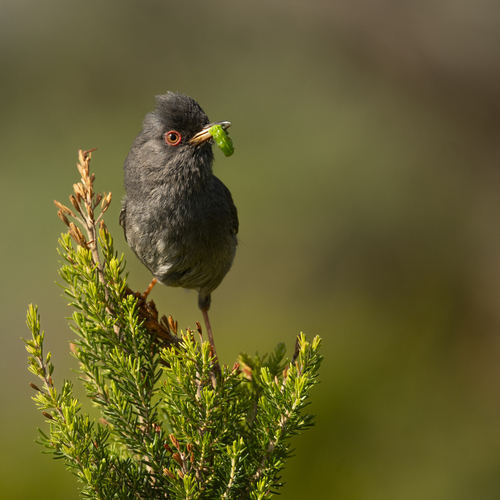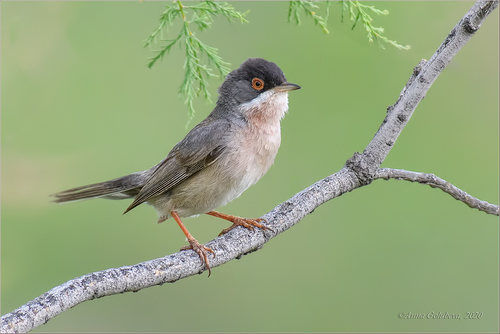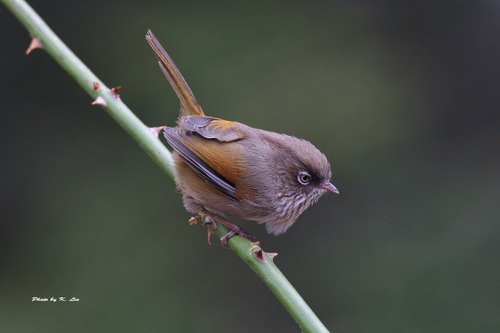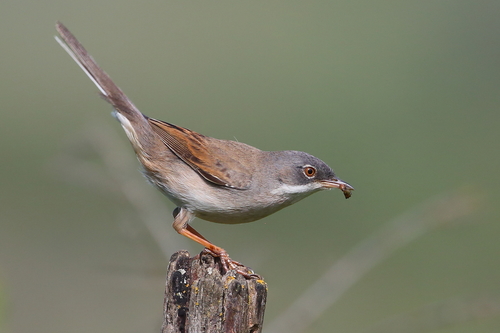
About Sinosuthora alphonsiana (J.Verreaux, 1870)
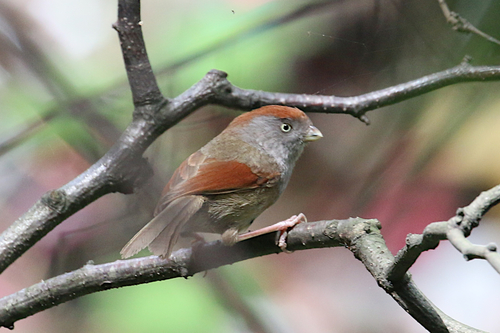
This medium-sized tawny-colored parrotbill has the large bill that is characteristic of parrotbill species. Its specific epithet honors the French ornithologist Alphonse Milne-Edwards. The species was formerly classified in Sylviidae alongside typical warblers (genus Sylvia), or grouped with Old World babblers in Timaliidae, or with tits and chickadees in Paridae. It is now widely accepted to belong to the distinct parrotbill family Paradoxornithidae.
This species may be less closely related to the great parrotbill (Conostoma oemodium) than it is to the genus Chrysomma or to fulvettas of the genus Fulvetta. Fulvettas were historically often placed in the broad, catch-all wastebin genus Alcippe. Another potential relative is the wrentit (Chamaea fasciata), which is the only currently known American member of Paradoxornithidae under modern family circumscription. Traditionally, Chrysomma, Fulvetta, and occasionally the wrentit were categorized as either typical warblers or Old World babblers.
Alongside other parrotbill lineages, this species, the golden-breasted fulvetta (Lioparus chrysotis), and species in the genus Rhopophilus form an Asian evolutionary radiation that corresponds to the westward radiation of typical warblers. Instead of recognizing only two parrotbill genera – Paradoxornis and the monotypic Conostoma – current evidence suggests parrotbills are better treated as multiple independent lineages that have evolved strong convergent traits. This convergence occurred due to shared adaptation to reedbed habitats and a shift to a more granivorous diet compared to their secretive, warbler-like ancestor. Under this revised classification, the ashy-throated parrotbill would likely be placed in the genus Sinoparadoxornis.
Unlike its western Eurasian typical warbler relatives, this East Asian bird is a small omnivore adapted to life in reed beds. Across its native range, the ashy-throated parrotbill occupies bamboo stands and regions with tall grasses. The population of parrotbills in Brabbia Swamp Nature Reserve lives in beds of common reed (Phragmites australis), as well as drier land overgrown with meadowsweet (Filipendula ulmaria), grey willow (Salix cinerea), and giant goldenrod (Solidago gigantea).
It feeds on arthropods, seeds, and buds; wintering birds in Italy appear to survive by eating insects that hibernate inside reed stalks. As with other relatives in the (sub)genus Sinoparadoxornis, its eggs are smaller than average for parrotbills, whitish to light blue, and unspotted. The species will be extirpated from areas where wetlands are drained, but its overall range is large, and much of its habitat is remote and rarely accessed. For these reasons, the IUCN currently classifies it as a Species of Least Concern.