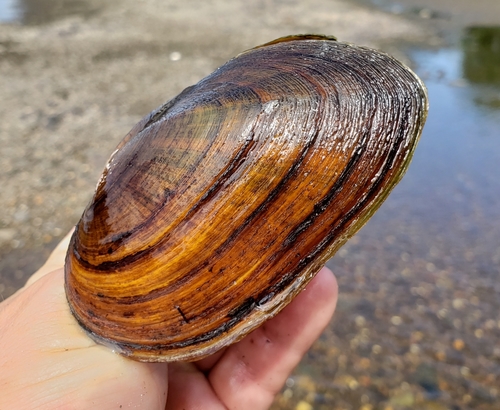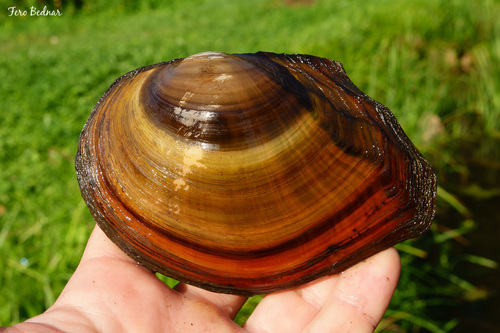
About Sinanodonta woodiana (I.Lea, 1834)
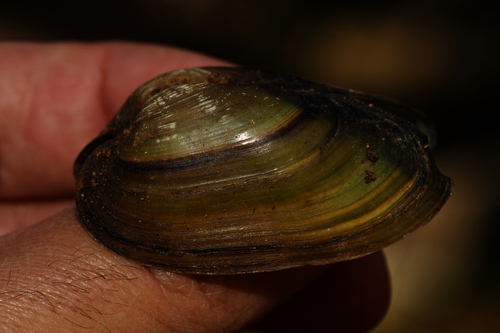
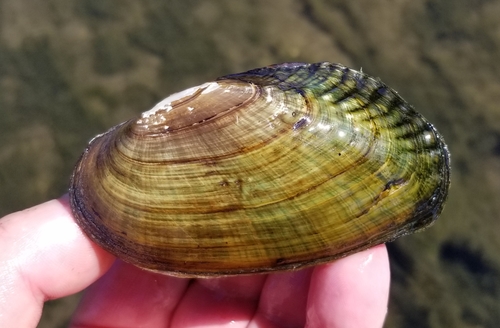
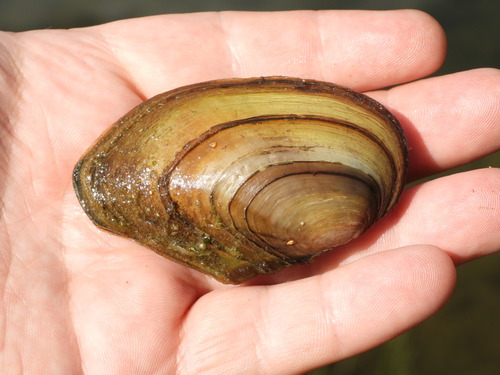
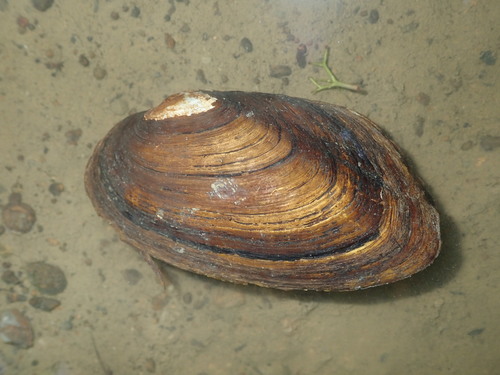
Sinanodonta woodiana, commonly known as the Chinese pond mussel, Eastern Asiatic freshwater clam, or swan-mussel, is a species of freshwater mussel, an aquatic bivalve mollusk, that belongs to the Unionidae family (the river mussels).
This species is indigenous to Eastern Asia. It has been introduced as a non-native species to multiple regions across the globe. In Europe, it can be found as a non-native species in Austria, Belgium, Croatia, the Czech Republic (non-indigenous in Bohemia since 2001, and non-indigenous in Moravia since 1996; it has not been evaluated for conservation status here), France, Germany, Greece, Hungary, Italy, Poland, Romania, Serbia, Slovakia, Spain, Ukraine, and Switzerland. It is also non-native on some Indonesian islands, in the Americas (Costa Rica, the Dominican Republic, and the United States, where it has been extirpated from New Jersey), in Africa (Algeria, where it has been non-native in Oubeira Lake since 2023), and in non-native areas of Asia (Myanmar, where it was first reported in 2017).
Sinanodonta woodiana is an East Asian freshwater unionid bivalve mollusk primarily recorded from the Amur River in the Russian Far East and China's Yangtze River. This species can grow up to 30 cm in length, reach an age of 12 to 14 years, and become reproductively mature by the end of its first year when it is only 3 to 4 cm in size. This large freshwater bivalve is a habitat generalist with a high tolerance for silt, and it has become established worldwide. Like all unionid mussels, S. woodiana has an obligatory parasitic larval stage called a glochidium, where larvae must encyst on a host fish to complete their development. Known host species include invasive, non-native, and native fishes. The presence of S. woodiana can seriously impact local unionid mussel populations. The species' widespread success is attributed to the global importation and commercialization of its native Asian host, Asian carp, which is now distributed worldwide. S. woodiana was introduced to Tuscany both inadvertently and intentionally, for the production of artificial or imitation pearls. It is also sold in some garden centers to provide biofiltration for outdoor ponds and water features. One documented parasite of this species is Aspidogaster conchicola, a member of the subclass Aspidogastrea.