About Silene greenei (S.Watson ex B.L.Rob.) Howell
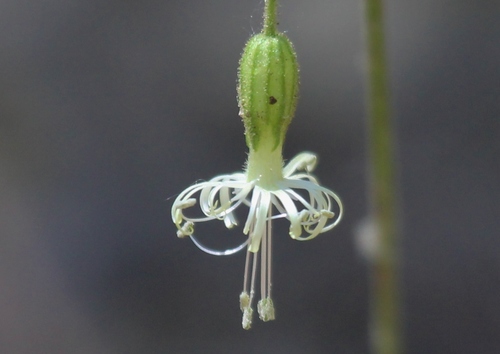
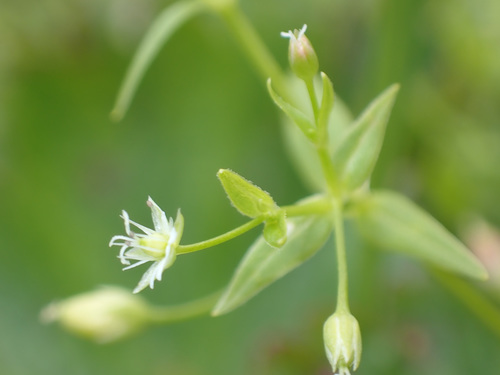
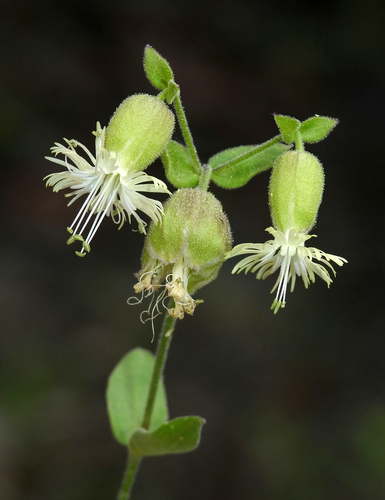
Specimens of Silene greenei have a taproot and a stout, woody, many-branched caudex that produces many erect-to-straggling, little-branched flowering shoots. Stems are 5–40 cm long and covered in trichomes, ranging from soft to scabrous. Trichomes are either eglandular or viscid-glandular, especially on the distal portions of stems. Stems are very rarely glabrous, and bear several pairs of two leaves that are equal in length to the stem or shorter than the stem. Flowers have ten-veined sepals, and are most often greenish, though they can rarely be pink or purple. Seeds are brown and measure 2 to 2.5 mm broad. The nominate subspecies Silene greenei subsp. greenei, common bell catchfly, is native to northern California and southern Oregon. Silene greenei subsp. angustifolia, red mountain catchfly, is classified as Critically Imperilled and is only found in the mountains of California.