About Silene gallica L.
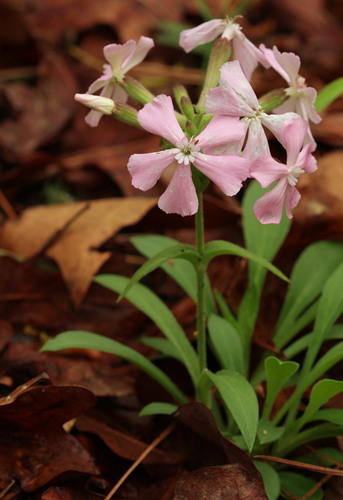
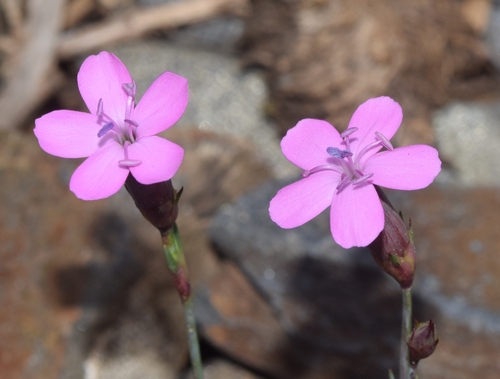
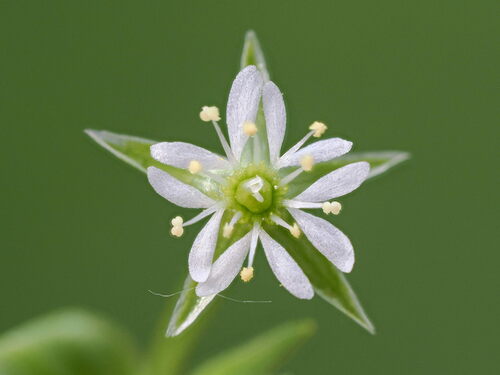
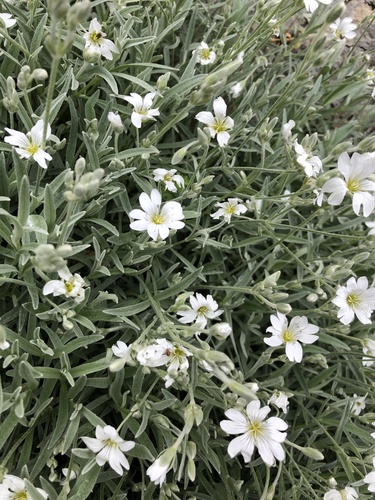
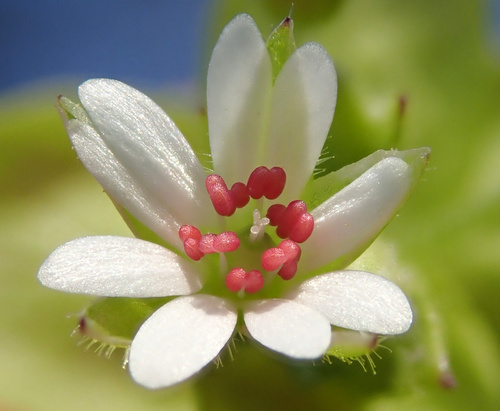
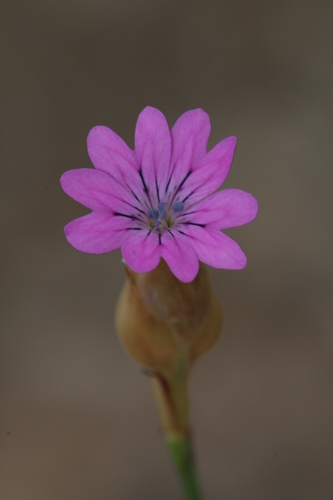
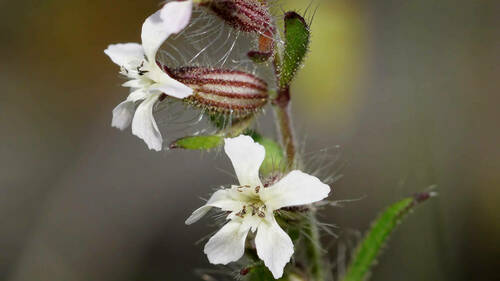
Silene gallica L. is an erect or semi-erect annual herb that reaches up to 50 cm (20 in) in height. Its branching stem is covered with long, curling hairs plus shorter glandular hairs. The leaves are opposite, entire, and lance-shaped with pointed tips. Lower leaves on the plant grow up to 3.5 cm (1.4 in) long, while upper leaves are smaller. Flowers form a terminal inflorescence at the top of the stem, and additional flowers can appear in the leaf axils. Each flower has a tubular calyx made of fused sepals marked with ten green or purple-red veins. The calyx is covered in long, sometimes glandular, hairs, and becomes inflated when the plant develops fruit. This species produces five white, pink, or bicolored spatulate petals, each with a small appendage at its base. Each flower contains ten stamens and three styles. The fruit is a brown, ovoid capsule that has six teeth at its apex. This species is native to Europe, where it has a submediterranean and subatlantic distribution. In the British Isles, it occurs mostly near the coasts of England, Wales, Scotland, and Ireland, with occasional sporadic inland populations. It grows in sandy or gravelly, often acidic, soils, in habitats including arable fields, wasteland, walls, poor dry coastal pastures, and sand dunes in the Channel Islands.